Birds With Red Heads: 12 Species and How to Tell Them Apart
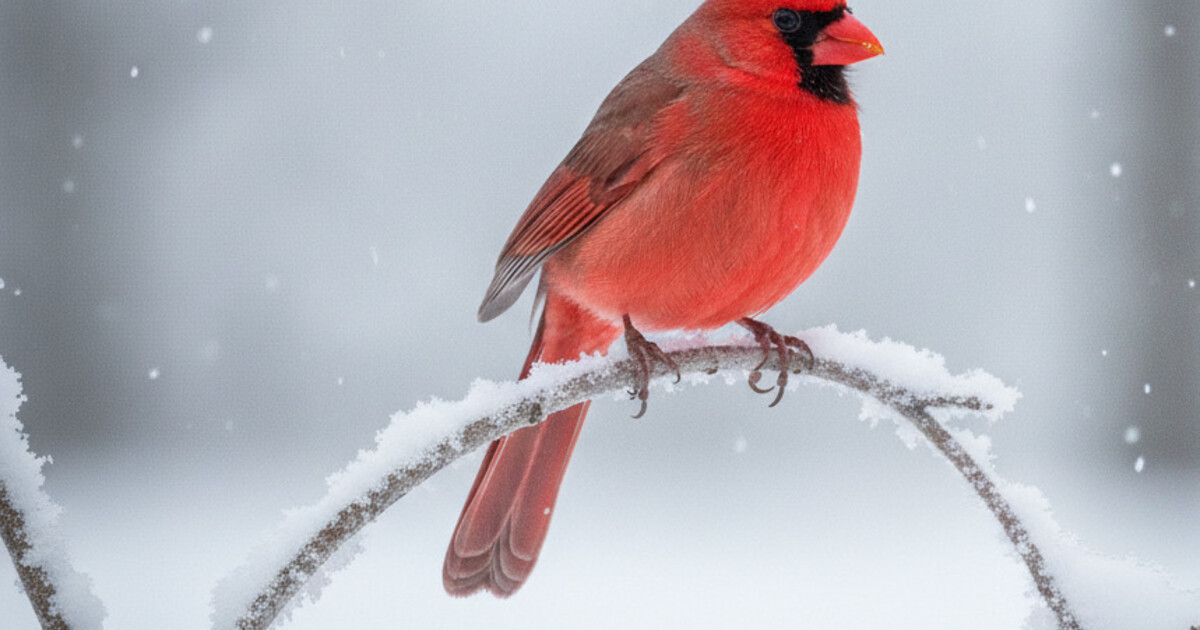
You spotted something red on a bird’s head and now the identification is stuck. Was the whole head red, or just the crown, or a patch at the back of the neck? That distinction separates a Northern Cardinal from a House Finch from a Red-headed Woodpecker, and all three show up at the same backyard feeder.
Twelve North American species are commonly described as a “bird with a red head.” Some are entirely red-bodied, some wear a red cap on a woodpecker’s black-and-white frame, and a couple carry an iridescent gorget that reads as red at the right angle. Size, bill shape, and exactly where the red sits on the head do most of the separating work.
Birds with red heads in North America fall into songbirds (red or rosy feathering on the face and crown) and woodpeckers (a cap, crest, or nape patch on a black-and-white body). Two hummingbirds also qualify. Size and bill shape separate most lookalike pairs once you know which field mark to check.
Two Types of Red Head to Distinguish First
Most sightings fall into one of two visual categories. Sorting between them cuts the candidate list in half before you look at anything else.
The first is a smooth red flush covering the face, crown, and often the breast. The bird looks painted in red or rose. Northern Cardinals are the extreme example: entirely red with a crest. House Finches and Purple Finches wear a similar flush on the head and breast, just with a streaky brown body underneath.
The second is a distinct red marking on a non-red body. Red-headed Woodpeckers carry this to its logical extreme: a fully crimson head, black back, white underparts. Pileated Woodpeckers have a pointed red crest on a crow-sized black frame. Male Downy and Hairy Woodpeckers show only a small red smudge at the back of the crown.
Got a photo? The structure of the red (flush vs. patch, full head vs. nape only) is usually visible even in a poor shot.
Songbirds With Red Heads
These are perching birds with cone-shaped bills built for cracking seeds. The red on their heads is feather pigment, not bare skin.
Northern Cardinal (male). About 8-9 inches. The whole body is red, with a tall pointed crest and a black mask around an orange-red bill. Females are warm tan-brown with red tints on the crest, wings, and tail. If the bird was entirely red, it’s almost certainly a male cardinal.
House Finch (male). About 5-6 inches. The red covers the forehead, eyebrow, throat, and breast, but the back, wings, and belly carry brownish streaks. The bill is short and rounded. This is the most frequently recorded red-headed bird in North America.
Purple Finch (male). Often described as a sparrow soaked in raspberry juice. Similar size to a House Finch, but the red is richer and spreads further down the back. The belly is unstreaked white, and the bill is chunkier. Purple and House Finch are probably the most-confused pair in eastern North America.
Common Redpoll. Winter visitor from the boreal north, about 5 inches. Small red forehead patch, rosy flush on the breast in males, otherwise streaky brown with a tiny pointed bill. Travels in flocks and forages on birch and alder catkins.
Pine Grosbeak (male). North America’s largest finch, at 8-10 inches. The head and breast are soft rosy-red rather than vivid scarlet, and the wings are dark with two white wingbars. It’s notably slow-moving for a finch and often allows close approach.
North American birders submit roughly 70 million House Finch observations to eBird each year, making it the continent’s most frequently logged red-headed bird. Its range runs from the Pacific Coast to the eastern seaboard. The intensity of a male’s red varies by individual diet: birds that consumed more carotenoid-rich foods during summer molt show deeper reds and, per Cornell Lab research, attract more mates. Purple Finch is logged at roughly 8% of that frequency, which explains why eastern observers often go years without a confident House Finch vs. Purple Finch call. Northern Cardinals contribute around 25 million annual eBird submissions from the eastern US. Common Redpolls are irregular visitors (some winters bring large irruptions south, other years almost none appear). Pine Grosbeak, while widespread across boreal forests, averages fewer than 1 million eBird reports per year in the lower 48 states.
Woodpeckers With Red on the Head
If the bird was clinging to a tree trunk, probing bark with a chisel bill, or hitching up a trunk in short hops, start here. Woodpeckers don’t perch on wires and they don’t sit in open grass.
Red-headed Woodpecker. About 9 inches. Entirely crimson head, clean black back, bright white underparts and white secondary wing patches that flash in flight. Common in open woodlands and park edges east of the Rockies. Population fell roughly 70% between 1966 and 2019 per Breeding Bird Survey data, so it’s increasingly uncommon in areas where it was once abundant.
Pileated Woodpecker. Crow-sized (16-19 inches), with a blazing triangular red crest on a black body. White neck stripes run from the bill down toward the shoulder. If the bird looked as large as a crow and had a prominent red crest, this is it.
Red-bellied Woodpecker. Confusingly named. The visible red is a full red cap and nape on a black-and-white barred back. The belly has only a faint rosy wash that’s rarely obvious in the field. About 9-10 inches, common at eastern feeders, and one of the most regularly misidentified woodpeckers.
Downy Woodpecker (male) and Hairy Woodpecker (male). Both have only a small red patch at the very back of the crown on an otherwise black-and-white head. The Downy is about 6 inches with a stubby bill; the Hairy is about 9 inches with a bill nearly as long as its head is wide. For a closer look at separating these two, see the black and white birds guide.
A Red Spot on the Back of the Head, Not the Whole Head
This is worth separating out, because it’s the single most common version of the question — and it points somewhere quite different from a fully red head.
If what you saw was a black and white bird with a red spot on the head, and the red was a small mark right at the back of the head rather than a full hood, you are almost certainly looking at a male Downy or Hairy Woodpecker. Females of both species have no red at all. That small red patch on the back of the head is the male’s only red, and it’s easy to miss unless the bird turns away from you.
A few notes that resolve most of the remaining confusion:
- A red patch on the back of the head = Downy or Hairy (small, black-and-white, clinging to a trunk).
- A red cap covering the whole crown and nape = Red-bellied Woodpecker, despite the name.
- The entire head crimson, hood-like, with no black-and-white face pattern = Red-headed Woodpecker.
- A small bird with a red cap on the head that was not on a tree trunk — feeding on the ground or at a feeder — is more likely a Common Redpoll or House Finch than any woodpecker. Those are covered in the songbird section above.
So a red headed bird with a black and white body splits cleanly: full crimson head means Red-headed Woodpecker, while a red mark on the back of the head means Downy or Hairy. Size settles the last step — Downy is sparrow-sized, Hairy is noticeably bigger with a much longer bill.
Hummingbirds With Red on the Head
Two hummingbirds give observers the impression of a red head, though the color is structural (iridescent) rather than pigmented and changes noticeably with the viewing angle.
Anna’s Hummingbird (male). West Coast resident, rarely seen east of the Rockies. The entire head and gorget are covered in iridescent rose-magenta feathering that reads as vivid red in direct sun and nearly flat gray in shadow. About 4 inches, the largest hummingbird that winters in the continental US.
Ruby-throated Hummingbird (male). Eastern US summer resident. The gorget is ruby-red at the right angle, but the crown is green, not red. At poor angles the whole head can look reddish-orange, which is why it turns up in “bird with red head” searches. About 3.5 inches. Its range rarely overlaps with Anna’s.
The Trickiest Lookalike Pairs
House Finch vs. Purple Finch. Check the belly. House Finch has blurry brownish streaks running the full length of the underparts. Purple Finch has a cleaner white belly with little or no streaking, and the male’s red is deeper and more evenly saturated, not patchy or “paint-brushed on.”
Red-bellied vs. Red-headed Woodpecker. The Red-bellied has red only on the cap and nape, with a zebra-barred black-and-white back. The Red-headed has a solid crimson head and a clean, unbarred black back with a large white body patch. If the back is barred, it’s Red-bellied.
Anna’s vs. Ruby-throated Hummingbird. Geography handles most of this ID. Anna’s breeds year-round on the West Coast; Ruby-throated breeds east of the Rockies and winters in Central America. If you’re in California, it’s Anna’s. If you’re in Georgia, it’s Ruby-throated.
If the Red Turned Out to Be a Trick of the Light
Red is one of the first things the eye reports and one of the least reliable. Backlighting turns a rusty brown cap crimson, and low autumn sun does the same to a plain brown crown. If you’re now unsure the bird had any red at all, work from the pattern instead:
- Mostly black with white flashes in the wing → black birds with white wing stripes
- Mostly white with dark tips at the end of the wing → white birds with black wing tips
- Small, dark all over, in a feeder flock → small black birds
- Large, broad-winged, seen soaring rather than perched → hawk identification
- Small and yellow-toned, especially in spring → small yellow birds
- Small and plain brown, probably at a feeder → small brown birds
How Animal Identifier Can Help
A photo taken at a tricky angle can make a Purple Finch look identical to a House Finch, or a Red-bellied Woodpecker look like it has a fully red head. Animal Identifier works from a single photo: point the camera, tap identify, and it returns the species name along with habitat notes, diet, and the field marks that confirm the ID.
The follow-up chat is useful for lookalike checks. If the app returns Purple Finch and you’re not certain, ask “how do I tell this from a House Finch?” and it walks through the specific differences for your situation. Animal Identifier covers birds, mammals, reptiles, and insects, so it handles anything else you come across on the same walk. Two identifications are free every day, no account required.
Try Animal Identifier on iOS or Android next time you spot a bird with a red head you can’t name.
Frequently Asked Questions
What is the most common bird with a red head in the US?
The House Finch is the most frequently logged red-headed bird in North America, with roughly 70 million eBird observations per year. Northern Cardinals rank second in the eastern US. On the West Coast, Anna’s Hummingbird is a common year-round suburban resident and one of the more regularly spotted red-headed birds across California and the Pacific states.
Is a bird with a completely red head always a Northern Cardinal?
A completely red bird is almost certainly a male Northern Cardinal in most of North America. However, male House Finches and Purple Finches have red on the head and breast with streaky brown elsewhere, and Red-headed Woodpeckers have a fully crimson head on a black-and-white body. Size and body pattern separate them quickly.
Why do male birds have red heads but females don’t?
Red and rosy plumage in birds comes from carotenoid pigments that males display to attract mates. Females of most red-headed species (House Finch, Cardinal, Purple Finch) are dull brown or streaked, which helps them stay less visible on the nest. The male’s red signals fitness; the female’s coloring signals camouflage.
What small bird has a red patch only on its forehead?
The Common Redpoll has a compact red forehead cap on an otherwise streaky brown body. About 5 inches, it visits North America in winter, often in flocks, and forages on catkins. The red cap doesn’t spread down the face the way a House Finch’s red does, and the Redpoll’s bill is tiny and sharply pointed.
I saw a large black bird with a red crest. What is it?
A large black bird with a prominent red crest is almost certainly a Pileated Woodpecker. At 16-19 inches it’s the largest woodpecker in North America. You’ll usually find it in mature forest, carving out large rectangular holes in dead trees. The red crest is triangular and visible from a good distance.