White Birds With Black Wing Tips: Gulls, Gannets and More
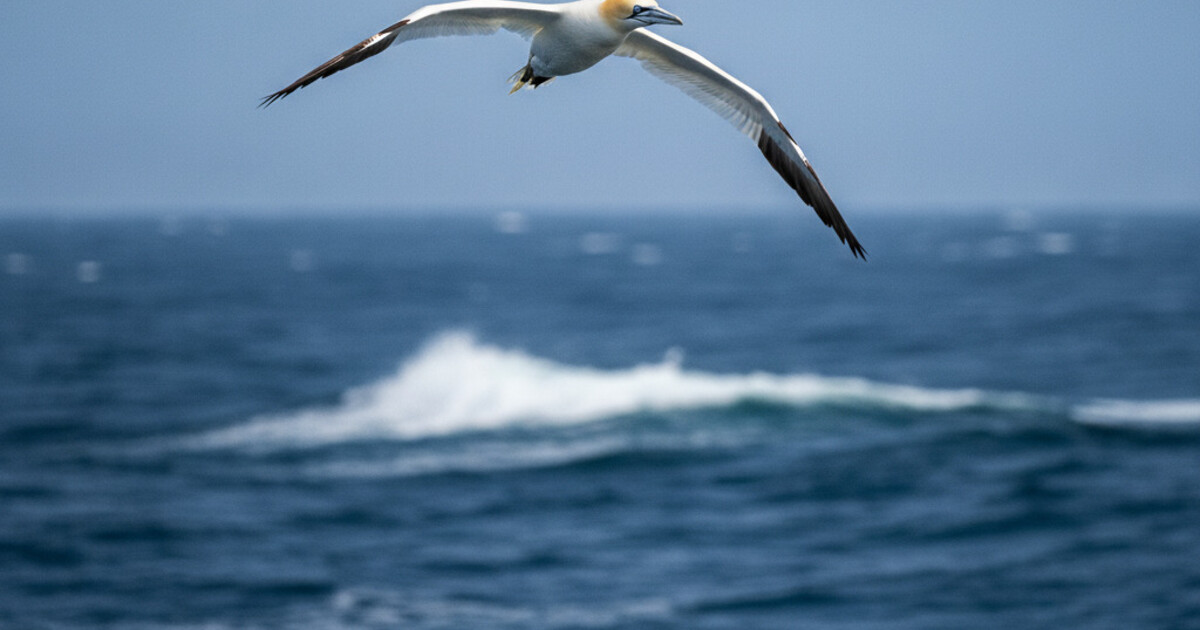
A white bird with black wing tips banks overhead and you want a name. It’s one of the most common color patterns in North American birds, which means you’ve got real options to sort through before anything resolves.
The white-body-black-wingtip combination shows up in gulls, geese, pelicans, gannets, cranes, storks, and terns. Body size is the first filter: a gull-sized bird with a yellow bill points to a Ring-billed Gull; something with a 9-foot wingspan is an American White Pelican. After size, bill shape, leg color, and how much black covers the wing all separate the candidates.
White birds with black wing tips in North America include Ring-billed, Herring, and Laughing Gulls (the most common matches), American White Pelicans, Northern Gannets, Snow Geese, Whooping Cranes, Wood Storks, White Ibises, and Common or Forster’s Terns. Size narrows it fast: gull, then goose, then crane or pelican, then seabird. Bill shape and habitat finish the ID.
Common Gulls: The Most Likely Answer
The four gulls most likely behind white-body-black-wingtip sightings in North America differ in size, bill detail, and range. The Ring-billed Gull (Larus delawarensis) is 17-21 inches long, wingspan 41-46 inches, with a yellow bill ringed in black near the tip and yellow legs; its outer primaries are black with two small white “mirror” spots. The Herring Gull (Larus argentatus) runs 22-26 inches, wingspan 54-62 inches, with a yellow bill bearing a red spot (not a ring), pink legs, and a slightly paler gray back; it concentrates along the coasts and the Great Lakes year-round. The Laughing Gull (Leucophaeus atricilla) covers Atlantic and Gulf coasts from New England to Texas with a dark gray back, no mirrors on the wing tips, and a full black hood in spring that fades to a dark smudge by fall. On the West Coast, the California Gull (Larus californianus) fills the same role as the Herring Gull with a yellow bill marked by both red and black spots and greenish-yellow legs.
Among these four, the Ring-billed is the default across most inland North America. If the gull was noticeably larger with pink legs, it was likely a Herring Gull. If you were on a southeastern beach and the bird had a dark back, it was almost certainly a Laughing Gull.
Juvenile gulls of all four species are brown and mottled rather than white, so a patchy-looking bird is probably a first- or second-year bird working through its plumage stages toward the clean adult pattern.
For more on birds that carry black and white across the whole body rather than just the wing tips, the black and white birds identification guide covers species where the contrast is more extensive.
Large Soaring Birds With Black Wing Tips
When the bird is enormous, gulls aren’t the answer.
The American White Pelican (Pelecanus erythrorhynchos) has a wingspan of 96-114 inches, roughly 8-9 feet, making it the second-largest flying bird in North America by wingspan. The body is all white. The black shows only in flight, when the primaries and outer secondaries fan out and the trailing edge of the wing reveals a broad dark border. Sitting on the water, a white pelican looks completely white. About 65,000 nest across interior lakes from the northern Great Plains down through Texas, then shift to coastal areas in fall. They don’t dive; they herd fish cooperatively at the surface, often working in coordinated lines.
The Northern Gannet (Morus bassanus) is a seabird. Adults are bright white with a golden-yellow wash on the head and solid black outer primaries. The wingspan reaches 70-72 inches, and the body is long and cigar-shaped with a pointed bill. They hunt by plunging from 40-100 feet nearly straight down at speeds close to 60 mph, folding the wings back just before impact. If you’re watching a white bird dive almost vertically into the ocean, it’s a gannet. They breed on a handful of cliff colonies along the Atlantic coast of Canada and winter down the US Atlantic coast; you won’t see them inland.
The Snow Goose (Anser caerulescens) brings the same white-body-black-primary pattern at a smaller scale, with a wingspan of 53-54 inches, a stubby pink bill, and pink feet. Snow Geese travel in enormous, very loud flocks during migration from October through April. The North American population sits around 15 million birds, considered overabundant by wildlife managers. A smaller version, the Ross’s Goose, is identical in pattern but roughly two-thirds the size; the two often flock together.
Tall White Birds With Black Wing Tips
These species spend most of their time on the ground or wading. The black shows only when the wings open.
The Whooping Crane (Grus americana) stands 5 feet tall, the tallest bird in North America, with a wingspan of about 7-8 feet. Adults are white with a red cap and black face mask; the black primary feathers appear only in flight and fold out of sight when the bird stands on the ground. The wild population has climbed from a historic low of 16 birds in the 1940s to around 500-550 today, but that’s still very few spread across a large migration route. They winter at Aransas National Wildlife Refuge on the Texas coast and breed in Wood Buffalo National Park in Canada. Seeing one counts as a genuine rarity.
The Wood Stork (Mycteria americana) is stockier than the crane at 33-45 inches tall with a wingspan of 59-65 inches. The body is white, but the flight feathers, both primaries and secondaries, along with the tail, are all black. That’s more dark area than most birds on this list. The head and upper neck are bare and gray, almost bald-looking at close range. It breeds in swampy forested areas across the southeastern US and Florida and is the only stork native to North America. In flight, you see a large white body panel bordered by black along both the wing’s trailing edge and tips.
The White Ibis (Eudocimus albus) shows this pattern at a smaller scale: 22-27 inches tall, long curved orange-red bill, white plumage with black only on the 4 outermost primary feathers. Those black tips are obvious in flight and completely hidden when the wings fold. Very common across southeastern coastal marshes, mangrove edges, and suburban lawns and golf courses throughout Florida and the Gulf states.
Terns: Smaller, Faster, and More Agile
Terns aren’t white-and-black in the same way gulls are. They’re gray-and-white above with dark outer flight feathers and a black cap rather than a black wing tip panel.
The Common Tern (Sterna hirundo) is 12-15 inches long with a wingspan of 29-32 inches, a black cap, pale gray back, and an orange-red bill with a black tip. The outer primaries darken over the course of the breeding season. The very similar Forster’s Tern (Sterna forsteri) has paler outer primaries that look silvery rather than dark in adults; it also turns up more at inland marshes and less at open ocean. Both species hunt by hovering in place over water and then diving headfirst, a very different action from a gull’s casual surface scavenging.
If the white bird was small, moved fast, hovered before diving, and had a black cap, it was almost certainly a tern. For other species where tail shape is the defining field mark, the birds with long tails guide covers the Barn Swallow and Scissor-tailed Flycatcher, both of which have forked tails that sometimes cause confusion with terns at a distance.
Why White Birds Have Black Wing Tips
The black isn’t decorative. Wing tips absorb more mechanical stress and UV exposure than any other part of a wing during flight. Each wing beat flexes the outer primaries through a wide arc, and large soaring birds put those feathers through thousands of cycles per day, at altitude where UV is strongest.
Black feathers contain eumelanin, a pigment that reinforces the feather’s protein structure and makes it harder and more abrasion-resistant than unpigmented white. Research on gull feathers found that melanized black feathers are roughly 39% stronger than white feathers of the same age pulled from the same bird. Most of the large soaring birds in this article, including pelicans, gannets, Snow Geese, and all the gulls, evolved this adaptation independently in different lineages. It’s the same reason albatrosses have black wing tips even though they’re not closely related to any gull or pelican.
The pattern shows up wherever evolution has produced large white birds that spend long hours in the air. White plumage may help with temperature regulation or social signaling, but it comes at a durability cost that black wing tips help offset.
Narrowing the ID: Size and Habitat First
A quick mental checklist gets you most of the way there. If the bird was about crow-sized to small-dog-sized and gray-backed with a bill that could fit in your hand, it was a gull. If it was enormous and you were at a lake or reservoir, American White Pelican. If enormous and diving into the ocean, Northern Gannet. If it was in a V-formation flock and very loud, Snow Goose. If it was 4-5 feet tall and standing in a marsh, Whooping Crane or Wood Stork. If it had a long curved orange bill and was walking on the lawn, White Ibis. If it was small and hovering over water before diving, tern.
Most sightings across the inland US resolve to Ring-billed Gull. Most sightings at an Atlantic beach resolve to Herring or Laughing Gull. Everything else is context-dependent.
Using Animal Identifier
A photo tells Animal Identifier things a description misses: the exact shade of gray on the back, the presence or absence of mirror spots on the primaries, the size ratio between body and wing, and the bill color. Point the app’s camera at the bird or upload a photo, and it returns the species name, habitat, and behavior. The follow-up chat lets you ask “how do I tell this from a Herring Gull?” and get a direct comparison.
Animal Identifier covers all the species in this article: gulls, pelicans, gannets, Snow Geese, Whooping Cranes, Wood Storks, White Ibises, and both Common and Forster’s Terns. Two identifications a day are free, no account needed, on iOS and Android.
Frequently Asked Questions
What is the most common white bird with black wing tips? In most of the continental US, it’s the Ring-billed Gull: 17-21 inches long, yellow bill with a black ring, yellow legs, and black outer primaries with two white mirror spots. On Atlantic and Gulf coasts, Herring Gulls and Laughing Gulls are at least as common. If the bird was much larger than a typical gull with an orange-yellow pouch bill, it was an American White Pelican.
Why do white birds have black tips on their wings? Wing tips take the most mechanical stress and UV exposure during flight. Black feathers contain eumelanin, a pigment that makes the feather’s protein structure harder and more abrasion-resistant than unpigmented white. Research on gulls found that melanized feathers are roughly 39% stronger than white feathers from the same bird. Most large soaring birds evolved black wing tips independently for this reason.
How do I tell a Snow Goose from an American White Pelican? Body size and bill. Snow Geese are 25-33 inches long with a small pink bill and fly in large, loud flocks in V-formation. American White Pelicans are 50-70 inches long with a huge orange-yellow pouch bill and soar in quiet circles. Pelicans’ black is only on the outer edge of the wing; Snow Goose black is limited to the primary feathers.
What white bird with black wing tips dives into the ocean? The Northern Gannet. It plunges from 40-100 feet in a near-vertical dive at speeds close to 60 mph. Adults are bright white with a golden-yellow head and solid black outer primaries. Gannets are seabirds and stay near the Atlantic coast; you won’t find them at inland lakes.
What is the tall white bird with black wing tips standing in a marsh? Most likely a Wood Stork or, if you’re in the central flyway, possibly a Whooping Crane. The Wood Stork stands 33-45 inches tall with a bare gray head and black extending across all its flight feathers and tail. The Whooping Crane stands 5 feet tall, has a red cap and black face mask, and shows black primaries only in flight. Both are wetland birds; the stork is seen across the Southeast, the crane mainly in Texas in winter.