Hawk Identification: How to Tell Common Hawks Apart
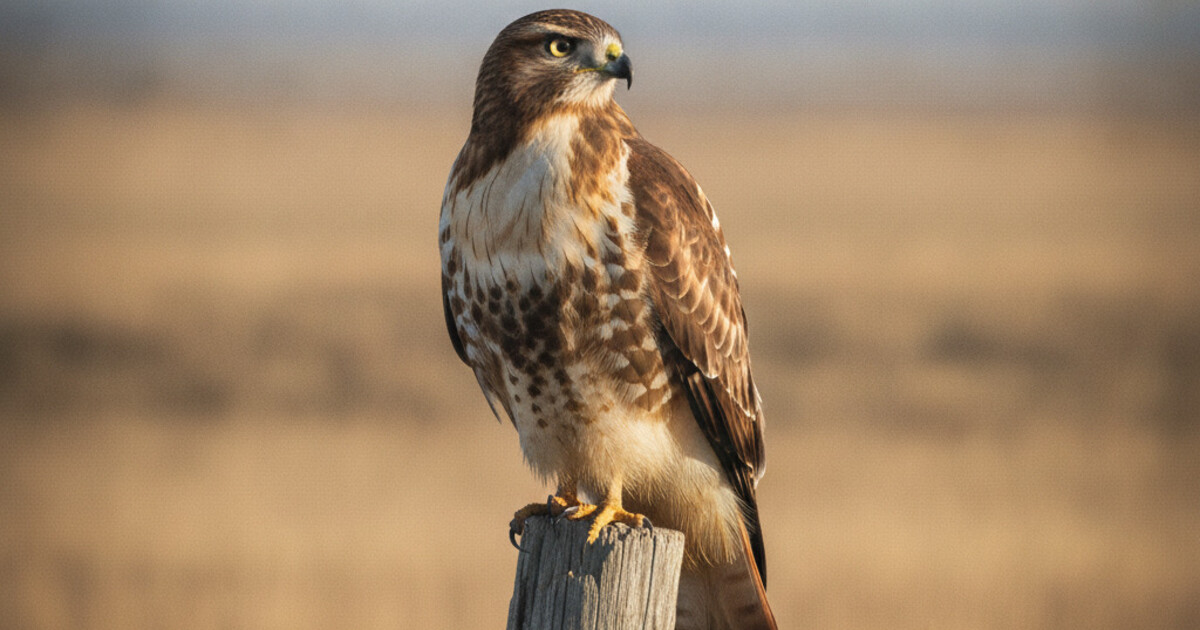
A hawk lands on the fence post at the edge of your yard. It’s bigger than any songbird you see out there, and it just sits, watching the lawn. You want to know which hawk it is, but a quick flip through a field guide gives you 15 species and half a dozen that look nearly identical.
Hawk identification gets easier once you learn two things: the group the bird belongs to, and the handful of field marks that separate the most common species. North America has about 14 resident and migratory hawk species you might realistically encounter. This guide walks through all of them, starting with the ones you’re most likely to see.
To identify a hawk, start with size and wing shape. Broad, rounded wings and a short fanned tail point to a buteo like the Red-tailed Hawk. Long narrow wings with a flat-winged glide near the ground suggest a harrier. Short rounded wings and a long tail are the accipiter pattern: Cooper’s or Sharp-shinned Hawk, the pair most likely to hit your backyard feeder.
The 3 Hawk Groups (and Why They Matter for Identification)
North American hawks divide into 3 families that account for roughly 95% of hawk sightings: buteos (broad wings, wide tails, soaring specialists), accipiters (short rounded wings, long tails, forest specialists), and harriers (long narrow wings, flat-faced, grassland coursers). The United States hosts about 14 resident and migratory hawk species. Buteos are the most commonly seen: the Red-tailed Hawk breeds across all 49 continental states and much of Canada, making it the default hawk most people see on roadside fence posts and utility poles. Accipiters hunt woodland edges and often appear at backyard feeders hunting songbirds. Cooper’s Hawk and Sharp-shinned Hawk look so similar that experienced birders frequently miss the ID on perched birds; U.S. Breeding Bird Survey data shows Cooper’s Hawk has expanded into suburban areas at roughly 1.7% annually since the mid-1980s. Harriers are grassland birds, nearly always flying low in a tilting, wing-rocking glide that no other North American hawk copies.
Once you slot the bird into one of these groups, you’ve eliminated most of the species on the list.
Buteos are the soaring hawks. They ride thermals in high, slow circles with broad, fanned wings. Red-tailed, Red-shouldered, Broad-winged, and Ferruginous Hawks are all buteos.
Accipiters are the dashing woodland hawks. They fly with a distinctive flap-flap-glide pattern, pumping their short wings in quick bursts, then sailing briefly. Cooper’s and Sharp-shinned are the two you’ll see most often.
Harriers look like neither of the above. The Northern Harrier has an owl-like facial disc, a bright white rump patch visible the moment it turns, and flies low over open ground in a tilting glide. That white rump eliminates every other North American hawk in half a second.
Red-Tailed Hawk Identification: The Most Common Species
If you see a hawk in North America and aren’t sure which one, bet on Red-tailed. It’s the default. You’ll find them perched on highway signs, utility poles, and fence posts from southern Alaska to Central America.
The field marks are stacked in your favor on this one.
The belly band is a band of brown streaking across the lower chest that creates a horizontal dark stripe on an otherwise pale bird. Not every Red-tailed shows it equally. Birds in the western United States can run considerably darker overall, but the typical eastern bird wears it clearly.
The rusty red tail clinches the ID on adults. From above, the tail is a warm orange-red. From below it looks paler, almost pink, but in direct sunlight it’s unmistakable. Young birds (hatched that year) lack the red tail and show a brown barred tail instead, which is where IDs get harder.
Patagial marks: On soaring Red-taileds, dark comma-shaped marks appear on the leading edge of the wing near the body. These show on both light and dark morphs and are visible in good light even at distance.
Size helps too. Red-tailed Hawks are large, crow-sized in bulk, with a wingspan of 45 to 52 inches. A big soaring buteo near a highway is Red-tailed until proven otherwise.
The Accipiter Problem: Cooper’s Hawk vs Sharp-Shinned Hawk
These two are the toughest common identification challenge in North American birding. Even careful observers hedge on perched birds.
Cooper’s Hawk is larger, roughly crow-sized. Perched, the head looks big and projects noticeably in front of the shoulders. The tail tip is rounded (the key mark, though worn feathers can blur this by late summer). In flight, the head sticks out well in front of the wings, giving the bird a “flying cross” look.
Sharp-shinned Hawk is smaller, closer to a jay or a large robin. The head barely clears the wrist in flight. The tail tip is square, sometimes notched.
Four things that work in the field:
- Size comparison. If other birds are nearby, use them. A Cooper’s next to a crow looks close in size. A Sharp-shinned next to a crow looks small.
- Tail tip. On a perched bird, look straight at the tail: rounded = Cooper’s, square = Sharp-shinned. (Fails on heavily worn birds in late summer.)
- Head projection. In flight, Cooper’s shows more head in front of the wings. Sharp-shinned looks front-light.
- Wingbeat. Cooper’s beats are slightly slower and stiffer. Sharp-shinned flaps in quicker bursts. Hard to use alone, but helpful when paired with size.
Both species hunt bird feeders, which is where most people encounter them. A brown streak from the sky that scatters your finches is probably one of these two.
Four More Hawks Worth Knowing
Red-shouldered Hawk. A medium buteo with a forest address. Look for a strongly banded black-and-white tail and a chest barred in rufous-red. It calls loudly (a repeated, raspy kee-yah) and screams from within the tree canopy more than most hawks. Common in the eastern United States and along the California coast.
Broad-winged Hawk. A small buteo, robin-to-crow sized, with a sharply banded tail (bold black and white, 2 to 3 bands) and a rufous chest. Mostly visible during migration, sometimes in enormous kettles of thousands of birds spiraling on thermals in September. Outside migration, it stays deep in eastern forests and rarely shows itself.
Northern Harrier. Unmistakable once you know it. It flies low over open ground with wings held in a shallow V, called a dihedral. The white rump patch shows on every individual. Males are pale gray with black wingtips; females and immatures are streaked brown. The flat, owl-like face turns toward you as it courses by.
Ferruginous Hawk. The largest buteo in North America, found in western grasslands and shrubsteppe. Adults show a rusty back, white underparts, and a dark V formed by dark leg feathers against a pale belly in flight. The wingspan reaches up to 56 inches and the pale head looks enormous compared to eastern buteos.
Hawk Identification in the Field: Silhouette, Flight, and Habitat
Most hawk identifications start with a shape in the sky, not a close perch view. Silhouette is your most reliable tool at distance.
Quick silhouette checklist:
- Wing width at the body vs. the tips (pinched base = accipiter; broad = buteo)
- Tail shape (short and fanned = buteo; long and banded = accipiter)
- Head size (barely visible = Sharp-shinned; large cap = Cooper’s; owl-faced = harrier)
Habitat narrows the field fast. A soaring hawk circling high over a highway median is almost certainly a buteo. A fast-moving hawk threading through neighborhood trees at feeder level is almost certainly a Cooper’s. A hawk gliding low over an open marsh, rocking side to side, is a Northern Harrier.
Season helps too. Broad-winged Hawks are scarce outside September migration kettles. Northern Harriers are far more common on the eastern seaboard in winter. A large pale buteo in January in Kansas puts Ferruginous on the list in a way it wouldn’t be in July.
When the bird is gone before you can work through the field marks, a photo is the next step. Animal Identifier lets you photograph a hawk and get a species ID within seconds. The follow-up chat is particularly useful here: you can ask “is this a Cooper’s or Sharp-shinned?” and the app walks through the field marks visible in your photo to explain the call. Two free identifications per day, no account needed.
For practice separating hawks from falcons before you get into the species level, our hawk vs falcon guide covers the structural differences between the two groups: wing shape, flight style, and the fastest visual checks.
Frequently Asked Questions
How do I identify a hawk in my backyard? Most backyard hawks are accipiters: Cooper’s Hawk or Sharp-shinned Hawk. Look for a medium-sized bird with short rounded wings, a long banded tail, and a flap-flap-glide flight pattern. Cooper’s is crow-sized with a rounded tail tip; Sharp-shinned is jay-sized with a square tail tip. Both hunt songbirds at feeders and move fast through trees.
What is the most common hawk in North America? The Red-tailed Hawk is the most widespread and commonly seen hawk in North America. It breeds across every continental US state and most of Canada. On adults, the rusty red tail is the clincher. On perched birds, look for the dark belly band, a horizontal stripe of brown streaking across the lower chest on an otherwise pale underside.
How do I tell a hawk from a falcon? Wing shape is the fastest check. Falcons have long, pointed, swept-back wings; hawks have broader, more rounded wings. Falcons also tend to flap faster in powered flight. Our hawk vs falcon guide covers the full breakdown of field marks, including the notched beak, head shape, and hunting style differences.
What hawk has a white rump patch? The Northern Harrier is the only common North American hawk with a bright white rump patch. It’s visible the moment the bird turns, even at distance. Harriers also fly low over open ground (meadows, marshes, farm fields) in a distinctive rocking, tilting glide with wings in a shallow V, a flight style no other hawk here copies.
Can an app help with hawk identification from a photo? Yes. A photo-based identification app works well when you got a reasonably sharp photo of a perched or soaring bird. Animal Identifier uses AI to identify the species and can explain which field marks it used, which helps when you’re trying to learn the difference between tricky lookalikes like Cooper’s and Sharp-shinned Hawks. It’s free to start with 2 identifications per day and covers hawks, falcons, and other raptors worldwide.
The next time a hawk lands in view, run through two questions: is it soaring broadly (buteo) or dashing through trees (accipiter) or gliding low over open ground (harrier)? Then look at tail shape and head size to lock in the species. Most of the time, that two-step process gets you there. When it doesn’t, Animal Identifier can work through the field marks from your photo.