Small Brown Birds: The Complete Identification Guide
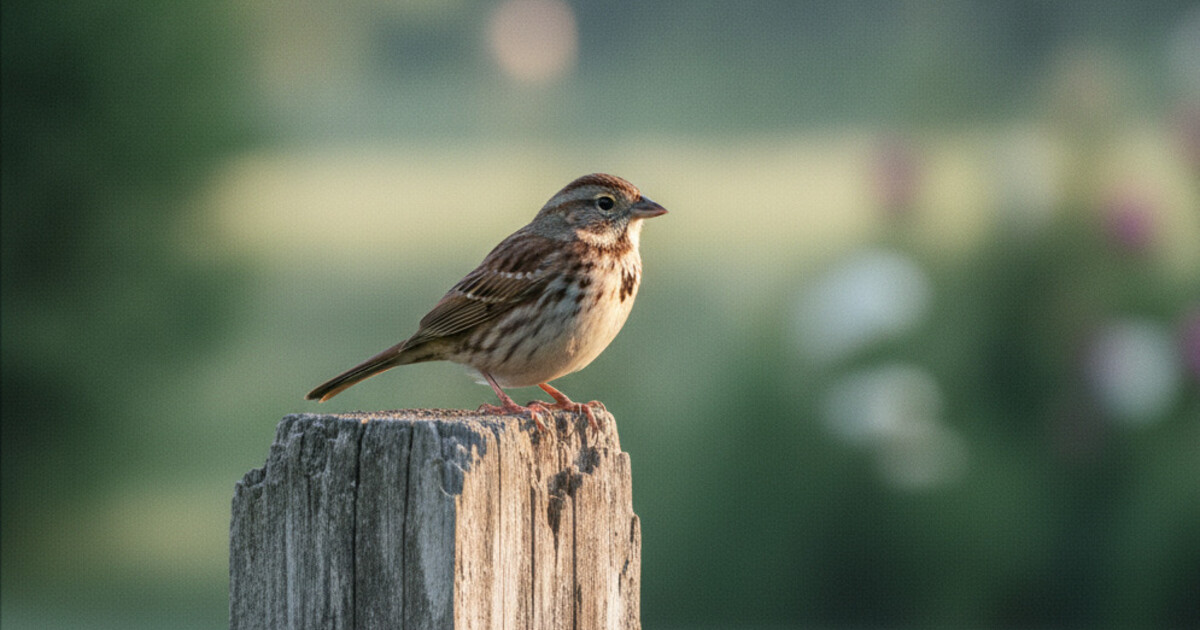
Birders have a nickname for them: LBJs, short for Little Brown Jobs. You spot something in the hedge, brown all over, gone before you could focus. Small brown birds are some of the most common backyard visitors in North America, and some of the hardest to name on a quick glance. Once you know which details matter, most species separate cleanly. This guide covers the key field marks: bill shape, breast pattern, eye stripe, and tail posture, applied to the 8 species you’re most likely to encounter in a North American yard.
Small brown birds in North America include sparrows, wrens, and a few creepers and thrushes. The key to separating them is bill shape (thick and triangular for sparrows, thin and curved for wrens), breast pattern (streaked, spotted, or plain), and tail posture. A clear photo makes identification much faster than color alone.
The Four Field Marks That ID Small Brown Birds
Size alone won’t get you far. A House Sparrow and a House Wren both fit in your palm, both flash brown when they move, both land at the edge of the yard. The field marks that split them are four:
Bill shape. Sparrows carry a short, thick, cone-shaped bill built to crack seeds. Wrens have a slim, slightly curved bill suited for picking insects out of bark and crevices. That one difference tells you the bird’s family before you check anything else.
Breast pattern. Look for streaks (most sparrows), a central dark spot (Song Sparrow), or a plain buff breast (most wrens). A clean, unstreaked breast on a small brown bird cuts your list of candidates fast.
Eye stripe. A pale line over the eye, called a supercilium, is bold in Carolina Wrens and visible in female House Sparrows. Its absence is equally useful: no eye stripe and no streaking, and the field narrows quickly.
Tail posture. Wrens often cock their tail sharply upward while perched, especially when alert. Sparrows hold theirs level or droop it slightly. A small brown bird with its tail stuck up at roughly 45 degrees is almost certainly a wren.
The most common small brown birds in North America span 3.1 to 6.7 inches. House Sparrows (5.8 in. average), introduced to Brooklyn in 1851, now number roughly 540 million across the continent; females are the plain brown bird at most feeders, with buff streaks on the back and a pale eye stripe. Song Sparrows (4.7 to 6.7 in.) are the most geographically variable passerine on the continent, with 52 recognized subspecies; their central breast spot, set against streaked sides, is the field mark to find first.
House Wrens (4.3 to 5.1 in.) appear warm buff-brown with faint wing barring; they almost always cock the tail above the body line, separating them from sparrows at a glance. Carolina Wrens (5.5 in.) carry a bold white supercilium and rufous-brown upperparts distinct enough to name in poor light. Brown Creepers (4.7 to 5.5 in.) match bark so precisely they’re routinely overlooked; they always spiral upward on a trunk before dropping to the base of the next tree.
Small Brown Sparrows at Your Feeder
Sparrows make up the largest part of the small brown bird problem. More than 35 native sparrow species live in the US, many of them brown, many overlapping in range. The ones below account for most of what you’ll actually encounter.
House Sparrow (female). The default brown bird at most suburban feeders. She’s 5.5 to 6.3 inches long with a streaked brown back, buff underparts, and a distinct pale stripe behind the eye. Males carry a gray crown and black bib; females show none of that. House Sparrows nest in cavities and crevices near buildings and stay year-round across the entire contiguous US.
Song Sparrow. Slightly smaller than a House Sparrow, with a heavily streaked breast that converges into a central dark spot on the chest. Find that spot first. Song Sparrows are among the most variable birds on the continent, ranging from pale gray-brown in the desert Southwest to deep rusty-brown in the Pacific Northwest.
Lincoln’s Sparrow. A subtler bird that passes for a Song Sparrow at first glance. Lincoln’s is slightly smaller, with finer and crisper streaking and a noticeable buff wash across the chest. There’s also a thin buff mustache stripe along the jaw. Lincoln’s migrates through most of the US in spring and fall; it breeds across Canada and the mountain West.
Swamp Sparrow. A wetland bird, so habitat is the first clue. Swamp Sparrows have a rusty cap, gray face, and a mostly plain gray breast with faint flank streaking. If you’re nowhere near a marsh or wet shrubby edge, you’re probably looking at something else.
Small Brown Wrens
Wrens are insect eaters that bounce through shrubs and brush piles with far more energy than sparrows. The upright tail is the first thing to notice.
House Wren. The plain, warm buff-brown wren you’re most likely to see at a nest box or poking through a brush pile. House Wrens are 4.3 to 5.1 inches long with faint dark barring on the wings and tail but no obvious eye stripe. They cock their tail at a steep angle when agitated and move in quick, jerky bursts. House Wrens arrive in spring across most of the US and leave by fall; in the deep South and along the Pacific coast, they winter.
Carolina Wren. Bigger than the House Wren at 5.5 inches, and much easier to name once you know the pattern: rich rufous-brown above, warm buff below, with a long bold white stripe over the eye. Carolina Wrens don’t migrate. They stay put year-round in the eastern half of the US, and they’re loud, producing a rolling call that sounds far too big for such a small bird.
Winter Wren. Very small at 3.1 to 4.7 inches, almost absurdly round, with a stub of a tail and dark-brown barring throughout. Winter Wrens hug the ground in dense undergrowth, especially near fallen logs and stream banks. They breed in coniferous forests across the northern US and Canada and winter at lower elevations. If something tiny and dark flicks through the leaf litter near a log, this is worth checking.
Small Brown Birds Away From the Feeder
A few brown birds of similar size live in different habitats and need a separate search image entirely.
Brown Creeper. The Brown Creeper is 4.7 to 5.5 inches long and almost never found away from trees. Its bark-patterned back and pale underparts make it vanish against the trunk it’s climbing. Creepers move only upward, spiraling from the base toward the crown, then flying to the base of the next tree to start again. Once you recognize the motion pattern, you’ll spot them regularly in winter woodlands.
Hermit Thrush. Slightly larger than a sparrow at 5.5 to 7.1 inches, and strictly ground-level in its foraging. The Hermit Thrush has a warm brown back and a spotted breast, but the tail is distinctly rufous while the back is cooler in tone. It pumps its tail slowly upward, then lowers it, which no sparrow does. Found in forest understory in winter throughout much of the US.
A note on winter arrivals: many small brown birds that appear only in October or November are migrants from farther north. If you’ve never seen a particular bird at your feeder before, check the seasonal range before settling on an ID.
For birds with yellow in their plumage rather than plain brown, the small yellow birds guide covers goldfinches, warblers, and their lookalikes. For high-contrast patterned birds, the black and white birds guide covers the most common ones.
How Animal Identifier Helps With Small Brown Birds
Small brown birds are exactly where a photo-based identification tool earns its place. Keeping field marks for 8 similar species in your head while the bird is still in the shrub is a lot to ask.
With Animal Identifier, you photograph the bird and get the species back in seconds, along with habitat, behavior, and diet details. After the identification, the app’s chat lets you ask follow-up questions: “How does this differ from a Song Sparrow?” or “Is this bird around in winter?” — the kind of question that needs more than a static field guide entry.
The app covers mammals, birds, reptiles, and insects worldwide, so it works beyond backyard sparrows. Two free identifications a day, no account required to start.
Frequently Asked Questions
What is the most common small brown bird in backyards?
The House Sparrow female is the most common small brown bird at North American feeders. She’s 5.5 to 6.3 inches long, plain brown above with a buff eye stripe, streaked back, and no distinctive breast markings. House Sparrows are year-round residents across the contiguous US and will nest in any gap or cavity they can find near a building.
How do I tell a sparrow from a wren?
Bill shape splits them fastest. Sparrows carry a short, thick, cone-shaped bill built for cracking seeds. Wrens have a slim, slightly curved bill for probing insects out of bark. Tail posture helps too: wrens often hold their tail cocked upward at a steep angle, while sparrows keep theirs level or drooped. Both groups come in similar shades of brown, so checking the bill first saves a lot of time.
What small brown bird has a spot on its chest?
A dark central spot on an otherwise streaked breast points to a Song Sparrow. Song Sparrows are common across most of North America year-round, vary widely in color by region, and almost always show that central breast spot against the surrounding streaks. A more cleanly spotted breast on a larger bird is the Hermit Thrush, which also has a rufous tail and forages on the ground rather than at feeders.
What small brown bird cocks its tail straight up?
Tail-cocking in small brown birds means wren. House Wrens, Winter Wrens, and Carolina Wrens all hold their short tail at a steep upward angle, particularly when alert or disturbed. If you see a small brown bird with its tail nearly vertical while it bounces through brush or a log pile, it’s almost certainly a wren.
Is the brown bird at my feeder a House Sparrow or a House Finch?
Female House Finches are streaked brown but finely built, with a longer, slightly curved bill compared to the thick and blunt bill of a House Sparrow. House Finches also have a plain face with no eye stripe; House Sparrow females carry a pale buff stripe over and behind the eye. Body shape helps too: House Sparrows are chunkier and more barrel-chested than finches.
Stuck on a brown bird in your yard? Photograph it with Animal Identifier for a quick species name, habitat background, and follow-up chat about what you’re seeing. Available on iOS and Android, with 2 free identifications a day and no account required.