Caterpillars in Michigan: Identification and Poisonous Species
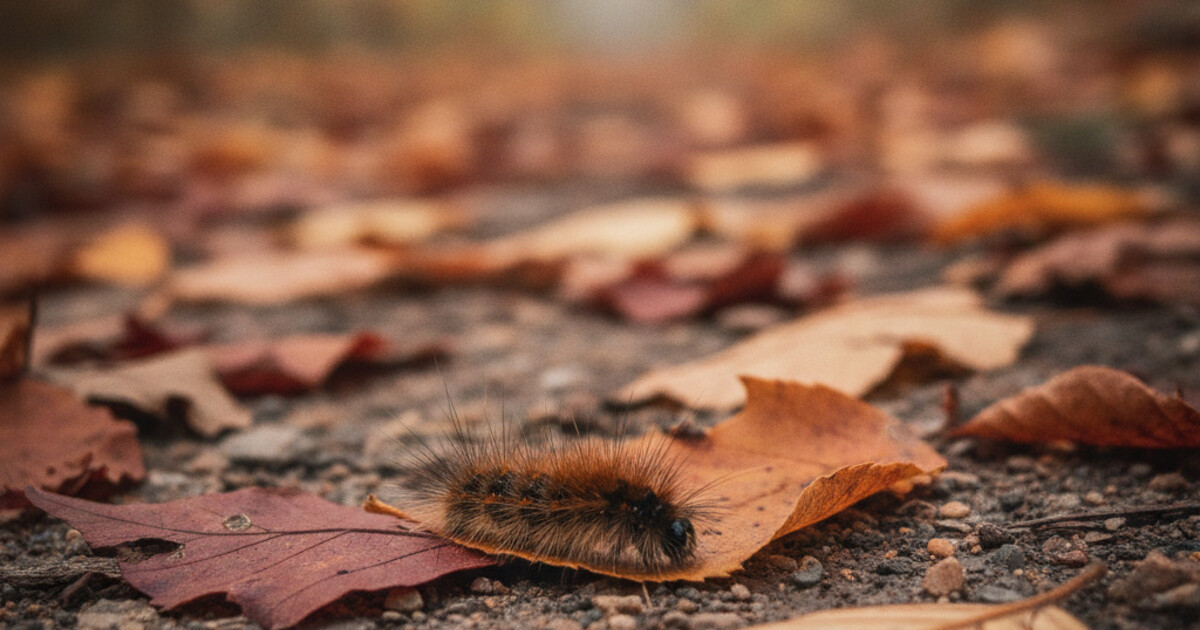
Michigan is one of the most caterpillar-rich states in the country. With 19.3 million acres of forest and more than 1,400 moth and butterfly species on record, the state runs a steady parade of larvae from May through early October. Woolly bears cross roads in September, eastern tent caterpillars web up cherry trees in May, and bright green luna moth larvae cling to birch branches in July. Most caterpillars in Michigan fall into a handful of groups, and identification gets much easier once you know which field marks to check.
Four clues unlock most identifications: body covering (bare, fuzzy, or spiny), color pattern (stripes, spots, or solid), host plant, and time of year. A caterpillar with four cream tufts in a row on its back, feeding on oak in August, is almost certainly a white-marked tussock moth. A fuzzy black-and-rusty caterpillar crossing the sidewalk in October is almost certainly a woolly bear. Those shortcuts cut the list fast.
The most common Michigan caterpillars are the woolly bear, eastern and forest tent caterpillars, luna moth larva, spicebush swallowtail, hickory and white-marked tussock moths, and Io moth. Identification relies on four clues: body covering, color pattern, host plant, and season. A close-up photo resolves most cases quickly.
How to Identify Caterpillars in Michigan
Michigan’s 19.3 million acres of forest support more than 1,400 moth and butterfly species documented by the Michigan Entomological Society, producing a caterpillar season from May through September. The eastern Lower Peninsula, with its oak-hickory lowlands and maple-beech uplands, holds the broadest species diversity, but woolly bears (Pyrrharctia isabella) and eastern tent caterpillars (Malacosoma americanum) range across every county. Michigan DNR tracks forest tent caterpillar (Malacosoma disstria) populations each spring; multi-year outbreaks in the Upper Peninsula have defoliated millions of acres of aspen and sugar maple, the most severe peaking in the 1990s and again in the early 2010s. Most Michigan caterpillars are safe to observe closely, but Io moth larvae (Automeris io), saddleback caterpillars, and some tussock moths carry spines or hairs that cause skin irritation. Identifying a caterpillar from a photo, cross-referenced against its host plant and your county, gives you the fastest reliable answer.
Start with body covering. Smooth, bare caterpillars include the luna moth larva (bright green, up to 3.5 inches) and the spicebush swallowtail (green with large false eyespots). Fuzzy species include the woolly bear and hickory tussock moth. Colonial caterpillars (those found in clusters rather than alone) are almost always one of the two tent caterpillar species.
Host plant is the second shortcut. Monarch caterpillars eat milkweed exclusively. Spicebush swallowtail larvae live on spicebush and sassafras. Eastern tent caterpillars cluster on wild cherry, apple, and crabapple. Matching a caterpillar to its food plant eliminates most lookalike pairs before you’ve opened a field guide.
Woolly Bear: Michigan’s Most Recognized Caterpillar
Few caterpillars are as instantly recognizable as the woolly bear. Its dense banding pattern (black at both ends, rusty brown in the middle) and fall road crossings make it one of the most-encountered caterpillars in Michigan.
The woolly bear is the larva of the Isabella tiger moth (Pyrrharctia isabella). It has 13 body segments and feeds on a wide range of low-growing plants: plantains, clovers, dandelions, and grasses. That generalist diet explains why woolly bears turn up in gardens, yards, and roadsides across Michigan from August through October, when they wander in search of overwintering spots under bark or leaf litter.
The folk belief that the width of the rusty band predicts winter severity doesn’t hold up to measurement. Band width reflects the caterpillar’s age and health during the current season, not the coming one. The prediction has been popular in the US since the 1950s but has never shown a consistent correlation in controlled studies.
Two lookalikes turn up in Michigan. The yellow woolly bear (Spilosoma virginica) is all white or pale yellow with no dark ends. The hickory tussock moth caterpillar is also fuzzy but has distinct pencil-like white tufts and scattered black markings rather than the woolly bear’s solid banded pattern.
Tent Caterpillars in Michigan: Eastern and Forest
Two tent caterpillar species live in Michigan, and both can reach outbreak densities that strip trees bare. They look similar as young larvae but diverge clearly by mid-growth.
Eastern tent caterpillar (Malacosoma americanum) builds its silken tent in the crotch of a branch rather than at the branch tip. Colonies typically hold 200 to 400 caterpillars, which use the tent as a home base and return to it each morning and evening. Host trees are almost entirely in the rose family: wild cherry, apple, and crabapple.
Mature caterpillars reach about 2.5 inches and show a white dorsal stripe on a dark body with pale blue spots along each side. Michigan residents see them from mid-April through June.
Forest tent caterpillar (Malacosoma disstria) is the bigger forest pest, especially in the Upper Peninsula. Despite the name, it builds no tent. Larvae cluster on bark when resting but feed individually at branch tips.
The identifying mark is a row of white keyhole or footprint shapes running down the blue-black dorsum. Primary Michigan hosts are aspen, sugar maple, and basswood. Severe outbreak years produce so many caterpillars that roads in affected areas turn slippery from crushed larvae.
Smooth Green Caterpillars: Luna Moth and Spicebush Swallowtail
Michigan’s smooth green caterpillars are among the most striking in the state, and both grow large enough to notice by midsummer.
The luna moth larva (Actias luna) is lime green from head to tail, up to 3.5 inches at its final instar, with a pale lateral stripe and small red-orange spots at the base of each raised segment. Host trees include birch, alder, walnut, cherry, and hickory, all common in Michigan. Luna moth caterpillars are present from June through August.
The species is single-brooded in the Upper Peninsula and double-brooded in the Lower Peninsula, so timing depends on where you are in the state.
The spicebush swallowtail caterpillar (Papilio troilus) mimics a snake. Early instars are brown and white, resembling bird droppings. Final instars are vivid green with a pair of orange-and-black false eyespots just behind the head, and you’ll find them on spicebush (Lindera benzoin) and sassafras, often tucked inside a leaf rolled up with silk.
Monarch caterpillars (Danaus plexippus) are also a Michigan staple on milkweed from late June through August. Their yellow-and-black striping and milkweed host plant make them easy to confirm. For a closer look at yellow-and-black species, see our yellow and black caterpillar guide.
Hairy and Stinging Caterpillars in Michigan
Several Michigan caterpillars have hairs or spines that irritate skin. None are medically dangerous for healthy adults, but the Io moth is worth knowing before you reach for one.
The hickory tussock moth caterpillar (Lophocampa caryae) is white with scattered black tufts along the body and two long black hair pencils at each end. It feeds on hickory, walnut, ash, and elm across southern Michigan from July through September. The white hairs cause mild skin irritation or a localized rash on contact, particularly for people with sensitive skin.
The white-marked tussock moth caterpillar (Orgyia leucostigma) has a more distinctive look: four dense cream or white tufts sitting in a row on the back, a red head, and tufts of black hairs at each end. It feeds on a wide range of deciduous trees, including oak, maple, elm, and apple. The hairs on this species can cause dermatitis on contact and it’s common across Michigan from late July through September.
The Io moth caterpillar (Automeris io) is the one to approach most carefully. Bright green with a white and red lateral stripe, it’s covered in clusters of branching green spines. Each spine is hollow and connected to a venom gland at the base.
Contact feels like a bee sting: sharp, localized pain with redness and swelling lasting one to two hours. Io moth caterpillars feed on corn, cherry, willow, and many other plants. They’re present from June through August across southern Michigan.
The hickory tussock and white-marked tussock are both hairy rather than spined, and Michigan has several more of that type — our guide to white fuzzy caterpillars covers how to tell the harmless fuzzy species from the ones that actually irritate skin. If what you found was covered in stiff branching spines rather than soft hair, the guide to spiky caterpillars works through the stinging species across North America, Io moth included.
Not sure which app to reach for in the field? We compared the options in best caterpillar identification apps.
For moth species that turn up inside homes rather than on trees, see our house moth identification guide. If you’re finding larvae in a pantry or closet instead of a garden, moth larvae identification is the better starting point.
How Animal Identifier Can Help
When you’ve got a caterpillar in front of you and none of the field marks are adding up, a photo is the fastest next step. Animal Identifier lets you photograph the caterpillar and returns a species identification in seconds, covering moths and butterflies across Michigan’s full range.
After the ID, the app’s follow-up chat lets you ask specific questions: “Is this safe to handle?”, “What moth or butterfly does this turn into?”, or “What plants does it eat?” The chat stays scoped to animals and won’t go off-topic.
Animal Identifier is free to start, with 2 identifications per day and no account required. It’s available on iOS and Android. Open it the next time you find a caterpillar you can’t place.
Frequently Asked Questions
Are there poisonous caterpillars in Michigan?
Not in the way most people mean. No caterpillar in Michigan is poisonous to touch in the sense of being toxic through skin, and none will hurt you if you leave it alone. What the state does have is a handful of stinging species — caterpillars with hollow spines or barbed hairs that release an irritant when pressed against skin. The result is a burning welt, not a poisoning. A few species are genuinely toxic if eaten, which matters mainly for pets and small children. The ones worth recognizing are covered above.
When is caterpillar season in Michigan?
Michigan caterpillar season runs from May through early October, with peak diversity in July and August. Spring species like the eastern tent caterpillar appear first, typically in late April. Woolly bears are most visible in September and October as they search for overwintering spots. Most moth larvae, including luna moths and Io moths, peak in midsummer.
What is the fuzzy caterpillar I found in Michigan?
The most common fuzzy caterpillar in Michigan is the woolly bear (Pyrrharctia isabella), with black ends and a rusty brown mid-band. Other fuzzy Michigan species include the hickory tussock moth (white with black tufts and two black hair pencils at each end) and the white-marked tussock moth (four cream tufts in a row on the back, red head). All three are found statewide.
Are any caterpillars in Michigan dangerous?
Most Michigan caterpillars are harmless. Three cause skin irritation: the Io moth caterpillar (hollow stinging spines that feel like a bee sting), the white-marked tussock moth (irritating hairs), and the hickory tussock moth (mildly irritating white hairs). None are life-threatening to healthy adults. Nudge any unidentified fuzzy or spiny caterpillar onto a stick rather than picking it up bare-handed.
What does a woolly bear predict about winter?
The folk belief holds that a wider rusty band means a milder winter. Studies haven’t found a consistent correlation. Band width reflects the caterpillar’s age and health during the current season, not upcoming weather. The prediction grew popular in the US after a naturalist at the American Museum of Natural History tracked woolly bears in the 1950s and found a coincidental pattern over several seasons.
How do I identify a caterpillar I found in Michigan?
Look at four things: body covering (smooth, fuzzy, spiny, or tufted), color pattern (stripes, spots, or solid), the plant it’s eating or resting on, and the time of year. Those four clues together eliminate most lookalike pairs. If you have a clear close-up photo, Animal Identifier can return a species-level ID in seconds.