White Fuzzy Caterpillars: Identification and Sting Risk
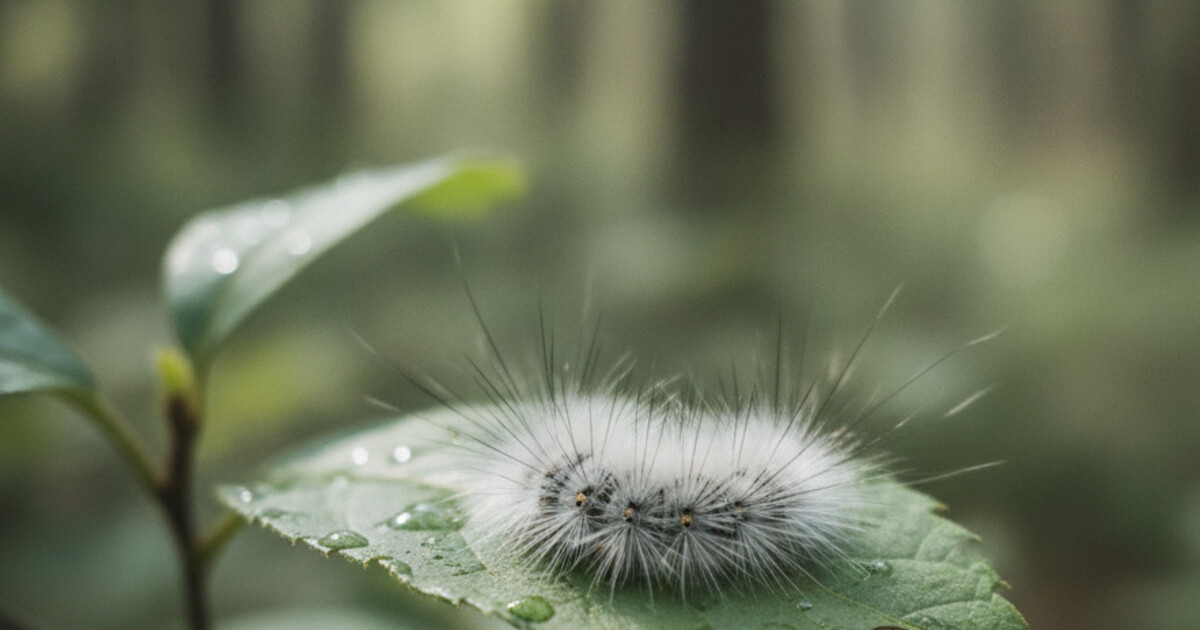
You find a white fuzzy caterpillar on your sleeve, a garden fence, or a low-hanging branch and you’re not sure whether to pick it up. Most white fuzzy caterpillars are completely harmless.
A few carry hollow bristle hairs that break off on contact and embed in skin, causing a red, itchy rash that can appear within minutes and last several days. Knowing which is which comes down to a handful of visible field marks you can read from a safe distance.
This guide covers the five most commonly seen white fuzzy caterpillars in North America: which ones irritate skin, which are safe to handle, and the specific field marks that separate them. White fuzzy caterpillar identification gets a lot clearer once you know exactly where to look.
White fuzzy caterpillars in North America include both harmless and stinging species. The Hickory Tussock Moth caterpillar (Lophocampa caryae) has black tufts at each end and 2 black pencil hairs on its back; contact causes skin irritation. The all-white Virginian Tiger Moth caterpillar has no black markings and is completely harmless.
White Fuzzy Caterpillar Identification: Key Field Marks
“White and fuzzy” alone doesn’t narrow it down much. Two caterpillars can look nearly identical from a foot away and behave very differently on contact. Three details do the sorting: hair arrangement, black markings, and host plant.
Hair arrangement: Dense, even fur covering the body uniformly points to a tiger moth caterpillar, which is almost always safe to handle. Tufted hair in distinct upright clumps, especially if arranged in rows or at specific points like the head, tail, or back, suggests a tussock moth or dagger moth, which may irritate skin.
Black markings: Any black tufts, black pencil hairs (tall, stiff hairs rising above the white fur), or black spots near the head or tail are the main warning signs. A caterpillar with no black markings anywhere is much more likely to be harmless.
Host plant: White fuzzy caterpillars found on hickory, walnut, oak, or maple are more likely to be stinging species. Caterpillars on grass, clover, or garden weeds are almost certainly tiger moths.
The most commonly encountered white fuzzy caterpillar in eastern North America is the Hickory Tussock Moth caterpillar (Lophocampa caryae), found from Quebec south to Texas and west to the Great Plains. It reaches 1.5 to 2 inches at maturity and carries dense white tufts along its body, with a distinctive cluster of black tufts at each end and 2 black pencil hairs rising from the middle segments. Its setae (bristle hairs) break off and embed in skin, causing contact dermatitis: a red, itchy rash that appears within minutes to hours of contact.
The Virginian Tiger Moth caterpillar (Spilosoma virginica) looks superficially similar but has no black tufts and is completely harmless to handle. Caterpillars of both species are most active from July through October. In its final instar, the Hickory Tussock caterpillar reaches about 1.75 inches before spinning a fuzzy gray cocoon on tree bark or a fence post.
White Fuzzy Caterpillars That Can Irritate Skin
Three species are worth knowing for their irritation or sting risk.
Hickory Tussock Moth Caterpillar (Lophocampa caryae)
The most frequently encountered stinging white fuzzy caterpillar in the eastern US. Its white body is densely covered in tufts, with a cluster of black tufts at both the head and tail end. Two long black pencil hairs jut up from the midsection.
Those hairs are hollow, break off easily, and embed in skin, triggering contact dermatitis in many people. Reactions range from mild itching to a raised red rash to significant swelling in those who are sensitive to the proteins in the setae. In late fall, it spins a gray fuzzy cocoon and overwinters as a pupa, emerging as an adult moth in late spring.
It feeds on hickory, walnut, and ash across eastern North America, with peak season from late July through September. Avoid direct contact and use a stick or gloves if you need to move one.
American Dagger Moth Caterpillar (Acronicta americana)
All-white body with long, soft lateral tufts and 4 shorter black pencil hairs rising from the back. The black pencil hairs are the distinguishing mark. They look almost ornamental but break off on contact and cause the same type of contact dermatitis as the Hickory Tussock.
The American Dagger feeds on oaks, maples, and birches across eastern North America, most visibly from late summer through fall. Mature caterpillars reach about 1.5 to 2 inches.
White-marked Tussock Moth Caterpillar (Orgyia leucostigma)
More colorful than the other two, with a red head, a yellow-and-black stripe along the sides, and 4 distinctive white “toothbrush” tufts standing upright on the back. Red dots appear near the tail. Skin contact with the tufts can irritate sensitive individuals, though the reaction is typically milder than with the Hickory Tussock.
It’s widespread across eastern North America and feeds on a long list of deciduous trees including maple, oak, elm, and apple.
White Fuzzy Caterpillars That Are Safe to Handle
Two of the most common white fuzzy caterpillars cause no irritation at all.
Virginian Tiger Moth Caterpillar (Spilosoma virginica)
Often called the yellow woolly bear, though it’s usually white to pale cream. The body is covered in dense, even, soft hair with no tufts, no pencil hairs, and no black markings. It looks like a small white pompom moving across a leaf or along the ground.
This is one of the most frequently seen caterpillars in North America. It feeds on a very wide range of low-growing plants, garden vegetables, and weeds, which is why it turns up almost everywhere. Mature size is roughly 1 to 1.5 inches.
You can pick it up with bare hands. It overwinters as a pupa and emerges in spring as the Virginia tiger moth: a plain white moth with small black spots on the wings.
Fall Webworm Caterpillar (Hyphantria cunea)
Pale whitish to light green with fine, short hair and a row of small darker spots along the sides. Fall webworms live in clusters inside large silk tents that cover branch tips, most visibly from August through October. Outside the tent, they look like pale, lightly fuzzy caterpillars with unremarkable coloring.
They’re harmless to handle. The tents are unattractive and can strip branch tips on ornamental trees, but they rarely threaten a healthy mature tree. Fall webworm has two generations per year in the southern US and one in the north; the silk tent breaks down on its own after the caterpillars pupate.
How to Tell White Fuzzy Caterpillars Apart in the Field
When you’re looking at one and need a quick answer, work through these checks:
- Black markings? Any black tufts, pencil hairs, or spots at the ends of the body are warning signs. Handle with caution until you’ve confirmed the species.
- Hair type? Dense and even all over means likely a tiger moth and almost certainly safe. Tufted in distinct upright clumps means tussock or dagger moth: don’t handle.
- Host plant? Hardwoods like hickory, oak, maple, or walnut suggest potentially irritating species. Grasses and garden weeds point toward tiger moths.
- Red head? A red head combined with white toothbrush tufts and a yellow-black body stripe is the White-marked Tussock Moth caterpillar.
If the marks don’t resolve the ID clearly, a photo will get you much further. Animal Identifier can identify a caterpillar from a single photograph and return the species name along with habitat and handling information. Photograph it clearly against the leaf or surface it’s resting on for the cleanest result.
For caterpillars with spines rather than fluffy tufts, the guide to spiky caterpillars covers stinging species with branched or bristled spines. If what you spotted is yellow and black rather than white, the yellow and black caterpillar guide covers those separately.
Frequently Asked Questions
Are white fuzzy caterpillars dangerous?
Most aren’t. The Hickory Tussock Moth, American Dagger Moth, and White-marked Tussock Moth caterpillars can cause contact dermatitis: a red, itchy rash from bristle hairs that break off on skin contact. Reactions range from mild itching to swelling in sensitive individuals. Any caterpillar with black tufts or black pencil hairs deserves caution before handling.
What is the most common white fuzzy caterpillar?
In eastern North America, the Virginian Tiger Moth caterpillar (yellow woolly bear) and the Hickory Tussock Moth caterpillar show up most frequently. The tiger moth caterpillar is entirely white or pale cream with dense, even fur and no black markings. The Hickory Tussock has a cluster of black tufts at each end, which makes them easy to tell apart.
How do I tell a harmless white fuzzy caterpillar from a stinging one?
Look for black markings. Black tufts at the ends of the body or black pencil hairs standing above the white fur are the main signs of a stinging species. A caterpillar that’s entirely white with no black markings at all is very likely a tiger moth and safe to handle.
What should I do if a fuzzy caterpillar’s hairs get on my skin?
Press tape firmly over the affected area and peel it off to lift any embedded hairs, then wash with soap and water. Apply hydrocortisone cream or take an oral antihistamine if itching develops. Most reactions clear within a few days. Seek medical attention if swelling spreads beyond the contact area or if you develop any breathing difficulty.
When are white fuzzy caterpillars most active?
Most white fuzzy caterpillar species in North America are active from July through October, peaking in late summer. The Hickory Tussock Moth and American Dagger Moth caterpillars are most visible in August and September, when they’re in their final instars and actively feeding before forming cocoons.
Identify White Fuzzy Caterpillars With Animal Identifier
Written descriptions and color charts only go so far. Individual caterpillars of the same species can look different depending on instar, region, and lighting conditions. A photo removes most of that uncertainty.
Animal Identifier lets you photograph any caterpillar and get a species ID in seconds. It covers insects alongside mammals, birds, and reptiles, so you don’t need a separate app for each type of wildlife you encounter. After the identification, the built-in chat lets you ask follow-up questions: is this species safe to touch, what moth does it become, where is it found.
Free to start: 2 identifications per day at no charge. Download Animal Identifier for iOS or Android and get a clear ID next time something white and fuzzy turns up in the yard.
Related reading: Poisonous Caterpillars in Michigan: Species That Sting