Stinging Caterpillars: How to Identify the Spiky Ones That Hurt
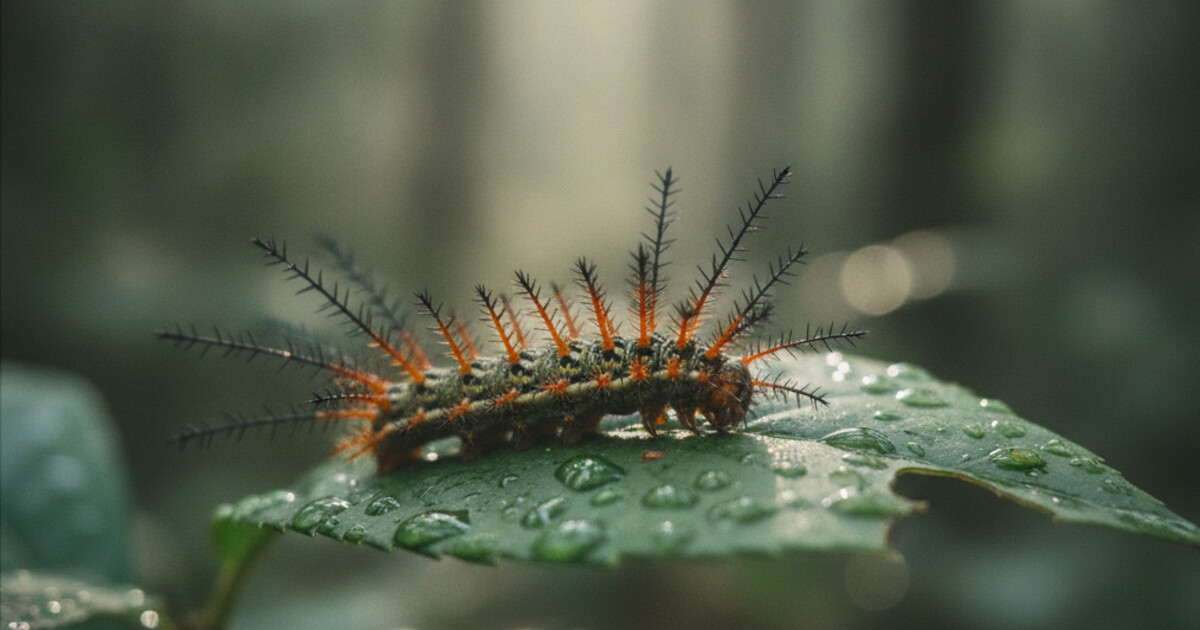
Finding a spiky caterpillar on your arm or a garden plant raises an immediate question: safe to touch, or a sting waiting to happen? The answer genuinely varies by species. Some of the most intimidating-looking spiky caterpillars in North America are completely harmless. Others, with soft-looking fur or modest bristles, hide venom potent enough to cause hours of pain.
The caterpillar you’ve spotted might be carrying yellow-and-black spikes, a fluff of white tufts, or clusters of branched green spines. Body color and spine shape together point toward the right ID. Color alone won’t get you there: a caterpillar with dramatic black-and-orange scoli might be dangerous, while one with identical-looking spines in green is not.
Spiky caterpillars are identified by spine type, body color, and host plant. Stinging species have hollow, branched venom-filled spines called scoli: the io moth, saddleback, puss, and buck moth caterpillars all carry them. Most other spiky-looking caterpillars have harmless hair tufts or soft fleshy tubercles. Identify before touching.
What Spine Type Tells You About a Spiky Caterpillar
The shape of the spines is the first and most important field mark.
Scoli are branched spines with hollow tips connected to venom glands at their base. Pressing one against skin breaks the tip and injects venom. Stinging caterpillar species carry scoli in rows along the body. They tend to look rigid and thorn-like rather than soft or hair-like.
Hair pencils and tufts are dense clusters of fine hair. A caterpillar blanketed in yellow tufts reads as alarming but is usually safe. The American dagger moth caterpillar fits this type: fluffy, slow-moving, and non-venomous for most people.
Tubercles are raised fleshy knobs on the body surface. Many butterfly caterpillars have rows of tubercles tipped with short soft filaments that can’t penetrate human skin.
Among North America’s roughly 11,000 Lepidoptera species, caterpillars with visible spines, tubercles, or hair tufts represent a range of defense strategies. The branched spine clusters on stinging species are called scoli, and they connect to venom glands at their base. The puss caterpillar (Megalopyge opercularis) is the most venomous in the United States: its flattened, fur-like coat conceals rigid hollow spines that inject venom on contact, causing intense radiating pain, blistering, and sometimes systemic reactions including fever and nausea. The saddleback caterpillar (Acharia stimulea) reaches about 1 inch long and delivers a sting comparable to a bee sting, with phospholipase and histamine compounds responsible for the reaction. The buck moth caterpillar (Hemileuca maia), common in Gulf Coast oak scrub, carries similar venomous scoli. By contrast, the American dagger moth caterpillar’s long yellow-white tufts are non-venomous; most people handle one without any reaction.
Stinging Caterpillars: Don’t Touch These
Puss Caterpillar (Megalopyge opercularis)
The puss caterpillar is the most venomous caterpillar in the US. It looks almost harmless: an oval creature covered in tan, gray, or cream-colored fur that resembles a cat’s coat. The danger is concealed underneath. Rigid hollow spines beneath the fur inject venom on contact, causing intense burning that radiates up the arm, sometimes with blistering, rash, fever, and nausea.
Found across the southeastern US, with concentrations in Texas, Florida, and Virginia. Peak season runs from September through November. Size: about 1 inch.
Saddleback Caterpillar (Acharia stimulea)
One of the easier stinging caterpillars to identify: brown body, bright green saddle-shaped patch outlined in white at the center, with a darker spot inside the green area. Four prominent horn-like scoli jut from each corner. Rows of smaller venomous tubercles line the sides.
About 1 inch long. Found on a wide range of ornamental and garden plants, shrubs, and trees across eastern North America from Florida to Massachusetts. Most common in late summer through fall.
Io Moth Caterpillar (Automeris io)
Early instars of the io moth caterpillar are dark and often clustered in groups on a single stem. Later instars are bright green with a white-and-red lateral stripe and clusters of pale green scoli bristling along the body. The coloring reads almost decorative, but the scoli are venomous and cause a sting similar to the saddleback.
Found on oaks, willows, maples, and many other trees and shrubs across the eastern and midwestern US. Handle with gloves or not at all.
Buck Moth Caterpillar (Hemileuca maia)
Black body with pale spots and rows of branched red-orange or brown venomous scoli. Common in Gulf Coast oak scrub from Texas to North Carolina, typically active in spring. A caterpillar with black-and-orange spikes like these is worth taking seriously: the buck moth is the main reason.
The sting causes pain and swelling lasting several hours. It’s one of the most frequently encountered stinging caterpillars in the Deep South.
Hag Moth Caterpillar (Phobetron pithecium)
Also called the monkey slug. Brown and cream-colored, with irregular curved projections that look like tangled hair or a piece of weathered bark. The projections are fleshy appendages, some tipped with stinging hairs. It comes up regularly in the eastern US whenever people search for an unidentifiable spiky caterpillar, and it deserves caution.
Spiky Caterpillars That Are Safe to Handle
Several visually intimidating spiky caterpillars carry no venom at all.
Pipevine Swallowtail Caterpillar (Battus philenor)
Dark reddish-brown to black body with rows of fleshy orange or red tubercles. Almost always found on Aristolochia vines (pipevine or Dutchman’s pipe). The caterpillar sequesters aristolochic acids from its host plant, which makes the adult butterfly toxic to birds, but the caterpillar itself is harmless to handle.
Gulf Fritillary Caterpillar (Agraulis vanillae)
Orange with rows of black branched spines. The spines look threatening because they’re structurally similar to scoli in shape, but they’re soft, blunt, and non-venomous. Found almost exclusively on passionflower vines. Common in Florida, Texas, and California. One of the most frequently misidentified “dangerous” caterpillars.
Spiny Elm Caterpillar (Nymphalis antiopa, Mourning Cloak Butterfly)
Black with small white dots and rows of short reddish-orange stubby spines. Feeds on elm, willow, and cottonwood, often in clusters on the same branch when young. The spines look hard and rigid but are non-venomous. Found across North America. This species and the gulf fritillary together account for many cases of people panicking about a “stinging caterpillar” that doesn’t sting.
American Dagger Moth Caterpillar (Acronicta americana)
Bright yellow-white hair tufts with black hair pencils at each end. Soft and fluffy. Found on maple, oak, elm, and other hardwoods throughout eastern North America. Non-venomous for most people, though the hairs can irritate sensitive skin. This is the caterpillar most people have in mind when they search for a “yellow fuzzy spiky caterpillar.”
For caterpillars with specific yellow-and-black coloring, spiny or smooth, the black and yellow caterpillar guide covers the full range of that color combination across species.
How to Identify a Spiky Caterpillar Without Touching It
Spine shape at close range, without making contact, is the fastest diagnostic.
Branched and rigid spines with thorn-like tips: treat as stinging and back away without touching. If the spines fan out in multiple directions like a cactus spine rather than pointing in a single direction, that’s scoli structure.
Soft, fluffy, or hair-like tufts: probably harmless, but the puss caterpillar’s fur-covered surface is a notable exception. Soft-looking still means no touching until you’ve made an ID.
Fleshy rounded knobs or tubercles: usually safe, especially when tipped with short filaments rather than pointed tips.
Host plant is your second-fastest shortcut. Pipevine swallowtail caterpillars are nearly always on Aristolochia. Gulf fritillary lives on passionflower. Io moth caterpillars show up on oaks, ashes, and a wide range of shrubs. Buck moth caterpillars feed on oaks in coastal plain habitats. Knowing the plant narrows 20 possibilities to 2 or 3.
Season also narrows the field. Buck moth caterpillars are active in spring. Saddleback and io moth caterpillars are most common in late summer and fall. Puss caterpillars peak in fall across the southeastern US.
For caterpillars found across the upper Midwest, the guide to caterpillar identification in Michigan covers the regional species mix, several of which are spiny.
How Animal Identifier Can Help
Written descriptions of caterpillar spines only go so far. Spine color and arrangement vary between individual larvae of the same species, and early instars often look nothing like the mature caterpillar. A photo removes most of the uncertainty.
Animal Identifier lets you photograph any caterpillar and get a species ID in seconds. It covers insects and invertebrates alongside birds, mammals, and reptiles. After the identification, the built-in chat lets you ask follow-up questions: is it safe to handle, what does this species turn into, what’s the range.
Free to start: 2 identifications per day at no charge. Download Animal Identifier for iOS or Android for a quick ID next time something spiky shows up uninvited.
Frequently Asked Questions
Are spiky caterpillars dangerous?
Some are. The stinging species (puss caterpillar, saddleback, io moth, and buck moth) carry hollow venomous spines that inject venom on contact. Most caterpillars with hair tufts, blunt bumps, or fleshy soft spines are harmless. Spine type and a confirmed species ID are the only reliable guides.
What is the most venomous caterpillar in the US?
The puss caterpillar (Megalopyge opercularis), also called the flannel moth caterpillar, is considered the most venomous in the country. Its soft fur-like coat conceals rigid hollow spines. Contact causes intense radiating pain, blistering, and sometimes systemic reactions including fever and nausea.
What does a saddleback caterpillar look like?
The saddleback has a brown body with a bright green saddle-shaped patch outlined in white at its center, with a dark spot inside the green. Four horn-like spine clusters extend from each corner, with rows of smaller venomous tubercles along the sides. About 1 inch long, found on garden plants and trees in eastern North America from late summer into fall.
Can I pick up a spiky caterpillar?
Only after a confident species ID. Safe species include the pipevine swallowtail, gulf fritillary, and spiny elm caterpillar (Mourning Cloak). Avoid any caterpillar with branched rigid-looking spines, a fluffy fur coat that might be a puss caterpillar, or rows of pointed tubercles until you know the species.
What caterpillar is black and orange with spikes?
Two common species fit: the buck moth caterpillar (Hemileuca maia), with a black body and rows of branched red-orange venomous scoli, and the pipevine swallowtail caterpillar (Battus philenor), with a dark body and fleshy orange tubercles. The buck moth’s spines are sharper and more rigid; the pipevine swallowtail’s projections are rounded and soft. The buck moth stings; the pipevine swallowtail doesn’t.
Related reading: Poisonous Caterpillars in Michigan: Species That Sting