Caterpillars in Alabama: Identification and Poisonous Species
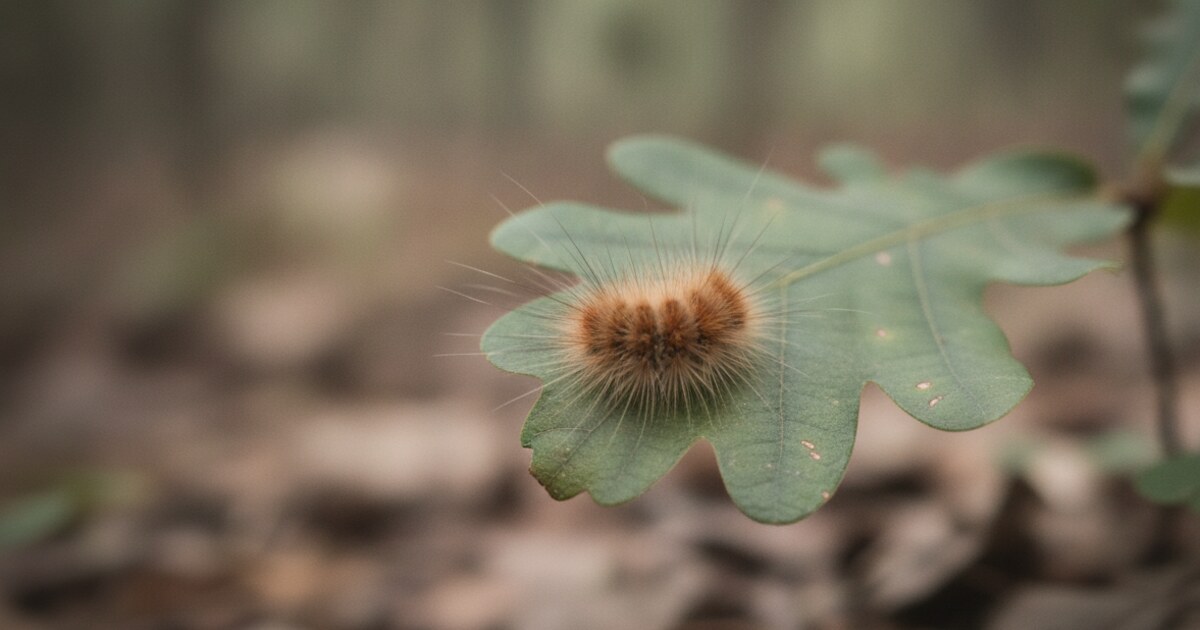
Alabama stretches from the Cumberland Plateau in the north to Mobile Bay on the Gulf Coast, packing roughly 159 caterpillar species into 52,420 square miles across three distinct ecoregions. That north-to-south climate gradient matters: the subtropical Coastal Plain in the south supports the puss caterpillar, the most venomous caterpillar on the continent, at higher densities than most southeastern states. The buck moth caterpillar, common on Alabama’s oak forests, causes stinging pain that can linger up to a week. Three clues sort most of what you find in a yard or on a trail: body covering, color pattern, and host plant. This guide covers nine species common to Alabama, starting with the four that sting.
Alabama has roughly 159 caterpillar species across its Appalachian, Piedmont, and Coastal Plain ecoregions. The four stinging species to recognize are the puss caterpillar, buck moth caterpillar, saddleback caterpillar, and Io moth caterpillar. Body covering (fuzzy, spiny, or smooth), color pattern, and host plant are the three fastest identification clues.
How to Identify Caterpillars in Alabama
Body covering is the fastest first filter. Fuzzy or hairy caterpillars point toward moth families: tussock moths, tiger moths, and flannel moths. Spiny caterpillars narrow the field to species with urticating hairs or venomous spines, with stinging and harmless species split fairly evenly within this group. Smooth caterpillars are mostly butterfly larvae. Color pattern narrows the identification further, and host plant closes most of the remaining cases, since many species feed on only a handful of plants.
Alabama’s 3 ecoregions span 52,420 square miles and create distinct caterpillar habitats. The Cumberland Plateau and Appalachian foothills in the north host species with more northerly distributions, including the hickory tussock moth caterpillar and eastern tent caterpillar, which strips wild cherry and apple trees each spring. The Piedmont, a rolling band across central Alabama, is the core range of the eastern tiger swallowtail (Alabama’s official state butterfly since 1989), whose caterpillar feeds on tulip poplar, wild cherry, and ash statewide. The Coastal Plain, covering more than half the state’s area down to Mobile Bay, supports subtropical-zone species near their northern range limits, including the puss caterpillar (Megalopyge opercularis), which Alabama Cooperative Extension reports each fall from Baldwin and Mobile counties at higher densities than anywhere north of the Gulf states. Roughly 159 caterpillar species are documented statewide, with peak diversity in the Coastal Plain during July through September.
Stinging Caterpillars in Alabama
Alabama has four caterpillar species that cause notable skin reactions. The puss caterpillar is the most medically significant; the buck moth caterpillar causes some of the most prolonged pain of any North American stinging species.
Puss caterpillar (Megalopyge opercularis) is covered in dense, silky fur ranging from tan to rust-brown, with hollow venomous spines hidden underneath the coat. It’s the most venomous caterpillar in North America. Contact drives those spines into skin, causing sharp burning pain that can spread up the limb within minutes, sometimes with nausea, sweating, and swollen lymph nodes in severe reactions. First aid involves pressing tape over the contact site to pull out embedded spines, then applying ice to reduce swelling; severe reactions warrant urgent care. Alabama’s Coastal Plain, especially Baldwin and Mobile counties, sees the highest concentrations each fall from September through November. Host plants include oaks, elms, and hackberry. At about 1 inch long at maturity, it’s smaller than most people expect for something so medically significant.
Buck moth caterpillar (Hemileuca maia) is dark gray-brown to black with rows of white dots and clusters of hollow, branching spines connected to poison glands. It’s one of the most commonly reported stinging caterpillars in Alabama’s oak forests, especially in fall when caterpillars drop from the canopy or crawl across lawns and footpaths. The sting causes immediate, intense burning pain that can radiate and persist for up to a week in sensitive individuals, longer than almost any other stinging caterpillar species in North America. Host plant is almost entirely oaks; look for it from September through November in north and central Alabama.
Saddleback caterpillar (Acharia stimulea) is unmistakable once you’ve seen it. A bright green oval patch with a brown center sits across its back like a saddle on a blanket. Four fleshy horn-like clusters of venomous spines protrude from the corners, with smaller spined structures along the sides. It grows to about 1 inch and feeds on a wide range of plants: corn, ornamental hibiscus, palms, garden perennials, and many deciduous trees. Contact causes sharp burning pain and localized swelling that can persist for hours to days. For more spiny caterpillar species found across multiple states, see the spiky caterpillar identification guide.
Io moth caterpillar (Automeris io) is vivid lime green with a red-and-white stripe running along each side and clusters of branching pale green spines. Younger caterpillars feed together on the same branch before spreading out individually in later instars. They eat oak, willow, corn, and many ornamentals; mature caterpillars reach about 2.5 inches. Skin contact causes immediate irritation similar to a bee sting, with localized redness and swelling lasting one to two hours. Common statewide from late spring through early fall.
Common Non-Stinging Caterpillars in Alabama
Most caterpillars found in Alabama won’t cause any skin reaction. Several of the most striking-looking species are completely harmless.
Eastern tiger swallowtail caterpillar (Papilio glaucus) feeds on tulip poplar, wild cherry, ash, and cottonwood across Alabama, where the adult form has been the official state butterfly since 1989. Early instars look like bird droppings: dark brown with a white saddle mark. Final instars are smooth, bright green with two large orange-and-black false eyespots near the head that resemble a small snake when the caterpillar curls up. Mature caterpillars reach 2 inches or more. Common in suburban yards and woodland edges statewide from April through October, and completely harmless to handle.
Spicebush swallowtail caterpillar (Papilio troilus) changes dramatically as it grows. Early instars mimic bird droppings. Final instars are vivid green with two large orange-and-black false eyespots that suggest a snake face when the caterpillar curls inside a rolled leaf. It feeds on spicebush, sassafras, and related plants across the Piedmont and Coastal Plain. Harmless to handle.
Monarch caterpillar (Danaus plexippus) is the benchmark Alabama identification: smooth and plump with bold alternating yellow, black, and white bands around every segment, feeding exclusively on milkweed. Alabama sits on the eastern monarch migration corridor; caterpillars appear on milkweed statewide from spring through fall, peaking in August and September. A banded yellow-black-white caterpillar on milkweed is almost certainly this species. For comparisons with similar banded caterpillars, see the yellow and black caterpillar guide.
Eastern tent caterpillar (Malacosoma americanum) builds silky white tents in the forks of wild cherry and apple trees across the Piedmont and northern Alabama from March through May. Groups of 200 or more larvae feed together, stripping branches before dispersing to spin individual cocoons. The tents are sticky and conspicuous, making this one of the easiest caterpillars to spot at a distance in spring. Harmless to handle. Populations spike in outbreak years every 3 to 5 years.
Fall webworm (Hyphantria cunea) builds loose silk nests over branch tips, which distinguishes it from the tent caterpillar’s fork-based tents. It feeds inside the nest, often defoliating branch tips of pecans, persimmons, and sweetgum in August and September. The caterpillars are pale greenish-yellow to whitish with rows of black dots and sparse pale hairs. Common statewide and harmless to handle, though the branch-tip webs on pecans look alarming by late summer.
Identifying Alabama Caterpillars by Color
Color is a useful first filter, but body texture and host plant close most identifications.
Silky tan to rust-brown fur: Puss caterpillar (small, oval, smooth-looking from above, with venomous spines hidden under the fur; on oaks and elms; September through November). Treat any uniformly silky, oval caterpillar in this color range with gloves and don’t touch it bare-handed.
Dark gray-brown to black with white dots and branching spines: Buck moth caterpillar (on oaks; fall). Distinguish from harmless dark caterpillars by the obvious branching spine clusters along the body.
Lime green with spines: Io moth caterpillar (branching green spines, red-and-white side stripe, stings). Saddleback caterpillar (green saddle on a brown body with corner-cluster spines, stings). Spine presence separates the dangerous from the harmless in this color group.
White and fluffy: Hickory tussock moth caterpillar (white with black tufts and long black hair pencils at each end, urticating contact; on hickory, walnut, and ash in the northern half of the state). For a detailed breakdown of white fuzzy species and sting risks, see the white fuzzy caterpillar identification guide.
Smooth green with large false eyespots: Eastern tiger swallowtail (orange-and-black eyespots; on wild cherry or tulip poplar; harmless). Spicebush swallowtail (similar eyespots; on spicebush or sassafras; harmless). Both species roll inside leaves for shelter.
Yellow, black, and white stripes on milkweed: Monarch caterpillar. The host plant makes this near-diagnostic.
White silky tent in tree forks (spring): Eastern tent caterpillar (social, March through May, harmless). Loose silk nest over branch tips (late summer): Fall webworm (August through September, harmless).
How Animal Identifier Can Help
When a caterpillar’s field marks aren’t adding up, a photo is the fastest next step. Animal Identifier lets you photograph the caterpillar and returns a species ID in seconds, covering moths and butterflies found in Alabama and across North America.
After the ID, the follow-up chat lets you ask specific questions: whether it stings, what it becomes as an adult, or what plants it feeds on. The chat stays scoped to animals, so it won’t wander off topic.
Animal Identifier is free to start, with 2 identifications per day and no account required. Available on iOS and Android. Photograph the caterpillar before you decide whether to touch it.
Frequently Asked Questions
Are there poisonous caterpillars in Alabama?
Not in the way most people mean. No caterpillar in Alabama is poisonous to touch in the sense of being toxic through the skin, and none will hurt you if you leave it alone. What Alabama does have is a handful of stinging species — caterpillars with hollow spines or barbed hairs that inject an irritant when pressed against skin. The reaction is a burning welt, not a poisoning. A few species are genuinely toxic if eaten, which matters mainly for pets and small children. The species to recognize are listed below.
What stinging caterpillars are found in Alabama?
Alabama has four caterpillar species that cause notable skin reactions. The puss caterpillar, covered in silky fur with hidden venomous spines, is the most medically significant, causing sharp burning pain that can spread up the limb and sometimes requiring medical attention. The buck moth caterpillar causes intense burning pain that can persist for up to a week. The saddleback caterpillar (green saddle, corner spines) and Io moth caterpillar (lime green with branching spines) both cause immediate burning and swelling lasting hours.
What is the most common caterpillar in Alabama?
The eastern tent caterpillar is among the most visible each spring, forming conspicuous silky tents in wild cherry and apple trees across the Piedmont and northern Alabama in March and April. The eastern tiger swallowtail caterpillar is one of the most commonly found individual caterpillars statewide, feeding on tulip poplar, wild cherry, and ash from April through October. The fall webworm is the most visible caterpillar in late summer, draping silk nests over branch tips on pecans and sweetgums.
When are caterpillars most active in Alabama?
Most Alabama caterpillar species are active from March through October, with peak diversity from July through September. Eastern tent caterpillars appear as early as late February in warm years and peak in April. The puss caterpillar, saddleback, and buck moth caterpillar peak from September through November. Fall webworm is most visible in August and September. Alabama’s mild winters mean some species remain active year-round in the southern Coastal Plain counties.
Is the puss caterpillar common in Alabama?
Yes. Alabama’s Coastal Plain, especially Baldwin and Mobile counties, is within the core Gulf Coast range of the puss caterpillar (Megalopyge opercularis). It’s present statewide but most abundant in the south from September through November. Covered in silky tan-to-rust fur with venomous spines hidden underneath, it’s the most venomous caterpillar in North America. Move it with a stick or gloves and never pick it up bare-handed.
How do caterpillars in Alabama compare to nearby states?
Alabama’s puss caterpillar population is denser than in states farther north but comparable to Florida and Texas. The buck moth caterpillar is a more distinctive Gulf South species, less commonly reported outside the region. For state comparisons, see the caterpillar identification guide for Michigan, the Florida caterpillar guide, or the North Carolina caterpillar guide.