Caterpillars in Wisconsin: Identification and Poisonous Species
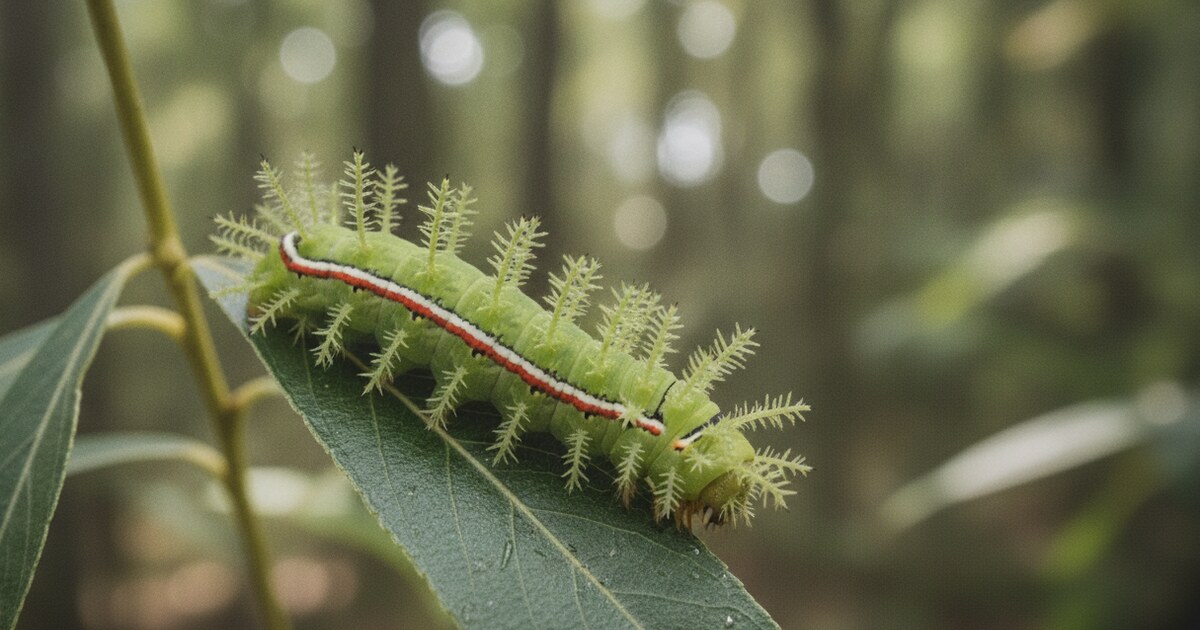
Wisconsin spans from the northern boreal lakes to the unglaciated ridge-and-valley terrain of the Driftless Area in the southwest, packing roughly 156 caterpillar species into 65,496 square miles across three distinct ecoregions. Most of those species are harmless. Three, however, cause real skin reactions, and the difference between a safe handling experience and a call to urgent care comes down to three field marks: body covering, color pattern, and host plant. The American dagger caterpillar is one of the most widely reported caterpillars in the state, covered in yellow-to-white hair with black pencil tufts that can irritate skin on contact. The Io moth caterpillar, bright lime green with branching spines, is found statewide and stings immediately. This guide covers the three stinging species and five common safe ones, with the fastest ID clues for each.
Wisconsin has about 156 caterpillar species statewide. The 3 stinging species to know are the Io moth caterpillar, American dagger caterpillar, and saddleback caterpillar (southern counties only). Body covering, color, and host plant are the fastest identification clues. The woolly bear, monarch, and forest tent caterpillar are among the most commonly spotted harmless species.
How to Identify Caterpillars in Wisconsin
Body covering is the fastest first filter. Fuzzy or hairy caterpillars belong to moth families: tiger moths, tussock moths, and dagger moths. Smooth caterpillars are usually butterfly larvae. Spiny caterpillars narrow the field to a smaller group, and even within that group stinging and harmless species split, so spine shape matters.
Color pattern narrows the identification further. Host plant closes most remaining cases, since many Wisconsin caterpillar species feed on only a few plant families.
Wisconsin’s 65,496 square miles support about 156 documented caterpillar species across 3 distinct ecoregions. The Northern Highlands in the north are dominated by mixed conifer-hardwood forest and host boreal species such as the forest tent caterpillar (Malacosoma disstria), which defoliates aspen and birch in outbreak cycles roughly every 10-13 years in the northern counties. The Driftless Area in the southwest, never scraped flat by glaciers, sustains unusually diverse hardwood stands with higher butterfly-caterpillar diversity than the surrounding glaciated landscape. The Eastern Ridges and Lowlands in the southeast, Wisconsin’s warmest ecoregion at USDA hardiness zones 5b-6a, marks the northern edge of the saddleback caterpillar’s documented range. The Io moth caterpillar (Automeris io) is documented statewide, with larvae appearing on willow, hackberry, and oak from late June through August. The American dagger caterpillar (Acronicta americana) is one of the most commonly submitted caterpillar photos to UW Extension’s Insect Diagnostic Lab, occurring east of the Rockies from southern Canada to Florida.
Stinging Caterpillars in Wisconsin
Wisconsin has three caterpillar species that cause notable skin reactions. Two are common statewide; the third reaches only the southern counties.
Io moth caterpillar (Automeris io) is the most widespread stinging caterpillar in Wisconsin. Vivid lime green with a red-and-white stripe running along each side and clusters of branching pale green spines, it’s hard to miss. Younger larvae feed together on the same branch before spreading out individually in later instars. Host plants include willow, hackberry, oak, and corn; mature caterpillars reach about 2.5 inches. Skin contact causes immediate burning, similar to a bee sting, with localized redness and swelling lasting one to two hours. Found statewide from late June through September. The branching spine clusters separate it from harmless green caterpillars at a glance. For more spiny caterpillar species found across multiple states, see the spiky caterpillar identification guide.
American dagger caterpillar (Acronicta americana) is one of the most commonly reported caterpillars in Wisconsin, partly because it looks striking and turns up in suburban yards in late summer. Young larvae are covered in dense, bright yellow hair with distinctive black hair pencils (long, upright bristles) at each end of the body and one more rising from segment 8. As caterpillars age, the yellow hair fades toward white, but the black pencils remain. Those pencils carry urticating hairs that cause skin irritation, redness, and a stinging sensation on contact in some people. Handle with gloves. Host plants include ash, elm, oak, hickory, and alder; caterpillars appear from July through September.
Saddleback caterpillar (Acharia stimulea) reaches its northern range limit in far southern Wisconsin, primarily in the Eastern Ridges and Lowlands ecoregion. The identification is unmistakable: a bright green oval saddle with a brown center sits across the back, flanked at four corners by fleshy horn clusters tipped with venomous spines, with smaller spined structures along the sides. It grows to about 1 inch and feeds on corn, ornamental hibiscus, garden perennials, and many deciduous shrubs and trees. Contact causes sharp burning pain and localized swelling that can persist for hours. An occasional find in southern Wisconsin, most likely August through September. Move it with a stick, not a bare hand.
Common Non-Stinging Caterpillars in Wisconsin
Most caterpillars you find in Wisconsin won’t cause any skin reaction. Several of the most conspicuous species fall into this group.
Woolly bear caterpillar (Pyrrharctia isabella) is the most recognized caterpillar in Wisconsin. Banded in black at both ends with a rust-colored middle section, it’s the larval form of the Isabella tiger moth. It feeds on low-growing plants: dandelion, plantain, nettles, and grasses rather than garden crops. Each fall, woolly bears cross roads in large numbers as they search for overwintering sites under bark and leaf litter. Completely harmless to handle. The folk tradition of reading winter severity from the width of the rust band has no scientific backing (the band just reflects the caterpillar’s age), but the woolly bear remains an autumn Wisconsin fixture.
Monarch caterpillar (Danaus plexippus) is the benchmark Wisconsin identification: smooth and plump with bold alternating yellow, black, and white bands around every segment, feeding exclusively on milkweed. Wisconsin lies in the eastern monarch migration corridor and hosts significant summer breeding populations. A banded yellow-black-white caterpillar on milkweed is almost certainly this species. For comparisons with other banded caterpillars, see the yellow and black caterpillar guide. Completely harmless to handle.
Forest tent caterpillar (Malacosoma disstria) is the species the Wisconsin DNR tracks most closely in northern counties. Unlike the eastern tent caterpillar, it builds no tent. It clusters overnight on bark or branches and disperses to feed during the day. Identifying marks: dark brown with a row of white keyhole-shaped spots along the back and blue-gray sides with sparse long hairs. Host plants are primarily aspen, sugar maple, oak, and birch. Outbreak cycles in Wisconsin’s northern forests run roughly every 10-13 years, and heavy defoliation of aspen stands is visible from roadsides during those years. Harmless to handle.
Eastern tent caterpillar (Malacosoma americanum) builds silky white tents in the forks of wild cherry and apple trees across Wisconsin in March and April. Groups of 200 or more larvae feed together and strip branches before dispersing to spin individual cocoons by late May. The tents are conspicuous from a distance in early spring. Harmless to handle; population spikes in outbreak years.
Spongy moth caterpillar (Lymantria dispar) is an invasive species actively monitored by the Wisconsin DATCP. Older caterpillars have a distinctive dorsal pattern: 5 pairs of blue dots followed by 6 pairs of red dots along the back, with tufts of brown-gray hair. They feed on more than 300 tree and shrub species, most heavily on oak, and can defoliate large areas in outbreak years. Found where spongy moth populations are established, primarily in eastern Wisconsin counties. The urticating hairs of young larvae can irritate sensitive skin, but caterpillars past early instar are generally handled without issue.
Identifying Wisconsin Caterpillars by Color
Color is a useful first cut, but body texture and host plant close most identifications.
Dense yellow-to-white hair with long black hair pencils: American dagger caterpillar (pencils at each body end and segment 8; urticating contact; handle with gloves; on ash, elm, and oak; July through September). Yellow color fades to white in older caterpillars; the pencils stay black throughout.
Banded black-rust-black: Woolly bear caterpillar (Isabella tiger moth; on dandelion and low-growing plants; harmless; most visible crossing roads in September and October).
Lime green with branching spines and a red-and-white side stripe: Io moth caterpillar (stings; on willow, hackberry, and oak; late June through September). The branching spine clusters distinguish this from harmless green species.
Brown saddle on green with corner spine clusters: Saddleback caterpillar (stings; far southern Wisconsin only; August through September). The saddle pattern makes this near-impossible to confuse with anything else.
Yellow, black, and white stripes on milkweed: Monarch caterpillar (smooth; harmless; the host plant is nearly diagnostic). For a full breakdown of similar banded species, see the white fuzzy caterpillar guide for the tussock moth species that share some color territory.
Blue and red dorsal dots with brown-gray hair: Spongy moth caterpillar (5 blue pairs then 6 red pairs; invasive; feeds on oak and 300+ other species). Distinguished from native moths by the blue-then-red dot sequence.
White keyhole spots along a dark back: Forest tent caterpillar (dark brown with blue-gray sides and sparse hairs; no tent; on aspen, maple, and birch in northern counties). The keyhole spots are the key field mark separating it from eastern tent caterpillar larvae.
Silky white tents in tree forks (March through April): Eastern tent caterpillar (wild cherry and apple; harmless; tents are the fastest ID at a distance in spring).
How Animal Identifier Can Help
When a caterpillar’s field marks aren’t adding up, a photo is the fastest next step. Animal Identifier lets you photograph the caterpillar and returns a species ID in seconds, covering moths and butterflies found in Wisconsin and across North America.
After the ID, the follow-up chat answers specific questions: whether it stings, what it turns into as an adult, or what plants it feeds on. The chat stays scoped to animals, so it won’t wander off topic.
Animal Identifier is free to start, with 2 identifications per day and no account required. Available on iOS and Android. Photograph the caterpillar before you decide whether to touch it.
Frequently Asked Questions
Are there poisonous caterpillars in Wisconsin?
Not in the way most people mean. No caterpillar in Wisconsin is poisonous to touch in the sense of being toxic through the skin, and none will hurt you if you leave it alone. What Wisconsin does have is a handful of stinging species — caterpillars with hollow spines or barbed hairs that inject an irritant when pressed against skin. The reaction is a burning welt, not a poisoning. A few species are genuinely toxic if eaten, which matters mainly for pets and small children. The species to recognize are listed below.
What stinging caterpillars are found in Wisconsin?
Wisconsin has 3 caterpillars that cause skin reactions. The Io moth caterpillar (lime green, branching spines, red-and-white stripe) is the most common statewide and stings immediately on contact, causing burning and swelling for one to two hours. The American dagger caterpillar (yellow-to-white hair with black pencil tufts) causes irritation from urticating hairs in some people. The saddleback caterpillar (green saddle, corner spine clusters) reaches far southern Wisconsin at its northern range limit, typically August through September.
What is the most common caterpillar in Wisconsin?
The woolly bear is the most widely recognized caterpillar in Wisconsin, seen crossing roads and fields each fall. The American dagger caterpillar is among the most commonly submitted for identification through UW Extension. The forest tent caterpillar is the most ecologically visible in northern Wisconsin, with periodic outbreaks that defoliate thousands of acres of aspen forest over outbreak cycles lasting several years.
When are caterpillars most active in Wisconsin?
Most Wisconsin caterpillar species are active from late April through September, with peak diversity in July and August. Eastern tent caterpillars appear as early as late March in warm years. The woolly bear is most visible in September and October as caterpillars move toward overwintering sites. Forest tent caterpillar outbreaks in northern Wisconsin peak in June and July during high-population years.
Does Wisconsin have spongy moth caterpillars?
Yes. The spongy moth (formerly called gypsy moth) is an established invasive species in Wisconsin, monitored by the Wisconsin DATCP. Caterpillars have 5 pairs of blue dorsal dots followed by 6 pairs of red dots, with tufted brown-gray hair. They feed on more than 300 tree species, most heavily on oaks, and can defoliate large areas in outbreak years. The DATCP runs an aerial treatment program in high-risk areas each spring.
How do Wisconsin caterpillars compare to nearby states?
Wisconsin’s caterpillar fauna overlaps heavily with Michigan and Minnesota. The puss caterpillar, the most venomous caterpillar in North America and a significant concern in Alabama, Texas, and Florida, doesn’t range into Wisconsin. See the caterpillar identification guide for Michigan for a close geographic comparison, or the North Carolina caterpillar guide for a southeastern state with a more dangerous stinging species list.