Caterpillars in Louisiana: Identification and Poisonous Species
Louisiana’s humid subtropical climate keeps caterpillar season running longer than most states. The mix of cypress-tupelo swamps, bottomland hardwood forests, longleaf pine flatwoods, and coastal marshes supports a wide range of species, and conditions stay warm enough for new broods to emerge from spring through early winter. Most caterpillars in Louisiana you’ll come across on a trail or garden plant are harmless. Four of them are not, and one is the most venomous caterpillar in North America.
Louisiana has 4 caterpillar species that sting: the puss caterpillar (asp), the buck moth caterpillar, the Io moth caterpillar, and the saddleback caterpillar. The puss caterpillar is the most venomous caterpillar in North America. The buck moth caterpillar is a spring hazard in Louisiana cities where live oak street trees are common, including New Orleans.
Common Caterpillars in Louisiana
Louisiana sits entirely within the humid subtropical climate zone, where warm winters and hot, wet summers let multiple caterpillar generations develop each year. The state’s forests, swamps, and coastal marshes hold more than 700 recorded Lepidoptera species (moths and butterflies combined). Peak activity runs April through October, but certain species, including the buck moth caterpillar on live oaks in New Orleans, emerge as early as February. A one-year hospital study of 112 caterpillar sting cases in Louisiana found that 96% of victims experienced severe pain, 89% had erythema (skin redness), 72% had edema (swelling), and 26% developed systemic reactions including nausea and rapid heartbeat. That data, published by LSU Health New Orleans, puts Louisiana among the US states with the highest rate of medically significant caterpillar encounters. The 4 stinging species, the puss caterpillar, buck moth caterpillar, Io moth caterpillar, and saddleback caterpillar, are responsible for all reported sting cases.
1. Monarch Caterpillar (Danaus plexippus)
Bold yellow, black, and white bands wrapped around a plump body, with a pair of thin black tentacles at each end; grows to about 2 inches. Found only on milkweed plants. Monarch caterpillars absorb cardiac glycosides from milkweed that make the adult butterfly toxic to predators, but they pose no risk to people.
Louisiana sits along a major migration corridor, and monarchs pass through in numbers each fall from September through November on the way to overwintering grounds in central Mexico. If the banded pattern looks similar to other caterpillars you’ve seen, the full guide to Black and Yellow Caterpillars sorts the common look-alikes.
2. Eastern Tiger Swallowtail Caterpillar (Papilio glaucus)
Smooth and bright green with 2 large orange-and-black eyespots on the thorax that mimic a snake’s face when viewed from above. When threatened, it pushes out a forked orange osmeterium from behind the head; the organ looks alarming but causes no harm. Found on tulip poplar, wild cherry, white ash, and willow across Louisiana’s bottomland forests and upland ridges from April through September. Safe to handle.
3. Woolly Bear (Pyrrharctia isabella)
Dense, coarse hairs with rust-brown coloring in the middle and black at both ends; about 2 inches long. The woolly bear feeds on a wide range of low plants and grasses and turns up across Louisiana in fall as individual caterpillars search for sheltered overwintering spots under bark and leaf debris. Safe to handle; the coarse hairs can mildly irritate sensitive skin but won’t sting.
4. Spicebush Swallowtail Caterpillar (Papilio troilus)
Green body with two large yellow-and-black eyespots on the thorax and a narrower pair behind them. This species hides inside a folded leaf shelter stitched together with silk on spicebush and sassafras, both common understory shrubs throughout Louisiana’s upland and bottomland forests. The folded-leaf shelter is often the first clue; the caterpillar looks like a small snake head when viewed from the front. Safe to handle.
5. Imported Cabbageworm (Pieris rapae)
Pale green and velvety, with a faint yellow stripe along each side; rarely exceeds an inch. A pest on broccoli, cabbage, kale, and collard greens. Non-native to North America, it arrived in the 1860s and is now in every US state. Louisiana’s mild winters mean brassicas grow much of the year, and cabbageworms follow wherever brassicas do.
Stinging Caterpillars in Louisiana
Louisiana has 4 stinging caterpillar species. The general rule: any caterpillar with branching, tree-like spines is a sting risk, and the puss caterpillar is dangerous despite looking soft and fluffy. For a visual guide to spiny species across North America, Spiky Caterpillars covers identification and sting risk for the main species in the region.
6. Puss Caterpillar / Southern Flannel Moth (Megalopyge opercularis)
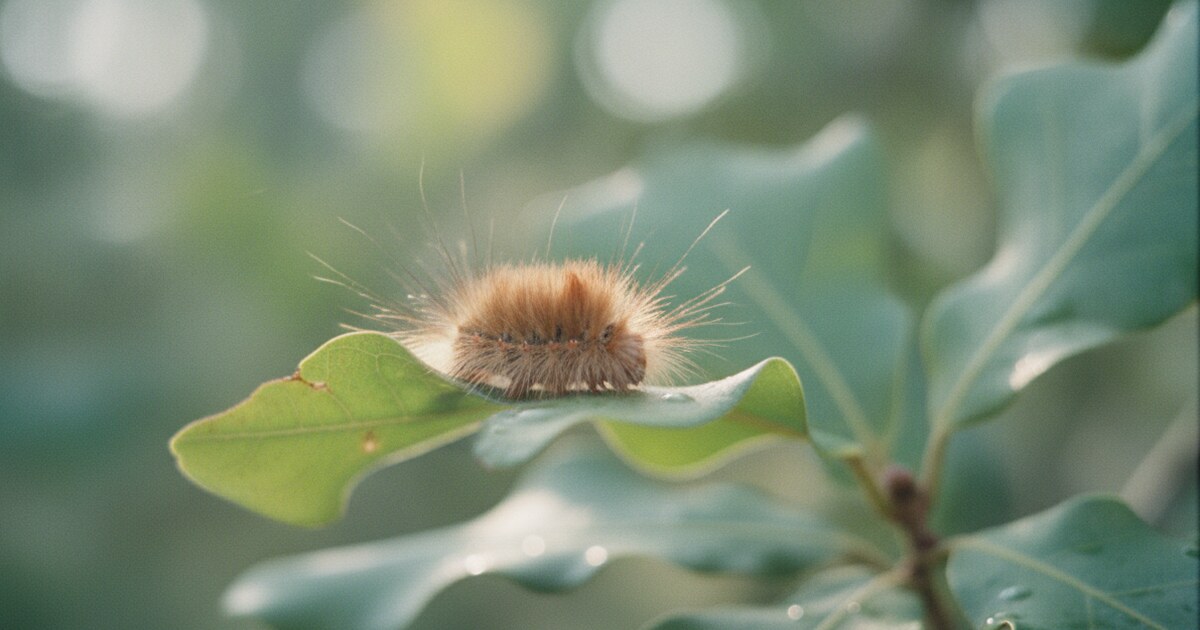
Covered in soft, dense hair in shades of cream, tan, gray, or reddish-brown, shaped roughly like a flattened teardrop; about 1 to 1.5 inches long. The fluffy appearance is the hazard. Concealed beneath the hairs are rows of hollow spines connected to venom glands; contact drives them into skin and causes immediate, intense burning pain that often radiates up the arm, sometimes accompanied by a grid of red welts at the contact site.
Known locally as the “asp,” this species is the most venomous caterpillar in North America. Reactions range from local redness and swelling to nausea, headache, and rapid heartbeat in cases where contact occurs on the torso or neck. It feeds on oaks, hackberry, and elms, and peaks in late summer and fall. If you find a small fluffy caterpillar you can’t identify, the white fuzzy caterpillar guide covers the main look-alikes. Never handle any fluffy caterpillar in Louisiana you can’t positively identify.
7. Buck Moth Caterpillar (Hemileuca maia)
Dark brown to nearly black, with rows of small pale spots along the sides and dense clusters of branching spines running the length of the body; about 2 to 2.5 inches long at maturity. The spines break on contact and inject irritating compounds that cause burning pain, a red welt, and swelling lasting several hours.
The buck moth caterpillar is a particularly notable hazard in Louisiana cities. It feeds almost exclusively on oaks, with a strong preference for live oak (Quercus virginiana), the dominant street tree in New Orleans and across the Gulf Coast. Egg masses hatch in late winter, typically February through early April, and young caterpillars drop from the canopy onto people walking beneath. Schools near live oak-lined streets in New Orleans have documented repeated sting incidents during this window. It’s the species most likely to find you rather than the other way around.
8. Io Moth Caterpillar (Automeris io)
Bright lime-green body with a horizontal red stripe bordered by white on each side, covered from head to tail in thick clusters of branching green spines; grows to about 2 to 3 inches. The spine clusters snap off and inject an irritating fluid on contact, causing immediate burning, a rash, and sometimes swelling beyond the contact point. People with insect venom sensitivities can develop stronger reactions.
Found on a wide range of host plants including oaks, willows, corn, roses, and fruit trees, so the Io moth caterpillar turns up in gardens and orchards as well as woodlands. Most active June through September across Louisiana.
9. Saddleback Caterpillar (Acharia stimulea)
Brown at both ends with a vivid green saddle-shaped patch on the back, marked by a brown oval in the center; fleshy horn-like projections at each end tipped with stinging spines; about 1 inch long at maturity. The bright coloration is aposematic (warning coloration), and the sting from the horn-tip spines is disproportionately painful for the caterpillar’s small size. Found on corn, apple, plum, oak, rose, and many other plants; most active late summer through fall across Louisiana.
How to Identify Caterpillars in Louisiana by Photo
Four clues narrow most Louisiana caterpillar IDs quickly:
- Color and pattern: solid, striped, banded, or spotted
- Texture: smooth skin, coarse hairs, soft fluffy hairs, or branching spines (both fluffy hairs and branching spines are sting-risk textures in Louisiana)
- Host plant: monarch caterpillars appear only on milkweed; cabbageworms only on brassicas; buck moth caterpillars concentrate on live oaks; Io moth caterpillars use a wide range of woody plants. Host plant alone closes a large share of IDs.
- Season: buck moth caterpillars hatch February through April; Io moth and saddleback peak late summer through fall; monarch migration runs September through November
When those clues still leave 2 or 3 candidates, a photo finishes the ID. Animal Identifier lets you photograph the caterpillar and returns the species name in seconds, along with details on whether it stings, what it becomes, and which host plants to look for nearby. It covers insects and caterpillars across Louisiana’s climate zones, from the New Orleans live oak canopy to the longleaf pine flatwoods of the Florida Parishes.
Frequently Asked Questions
Are there poisonous caterpillars in Louisiana?
Yes. Louisiana has 4 caterpillar species that sting: the puss caterpillar (asp), the buck moth caterpillar, the Io moth caterpillar, and the saddleback caterpillar. A hospital study of 112 sting cases in Louisiana found 96% of victims experienced severe pain and 26% developed systemic reactions. None produce venom that is life-threatening to healthy adults, but people with allergies or insect venom sensitivities should seek medical attention after a sting.
What is the most dangerous caterpillar in Louisiana?
The puss caterpillar (Megalopyge opercularis), called the asp locally, is the most venomous. Despite its fluffy appearance, it hides rows of hollow venom spines beneath the hairs. Contact causes immediate, intense burning pain that can radiate up a limb, sometimes combined with nausea, headache, and rapid heartbeat. It feeds on oaks, hackberry, and elm and is most common in late summer and fall across Louisiana.
When are caterpillars most active in Louisiana?
Louisiana’s humid subtropical climate supports caterpillar activity from about March through November, with peak abundance between May and September. The buck moth caterpillar is an exception, hatching in February and active through early April on live oaks in the New Orleans area and across the Gulf Coast. Monarch caterpillars pass through during fall migration in October and November.
What is the spiky caterpillar in Louisiana?
Three stinging species in Louisiana have visible spines: the Io moth caterpillar (bright lime-green with branching green spines), the saddleback caterpillar (green saddle, brown ends, spined horns at each end), and the buck moth caterpillar (dark with clusters of branching spines). Any caterpillar with branching, tree-like spines in Louisiana is a sting risk. The caterpillar identification guide for Michigan covers several of these same species across their northern range as well.
What is the fuzzy caterpillar in Louisiana?
The puss caterpillar (Megalopyge opercularis), also called the asp or southern flannel moth caterpillar, is covered in soft, fluffy hair in cream, tan, or reddish-brown tones. It looks like a small toupee on a leaf and is the most venomous caterpillar in North America. Other fuzzy caterpillars in Louisiana, including the woolly bear, are harmless. Don’t handle any unidentified fluffy caterpillar in Louisiana; the white fuzzy caterpillar guide covers the main fluffy species and how to tell them apart.
If you find a caterpillar in Louisiana you can’t place, photograph it and open Animal Identifier. A single photo returns the species name and details on whether it stings, what it becomes, and which plants to look for nearby. Download it free on iOS or Android and start with 2 identifications a day at no charge.