Caterpillars in Kentucky: Identification and Poisonous Species
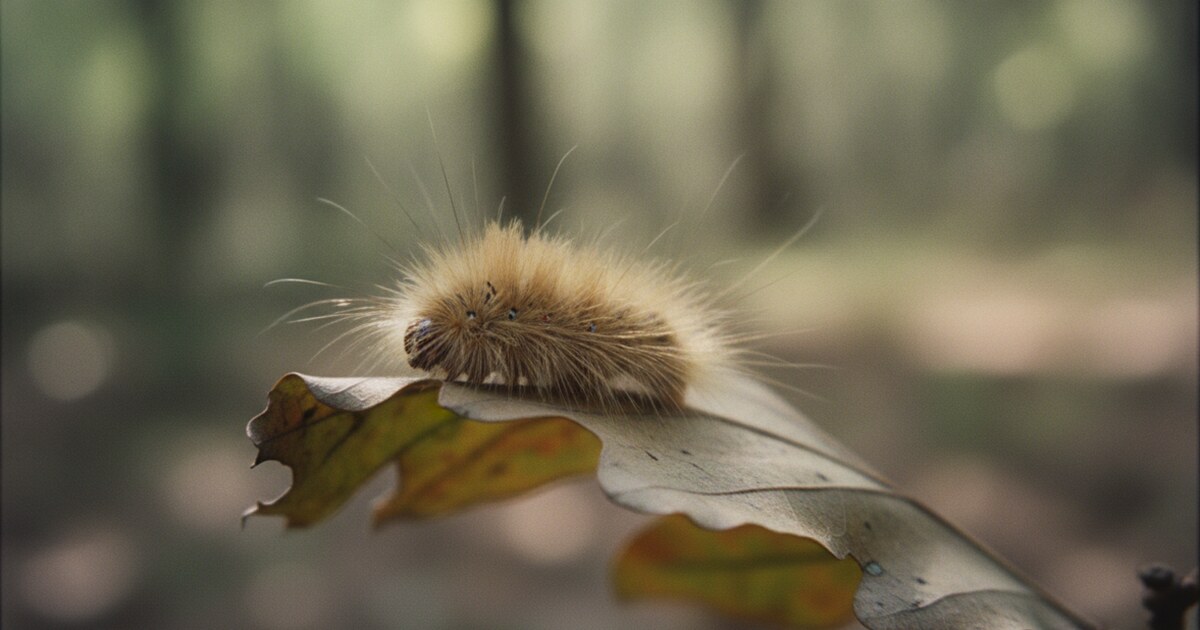
Kentucky’s blend of Appalachian highlands, limestone Bluegrass country, and Ohio River floodplains gives the state a caterpillar community that draws from 3 different ecological zones. Daniel Boone National Forest’s 708,000 acres in eastern Kentucky alone hosts Appalachian species tied to oaks, hemlocks, and high-elevation hardwoods that don’t appear further west in the state. Most caterpillars you’ll encounter in a Kentucky garden, orchard, or wooded trail are harmless. Three species sting, and one of them packs a reaction serious enough that some cases require a doctor visit. Knowing which ones they are before you reach for what looks like a fuzzy leaf decoration matters. This guide covers 6 common caterpillars in Kentucky and the 3 you should never handle bare-handed.
Kentucky has 3 caterpillar species that sting: the puss caterpillar (venomous spines under its silky fur coat), the saddleback caterpillar (a green saddle with spiny knobs at each end), and the buck moth caterpillar (branching black spines covering a dark body). Most caterpillars in Kentucky, including woolly bears and Tiger Swallowtail caterpillars, are safe to handle.
Common Caterpillars in Kentucky
Kentucky spans 3 geographic regions that give it more caterpillar diversity than most states its size. Each zone has its own host-plant community, which pulls in a distinct set of species.
Kentucky spans 3 physiographic regions that shape which caterpillar species appear where. The Appalachian Plateau and Daniel Boone National Forest’s 708,000 acres in the Cumberland and Red River Gorge areas host Appalachian species tied to elevations the Bluegrass never reaches. The central Bluegrass region, underlain by porous limestone and thick with mature hardwood forest, supports Eastern Tiger Swallowtail and forest tent caterpillar in some of the state’s highest concentrations. Western Kentucky’s Ohio and Mississippi River floodplain forests push Gulf Coast species northward, including the puss caterpillar, which ranges across southern and central counties from August through October on oaks, elms, and maples. Forest tent caterpillar (Malacosoma disstria) outbreaks cycle through Kentucky’s hardwood forests on an 8-12 year schedule, stripping oak, cherry, and black gum across wide patches before natural parasites and disease collapse the population within one season. Woolly bears make fall crossings through all 120 of Kentucky’s counties each August through October.
1. Banded Woolly Bear (Pyrrharctia isabella)
Dense, coarse hairs with a rust-brown midsection band and black at both ends, about 2 inches long. The woolly bear is the most widely recognized caterpillar in Kentucky, seen crossing roads, sidewalks, and garden paths from August through October as individuals search for places to overwinter. They survive cold months by freezing solid under bark, leaf litter, and fallen logs, then thaw in spring and resume feeding before pupating. Safe to handle; the hairs can mildly irritate very sensitive skin but don’t sting. For fuzzy caterpillars that do cause reactions, the white fuzzy caterpillar guide covers the hickory tussock moth and similar hairy species also found in Kentucky. The Kentucky folk belief that the width of the rust band predicts winter severity has no scientific backing, but the caterpillars are worth watching for in fall regardless.
2. Eastern Tiger Swallowtail Caterpillar (Papilio glaucus)
Smooth and bright green, with 2 large orange-and-black eyespots on the thorax that closely mimic a snake’s face from above. When threatened, it pushes a forked orange osmeterium from behind the head. The organ looks alarming; it causes no harm. Found statewide on wild cherry, tulip poplar, white ash, and black cherry from May through September. The Eastern Tiger Swallowtail is one of the most common large butterflies across Kentucky, and its caterpillar turns up wherever those host trees grow. Safe to handle.
3. Monarch Caterpillar (Danaus plexippus)
Bold yellow, black, and white alternating bands circling the body, with a pair of black tentacles at each end. Found only on milkweed plants, which narrows the ID to near certainty. Monarch caterpillars absorb toxins from milkweed that make adult butterflies unpalatable to predators, but they pose no risk to people. Peak numbers in Kentucky occur from late July through September as adults funnel south through the state toward Mexican wintering sites. The full roster of banded black-and-yellow caterpillars is covered in the black and yellow caterpillar guide.
4. Spicebush Swallowtail Caterpillar (Papilio troilus)
Smooth and bright green, with 2 large false eyespots on the thorax that mimic a tree frog or small snake head when viewed from above. Younger caterpillars are dark brown and white, mimicking a bird dropping before they shift to the green form in later instars. Found on spicebush (Lindera benzoin) and sassafras, both common in Kentucky’s forest understories and streamside thickets. The caterpillar rests inside a leaf it has folded and silk-tied into a tube shelter, emerging only to feed. Safe to handle.
5. Tobacco Hornworm (Manduca sexta)
Huge and bright green, up to 3.5 inches long, with 7 diagonal white stripes along the sides and a red or pink horn at the tail end. Kentucky grows more burley tobacco per acre than any other state in the eastern US, and tobacco hornworms turn up in tobacco fields and vegetable gardens statewide from late June through August. They also feed on tomatoes, peppers, and eggplant. To tell a tobacco hornworm from the closely related tomato hornworm (Manduca quinquemaculatus): the tobacco species has diagonal stripes and a red horn; the tomato species has V-shaped chevrons and a green or black horn. Safe to handle despite the dramatic horn.
6. Forest Tent Caterpillar (Malacosoma disstria)
A row of white keyhole-shaped or diamond spots down a blue-gray back, with orange-brown stripes along each side, about 2 inches long at maturity. Despite the name, this species builds no tent. In outbreak years it clusters on oak, cherry, and sweetgum trunks in spring and can strip large patches of eastern Kentucky forest within days. The population typically collapses within a season as natural parasites and disease catch up. Safe to handle.
Stinging Caterpillars in Kentucky
Three caterpillar species in Kentucky cause skin reactions serious enough to need attention. The rule for 2 of them: branching or tree-like spines are almost always a sting waiting to happen. For a broader look at spiny species across North America, Spiky Caterpillars covers the full field guide.
7. Puss Caterpillar (Megalopyge opercularis)
Covered in a thick coat of long, wavy, silky hairs in tan, gray, or orange-brown that look invitingly soft, like a small clump of cat fur or a tiny toupee sitting on a leaf. About 1 inch long. Under that coat are rows of venomous spines radiating outward; the hairs conceal them completely. Contact delivers immediate, severe burning pain that can spread up the arm, with a red grid-pattern welt on the skin matching the spine arrangement. Some cases involve nausea, chest pain, and difficulty breathing, and the University of Kentucky Cooperative Extension documents the puss caterpillar as the most serious stinging species in the state.
Found across southern and central Kentucky on oaks, maples, and elms from August through October. Younger caterpillars are smaller and darker; mature ones show the recognizable fluffy tan form. If a child picks up what looks like a tiny fur ball on a backyard leaf, the puss caterpillar is the first species to rule out.
8. Saddleback Caterpillar (Acharia stimulea)
One of the most recognizable stinging caterpillars in Kentucky: a bright green oval saddle with a brown center sits squarely on the back, flanked by a pair of prominent spiny knobs at each end. The rest of the body is dark brown to maroon. About 1 inch long. The branching spines on those knobs, and smaller spines scattered along the body, cause immediate burning, swelling, and a rash that can last several hours. Some people develop a stronger allergic reaction.
Found on oaks, elms, blueberry, pawpaw, and a range of other hardwoods and shrubs across Kentucky from July through September. The saddle pattern is a genuine warning signal to predators. Even experienced naturalists give saddlebacks a wide berth.
9. Buck Moth Caterpillar (Hemileuca maia)
Brown to purplish-black with rows of small yellow spots along the sides, covered in clusters of branching black spines that may have red or black tips. About 2 inches long at maturity. The spines break easily on contact and release irritating fluid, causing immediate burning pain and a localized red rash. Reactions are typically less severe than a puss caterpillar sting but still painful.
Found on oaks and occasionally willows across Kentucky from spring through mid-summer, which is earlier in the season than the puss caterpillar or saddleback. The adult moth is a striking black-and-white species that flies in October and November, during deer hunting season, which is how the species got its name. UK Cooperative Extension specifically flags this species as one to watch in Kentucky’s forests. Any caterpillar on an oak in spring with visible branching spines deserves the same caution as the later-season stingers.
How to Identify Caterpillars in Kentucky by Photo
Four clues narrow most Kentucky caterpillar IDs quickly:
- Color and pattern: solid, striped, banded, or spotted
- Texture: smooth skin, coarsely hairy, tufted, or branching spines
- Host plant: monarch caterpillars appear only on milkweed; Tiger Swallowtails on cherry, tulip poplar, and ash; tobacco hornworms on tobacco and tomatoes; forest tent caterpillars clustered on oak and cherry trunks in spring. The host plant alone closes a surprising number of IDs.
- Region and season: eastern Kentucky’s Appalachian species differ from central Bluegrass and western floodplain communities. Buck moth caterpillars appear spring through mid-summer; puss caterpillars peak in August and September.
When those clues still leave 2 or 3 candidates, a photo does the rest. Animal Identifier lets you photograph the caterpillar and returns the species name in seconds, along with details on whether it stings, what it turns into, and which host plants to look for nearby. It covers insects and caterpillars from all 3 of Kentucky’s geographic zones.
For species that cross state lines, the caterpillar identification guide for Michigan covers woolly bears, forest tent caterpillars, and other overlapping Midwestern species.
Frequently Asked Questions
Are there poisonous caterpillars in Kentucky?
Kentucky has stinging caterpillars but none that cause systemic poisoning through skin contact. The puss caterpillar delivers venom through spines hidden under its silky fur coat: immediate, severe burning that can spread up the arm and occasionally causes nausea, chest pain, or anaphylaxis. The saddleback’s spiny knobs cause burning, swelling, and rash. The buck moth caterpillar’s branching spines cause localized burning and rash. Most species in Kentucky, including woolly bears, Tiger Swallowtail caterpillars, and tobacco hornworms, are safe to handle.
What is the most common caterpillar in Kentucky?
The woolly bear (Pyrrharctia isabella) is the most widely recognized statewide, seen crossing roads and garden paths from August through October. The Eastern Tiger Swallowtail caterpillar is equally common, appearing on wild cherry, tulip poplar, and ash wherever those trees grow across all 3 of Kentucky’s geographic regions.
Do caterpillars in Kentucky sting?
Yes, 3 species do. The puss caterpillar is the most dangerous, with venomous spines under its furry coat that cause severe burning sometimes mistaken for a wasp sting. The saddleback’s spiny knobs sting on contact. The buck moth caterpillar’s branching spines cause burning and rash. Avoid handling any caterpillar that looks unusually soft or fur-like, or any caterpillar with visible branching or tree-like spines.
What is the big green caterpillar in Kentucky?
Two large green caterpillars are common in Kentucky. The Eastern Tiger Swallowtail caterpillar is bright green with large orange-and-black eyespots on the thorax, found on cherry, tulip poplar, and ash from May through September. The tobacco hornworm is even larger at up to 3.5 inches, with diagonal white stripes and a red horn at the tail, and turns up in tobacco fields and vegetable gardens statewide from late June through August.
What is the fuzzy caterpillar in Kentucky?
Two very different species show up as fuzzy caterpillars in Kentucky. The woolly bear is safe to handle, with coarse rust-and-black hairs. The puss caterpillar looks even softer, with long silky hairs in tan or gray, but hidden venomous spines under that coat make it the most dangerous caterpillar in North America. If a fuzzy caterpillar looks unusually soft or fur-like, treat it as a puss caterpillar until you’ve confirmed the ID.
If you find a caterpillar in Kentucky you can’t place, photograph it and open Animal Identifier. A single photo returns the species name and key details in seconds. You can ask follow-up questions in the same session: whether it stings, what it becomes, or which plant to look for nearby. Download it free on iOS or Android and start with 2 identifications a day at no charge.