Caterpillars in Colorado: Identification and Poisonous Species
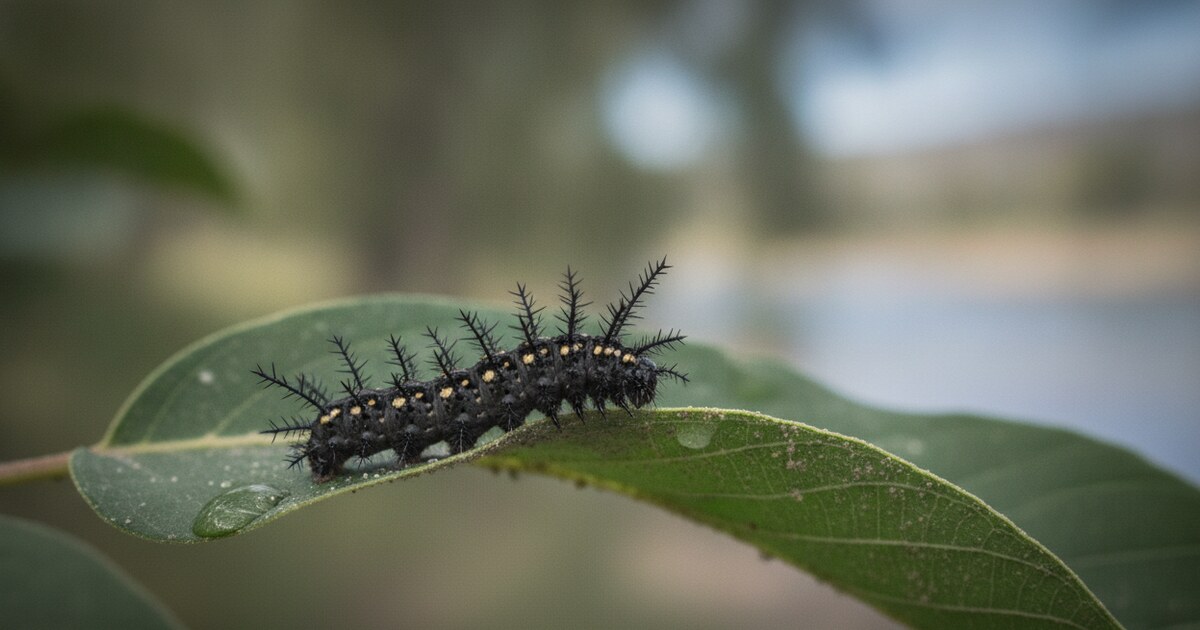
Colorado’s shortgrass plains, Front Range cottonwood corridors, and vast aspen and conifer forests each pull in a different set of caterpillar species. In Denver’s suburbs and urban parks you’ll find Front Range species tied to elm, willow, and cottonwood. An hour west in the foothills, the community shifts to aspen and ponderosa pine species you won’t see on the plains. Most caterpillars in Colorado that you’ll encounter in a yard, garden, or hiking trail are harmless. Three species sting or cause skin reactions, and one of them triggers outbreaks serious enough that Colorado State University Extension publishes dedicated management guides. Knowing which ones they are before you reach for something hanging off a Douglas-fir branch or a riverside cottonwood matters. This guide covers 6 common caterpillars in Colorado and the 3 stinging species worth keeping in mind.
Colorado has 3 caterpillar species that sting: the Io moth caterpillar (bright green, branching spines that burn on contact), the Nevada buck moth caterpillar (dark and spiny, found in riparian willow and cottonwood habitat), and the Douglas-fir tussock moth caterpillar (tufted hairs that cause contact dermatitis). Most Colorado caterpillars, including woolly bears and Western Tiger Swallowtails, are safe to handle.
Common Caterpillars in Colorado
Colorado’s caterpillar diversity maps onto its elevation bands. The Eastern Plains at 3,300-5,000 feet host grassland species tied to milkweed, willows, and cottonwood corridors along the South Platte and Arkansas Rivers. The Front Range foothills, from Pueblo to Fort Collins at roughly 5,000-7,000 feet, produce the most human-caterpillar encounters: cottonwood, elm, and willow line every creek and park in the corridor. Colorado holds roughly 4.8 million acres of aspen, more than any other US state, and Western tent caterpillar outbreaks can strip high-country aspen stands before natural parasites collapse the population within a season. Above 8,000 feet, the species list thins fast; woolly bears appear up to about 9,000 feet, but most lower-elevation species don’t follow. Colorado State University Extension identifies the Douglas-fir tussock moth (Orgyia pseudotsugata) as a recurring defoliator in Colorado’s conifer zones, with outbreak cycles in ponderosa and Douglas-fir forests across the mountain counties.
1. Banded Woolly Bear (Pyrrharctia isabella)
Dense, coarse hairs with a rust-brown midsection band and black at both ends, about 2 inches long. The woolly bear is the most recognized caterpillar in Colorado, crossing roads, garden paths, and hiking trails from late August through October as individuals search for overwintering sites. They’re found statewide from the Eastern Plains well up into the foothills, sometimes above 9,000 feet. They survive winter by freezing solid under bark and leaf litter, then thaw in spring to resume feeding before pupating. Safe to handle; the coarse hairs can mildly irritate sensitive skin but won’t sting. The Colorado folk tradition of predicting winter severity from the rust band’s width has no scientific backing, but woolly bears are hard to miss in fall regardless.
2. Western Tiger Swallowtail Caterpillar (Papilio rutulus)
Smooth and bright green with 2 large orange-and-black eyespots on the thorax that closely mimic a snake’s face from above. When threatened, it pushes out a forked orange osmeterium from behind the head; the organ looks alarming, but it causes no harm. The Western Tiger Swallowtail is the western counterpart of the Eastern Tiger Swallowtail and is one of the most common large butterflies along Colorado’s Front Range and river corridors. Its caterpillar feeds on cottonwood, willow, alder, and aspen, trees that grow along nearly every watercourse in the state. Found from May through September. Safe to handle.
3. Monarch Caterpillar (Danaus plexippus)
Bold yellow, black, and white bands circling the body with a pair of black tentacles at each end. Found only on milkweed plants, which narrows the ID to near certainty. Monarch caterpillars absorb cardiac glycosides from milkweed that make the adult butterfly unpalatable to predators, but they pose no risk to people. Colorado sits along the central flyway of the monarch’s fall migration, and caterpillar numbers peak in the state from late July through September as adults fuel up on milkweed before the long push south. The full guide to banded black-and-yellow species is at Black and Yellow Caterpillars.
4. Spiny Elm Caterpillar (Nymphalis antiopa)
Black with rows of red-orange spots along each side and rows of short, branching black spines bristling along the back, about 1.5-2 inches long at maturity. Despite the threatening appearance, the spines on this species cause no sting or irritation; they’re purely defensive armor against bird predation. The adult butterfly is the Mourning Cloak, one of Colorado’s longest-lived butterflies, recognized by its dark maroon wings with yellow edges and iridescent blue spots. The caterpillar feeds in groups on elm, cottonwood, willow, aspen, and hackberry, trees common across Colorado’s plains and foothills. Genuinely safe to handle, despite looking exactly like something you shouldn’t touch.
5. Western Tent Caterpillar (Malacosoma californicum)
Blue-black body with irregular orange-brown markings along the sides and fine pale hairs, about 1.5-2 inches long. Western tent caterpillars build silky tent or web masses in branch forks of aspen, cottonwood, willow, and wild cherry each spring. These communal webs become conspicuous in April and May when caterpillars cluster inside them overnight. In outbreak years they can defoliate large aspen patches across Colorado’s mountain counties, though healthy trees usually refoliate within the same season. Safe to handle.
6. Tomato Hornworm (Manduca quinquemaculatus)
Huge and bright green, up to 4 inches long, with 8 white V-shaped chevrons along the sides and a dark horn at the tail. Colorado’s Front Range and Eastern Plains support extensive vegetable gardening, and tomato hornworms turn up on tomatoes, peppers, and eggplant from June through August. The caterpillar’s size surprises most people who find one for the first time. To tell it from the closely related tobacco hornworm (Manduca sexta): the tomato species has V-shaped chevrons and a dark horn; the tobacco species has diagonal white stripes and a red or pink horn. Safe to handle despite the dramatic appearance.
Stinging Caterpillars in Colorado
Three caterpillar species in Colorado cause skin reactions serious enough to need attention. Two follow the same rule: any caterpillar with branching, tree-like spines is almost certainly a sting risk, regardless of color. For a broader look at spiny species across North America, Spiky Caterpillars covers the full field guide.
7. Io Moth Caterpillar (Automeris io)
Bright lime-green body with a red and white stripe running horizontally along each side. The real concern is the rows of thick, branching green spines covering the body from head to tail. Those clusters break on contact and inject irritating fluid, causing immediate burning pain, a red welt, and sometimes a rash lasting several hours. Some people develop a stronger allergic reaction.
Found on a range of host plants including oak, willow, cottonwood, and wild cherry from late June through August. More common in eastern Colorado and along the Front Range foothills than at high elevations; range extends across the Great Plains and into the region from the east. Any green caterpillar on a cottonwood or willow with visible branching spines is worth treating with caution.
8. Nevada Buck Moth Caterpillar (Hemileuca nevadensis)
Gray to dark brown or black with rows of small pale spots along the sides, covered in clusters of branching spines that may be reddish-tipped at maturity. About 1.5-2 inches long. The spines break on contact and deliver a burning sting with localized swelling and rash. Multiple contacts, which happen easily when a caterpillar drops from a willow branch onto bare skin, intensify the reaction.
Found in riparian willow and cottonwood habitats along Colorado’s major river corridors, including the Colorado, South Platte, Arkansas, and Cache la Poudre. Appears in spring through early summer, which is earlier in the season than most other stinging species in the state. Any dark, spine-covered caterpillar on a riverside willow from April through June is a strong candidate for this species. For white hairy species that also cause reactions, the white fuzzy caterpillar guide covers tussock moth species with similar urticating hairs.
9. Douglas-fir Tussock Moth Caterpillar (Orgyia pseudotsugata)
Gray to brown body with 4 distinctive cream or pale yellow “toothbrush” tufts on the back, a reddish-orange head, and long white “pencil” hairs projecting from the front and rear. About 1-1.5 inches at maturity. The tufted hairs are urticating: they break free and lodge in skin, causing contact dermatitis, itching, and a rash that can persist for several days. Eye contact causes more serious irritation, and people with sensitivities can develop respiratory symptoms from shed hairs during outbreak years.
Found on Douglas-fir, true firs (Abies spp.), and sometimes ponderosa pine across Colorado’s mountain counties. Colorado State University Extension and the Colorado State Forest Service actively monitor this species because outbreak populations can completely defoliate stands of Douglas-fir over multiple years. Populations tend to cycle on a roughly 7-10 year schedule. Hikers and forest workers in Colorado’s mountain counties from May through August are most likely to encounter them. If you’re in conifer forest and spot a tufted gray-brown caterpillar with toothbrush-shaped hair bundles on a fir or pine, don’t handle it. For species shared with states to the north and east, the caterpillar identification guide for Michigan covers overlapping Midwestern species.
How to Identify Caterpillars in Colorado by Photo
Four clues close most Colorado caterpillar IDs without a field guide:
- Color and pattern: solid, striped, banded, or spotted
- Texture: smooth skin, coarsely hairy, tufted hairs, or branching spines (the two sting-risk categories are spines and tufted hairs)
- Host plant: monarch caterpillars appear only on milkweed; Western Tiger Swallowtails on cottonwood, willow, and aspen; tomato hornworms on tomato and pepper; tussock moth caterpillars on conifer. Host plant alone closes a surprising number of IDs.
- Elevation and region: Eastern Plains species (Io moth, monarch) differ from Front Range foothills species, and high-country conifer species (Douglas-fir tussock moth) won’t appear in the suburbs. Nevada buck moth caterpillars concentrate in riparian corridors statewide.
When those clues still leave 2 or 3 candidates, a photo does the rest. Animal Identifier lets you photograph the caterpillar and returns the species name in seconds, along with details on whether it stings, what it becomes, and which host plants to look for nearby. It covers insects and caterpillars from all of Colorado’s elevation zones, from the Eastern Plains to the subalpine.
Frequently Asked Questions
Are there poisonous caterpillars in Colorado?
Colorado has stinging caterpillars but none that cause systemic poisoning through skin contact. The Io moth caterpillar delivers burning venom through branching green spines. The Nevada buck moth caterpillar’s branching spines cause burning, swelling, and rash along Colorado’s river corridors. The Douglas-fir tussock moth caterpillar’s urticating hairs cause contact dermatitis and can irritate eyes and airways during outbreak years. Most caterpillars in Colorado, including woolly bears, Western Tiger Swallowtails, spiny elm caterpillars, and Western tent caterpillars, are safe to handle.
What is the most common caterpillar in Colorado?
The woolly bear (Pyrrharctia isabella) is the most widely recognized caterpillar statewide, crossing roads and paths from late August through October in all 64 of Colorado’s counties, from the Eastern Plains up to around 9,000 feet. The Western tent caterpillar is also widespread, building silky web masses in cottonwood, willow, and aspen along watercourses and in the foothills each spring.
Do caterpillars in Colorado sting?
Yes, 3 species do. The Io moth caterpillar has branching green spines that break and inject irritating fluid on contact. The Nevada buck moth caterpillar has similar branching spines and lives in willow and cottonwood riparian areas statewide. The Douglas-fir tussock moth caterpillar has urticating tufted hairs rather than true spines, but contact with skin or eyes still causes significant reactions. Avoid handling any caterpillar with visible branching or tree-like spines, and in conifer forest, avoid tufted caterpillars with toothbrush-like hair bundles.
What is the big green caterpillar in Colorado?
Two large green caterpillars are common in Colorado. The Western Tiger Swallowtail caterpillar is bright green with large orange-and-black eyespots on the thorax, found on cottonwood, willow, and aspen from May through September; it’s safe to handle. The tomato hornworm is even larger at up to 4 inches, with white V-shaped chevrons along the sides and a dark horn at the tail, turning up in vegetable gardens statewide from June through August; also safe to handle.
What is the fuzzy caterpillar in Colorado?
The woolly bear (Pyrrharctia isabella) is Colorado’s most common fuzzy caterpillar, with dense rust-and-black coarse hairs; it’s safe to handle. The Douglas-fir tussock moth caterpillar also looks furry: gray-brown with 4 cream toothbrush tufts on its back and long white “pencil” hairs projecting from each end. Those hairs detach easily and cause skin and eye irritation, so the tussock moth caterpillar should never be handled bare-handed.
If you find a caterpillar in Colorado you can’t place, photograph it and open Animal Identifier. A single photo returns the species name and key details in seconds. You can ask follow-up questions in the same session: whether it stings, what it turns into, or which plant to look for nearby. Download it free on iOS or Android and start with 2 identifications a day at no charge.