Raccoon Scat: How to Identify Raccoon Poop
Found a pile of dark droppings on your deck, near your dumpster, or on a flat section of your roof? The size and contents narrow the suspect list quickly. Raccoons are among the most adaptable urban wildlife in North America, and their scat is distinctive once you know the key features. Getting the ID right matters more than it does with most animals, because raccoon scat carries health risks serious enough that safe cleanup requires protective gear you probably wouldn’t think to grab otherwise.
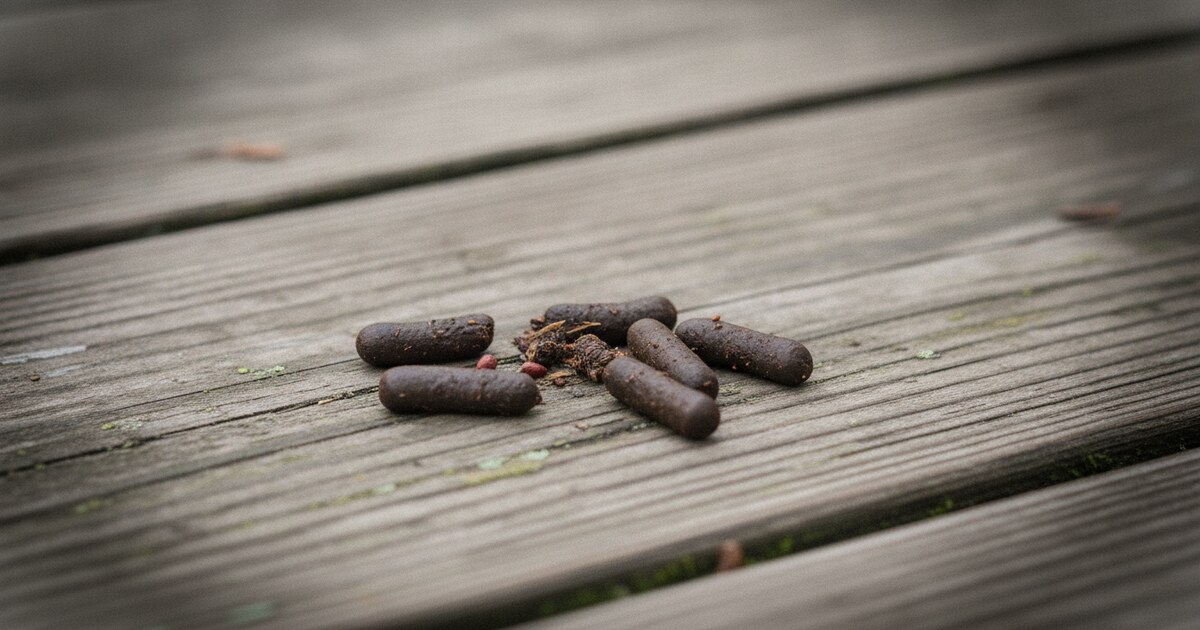
Raccoon scat is tubular, 3 to 5 inches long and 3/4 inch wide, with blunt rounded ends. Fresh scat is dark brown to black; dried scat fades to gray or tan. Undigested berry seeds, corn, and insect parts are common. Raccoons return to the same latrine sites repeatedly, so you’ll find a pile of multiple deposits of different ages rather than a single isolated dropping.
What Raccoon Scat Looks Like
Raccoon droppings are chunky and tubular with blunt ends, shaped roughly like a small cigar. Fresh scat measures about 3/4 to 1 inch across and 3 to 5 inches long. Color runs dark brown to near-black when fresh and fades to gray or tan as it dries. The most reliable identifying feature is what’s inside: raccoons eat almost everything, so their scat regularly contains visible berry seeds (mulberry, persimmon, wild cherry, pokeweed), corn cob fragments, insect exoskeleton pieces, and sometimes small bones.
After a heavy fruit season in late summer and fall, raccoon scat can look loose and mushy, almost like dark jam, because a berry-heavy diet reduces fiber structure. In those cases, shape is less useful than smell: raccoon droppings have a sharp, pungent, ammonia-tinged odor that carries clearly in outdoor air.
Raccoon scat is tubular to slightly segmented, 3 to 5 inches long and 3/4 to 1 inch wide, with rounded ends. Fresh scat runs dark brown to near-black; older deposits fade to gray or tan. Undigested seeds (mulberry, persimmon, wild cherry), corn fragments, insect parts, and occasional small bones appear in most samples. The odor is sharp and ammonia-tinged. Raccoons establish dedicated latrine sites and return to the same spots repeatedly, depositing waste from multiple animals over weeks or months. Common latrine locations include the base of large trees, flat rooftop surfaces, decks and patios, and attic spaces. Ground-level latrines typically appear 200 to 350 feet from a water source like a stream, creek, or retention pond. Raccoon scat poses serious health risks: Baylisascaris procyonis eggs remain viable in soil for several years, Leptospirosis bacteria can enter through broken skin, and Giardia may contaminate nearby groundwater. This combination of concentrated exposure from latrine sites and durable parasites is what makes raccoon droppings more hazardous than most other wildlife scat.
Raccoon Scat vs. Similar Droppings
Several animals leave droppings that people regularly mistake for raccoon scat. Size, shape, and the presence of undigested food narrow it down.
Dog vs. raccoon. Domestic dog poop is a similar diameter but typically longer (4 to 7 inches) and more uniform in texture. It almost never contains berry seeds or plant material. Dog waste also doesn’t pile up repeatedly at the same tight spot the way a raccoon latrine does.
Coyote vs. raccoon. Coyote scat tapers to a twisted or rope-like point at one or both ends rather than ending bluntly. It’s slightly narrower too, typically 1/2 to 3/4 inch wide. Coyote droppings frequently contain fur and bone fragments from prey animals; raccoon scat rarely does unless the raccoon scavenged a carcass.
Opossum vs. raccoon. Opossum droppings are noticeably smaller (1/2 to 3/4 inch wide, 1 to 3 inches long) and tend to be scattered rather than piled. Like raccoon scat, they may contain seeds, but they’re much shorter and thinner.
Skunk vs. raccoon. Skunk droppings are a similar diameter to raccoon scat but shorter, usually under 2 inches. They frequently contain insect exoskeleton fragments from a diet that leans heavily on grubs and beetles.
The animal poop identification chart covers over a dozen North American species side by side if you’re still not certain.
The Raccoon Latrine: A Key Identification Clue
Raccoons don’t scatter droppings randomly. They return to the same locations over and over, a behavior biologists call latrine use. This habit is one of the most reliable identification cues, and it’s also the reason raccoon scat is riskier than a single deposit from most other animals: repeated use builds up parasites and pathogens in one concentrated spot over months.
Common latrine sites include the base of large trees (especially pines and oaks near water), flat sections of roof, deck railings and patio surfaces, the tops of firewood piles, and inside attics. An attic latrine is a serious problem. Raccoons denning in attics can accumulate a large volume of waste quickly, and the confined space makes inhalation exposure a real concern.
If you’re finding fresh deposits at the same spot in your yard every few days, alongside older dried ones, that’s a latrine in active use.
Why You Shouldn’t Touch Raccoon Scat
Raccoon scat poses health risks that most people underestimate. Three pathogens are the primary concern.
Baylisascaris procyonis is a roundworm that uses raccoons as its primary host. The parasite’s eggs pass through raccoon feces, are microscopic and sticky, and can remain viable in moist soil for several years under normal outdoor conditions. If ingested or inhaled through disturbing dried scat, the larvae migrate through the body and can damage the eyes, organs, and central nervous system. There’s no reliably effective treatment once larvae migrate into tissue. Most documented human cases have involved children under 5 who played near raccoon latrines and accidentally ingested contaminated soil.
Leptospirosis is a bacterial infection transmitted through raccoon urine and, to a lesser extent, scat-contaminated water or soil. Symptoms include fever, muscle aches, and headaches; severe cases progress to kidney and liver failure (Weil’s disease). The bacteria enter through broken skin or mucous membranes, so handling contaminated material without gloves carries real exposure risk.
Giardia shows up in raccoon feces as well and can contaminate groundwater or surface water near outdoor latrine sites.
The practical rule: treat raccoon scat the way you’d treat a broken hypodermic needle. Don’t touch it, don’t dry-sweep it (which sends eggs airborne), and keep children and pets well away until the area is properly cleaned.
How to Clean Up Raccoon Scat Safely
Safe cleanup requires the right gear and a specific technique. Most exposures happen because people skip steps.
What you need:
- N95 or P100 respirator (a paper dust mask is inadequate)
- Disposable nitrile gloves
- Disposable coveralls or dedicated clothes you’ll bag and wash immediately at high heat
- Heavy-duty trash bags
- A shovel or scooping tool you can dispose of or fully disinfect
Steps:
- Wet the droppings thoroughly with water before touching them. This prevents dried particles and eggs from going airborne.
- Scoop or scrape the scat into a heavy-duty trash bag using your disposable tool. Seal the bag immediately.
- Scrub the surface with hot water and dish soap. Bleach does not kill Baylisascaris eggs. Physical removal plus heat (boiling water poured directly on hard surfaces) is effective; cold chemical washes aren’t.
- Double-bag all waste and place it in a sealed outdoor trash can.
- Remove and bag your protective clothing before going inside. Wash separately at the highest heat setting the fabric tolerates.
- Wash your hands with soap and water thoroughly, even though you wore gloves.
For attic latrines or large outdoor accumulations, a wildlife removal professional is the right call. Working in a confined space with years of dried raccoon scat, without proper respiratory protection, significantly raises the inhalation risk, and contaminated attic insulation typically has to come out entirely.
When You Spot the Raccoon Itself
Raccoon scat tells you an animal is using your property, but droppings don’t tell you what you’re actually dealing with. A single adult raccoon, a family group, or a juvenile separated from its mother all leave similar evidence, and knowing the answer shapes what you do next.
When you see the raccoon, photograph it and open Animal Identifier. The app identifies the species from the photo and gives you details on its behavior, typical territory, and habitat, which helps you figure out what’s drawing it to your yard and whether a simple deterrent (securing trash cans, removing pet food) will be enough. Raccoons can also be confused with ringtails in parts of the western US, or rarely with coatis in the Southwest, and a photo ID cuts through that ambiguity fast.
Animal Identifier covers mammals, birds, reptiles, and insects worldwide, and it’s free to start with 2 identifications per day, no account needed.
Frequently Asked Questions
What does raccoon scat look like?
Raccoon scat is tubular with blunt ends, 3 to 5 inches long and 3/4 to 1 inch wide. Fresh scat is dark brown to black; dried deposits fade to gray or tan. Undigested berry seeds, corn, and insect parts show up consistently. Raccoons deposit repeatedly at the same latrine site, so you’ll find multiple droppings of different ages piled together rather than a single isolated dropping.
Is raccoon scat dangerous?
Yes. Raccoon scat carries Baylisascaris procyonis (raccoon roundworm), whose eggs remain viable in soil for several years and can cause serious neurological damage if ingested or inhaled. It also carries Leptospirosis and Giardia. Always wear an N95 respirator and disposable gloves when handling raccoon droppings, and never dry-sweep dried scat, which sends eggs airborne.
How do I tell raccoon poop from dog poop?
Raccoon droppings are shorter and fatter than dog poop and almost always contain undigested berry seeds or plant material. The clearest tell is location: raccoons use latrines repeatedly, so you’ll find a pile of multiple deposits of different ages in the same spot rather than a single passing deposit.
How long do Baylisascaris eggs survive in soil?
Baylisascaris eggs are highly resilient and can remain infectious in moist soil for several years. Surface freezing doesn’t reliably kill them. Old latrine sites stay hazardous long after the raccoon has moved on, which is why disturbing dried old scat with a broom or rake is risky without respiratory protection.
What should I do if raccoons have been using my attic as a latrine?
Call a wildlife removal professional. Attic latrines accumulate large volumes of waste quickly, and contaminated insulation typically needs to be removed entirely. Working in an enclosed space with dried raccoon scat, without a P100 respirator, is a serious Baylisascaris inhalation risk. A professional can also seal the entry points so raccoons can’t return.