Coyote Poop: How to Identify Coyote Scat
Coyote Poop: How to Identify Coyote Scat
You found something in the backyard or on the trail and it doesn’t look like dog poop. The ends are twisted, the color is darker, and there’s something fibrous pressed into the surface. Coyote poop turns up in suburban yards, parks, hiking paths, and rural properties across nearly every part of the country, and getting the ID right matters. Coyote scat carries parasites and bacteria that are a real hazard for dogs and, less often, people. This guide covers what coyote scat looks like, what’s inside it, how it differs from dog and fox droppings, why coyotes leave it where they do, and what to do if you find it in your yard.
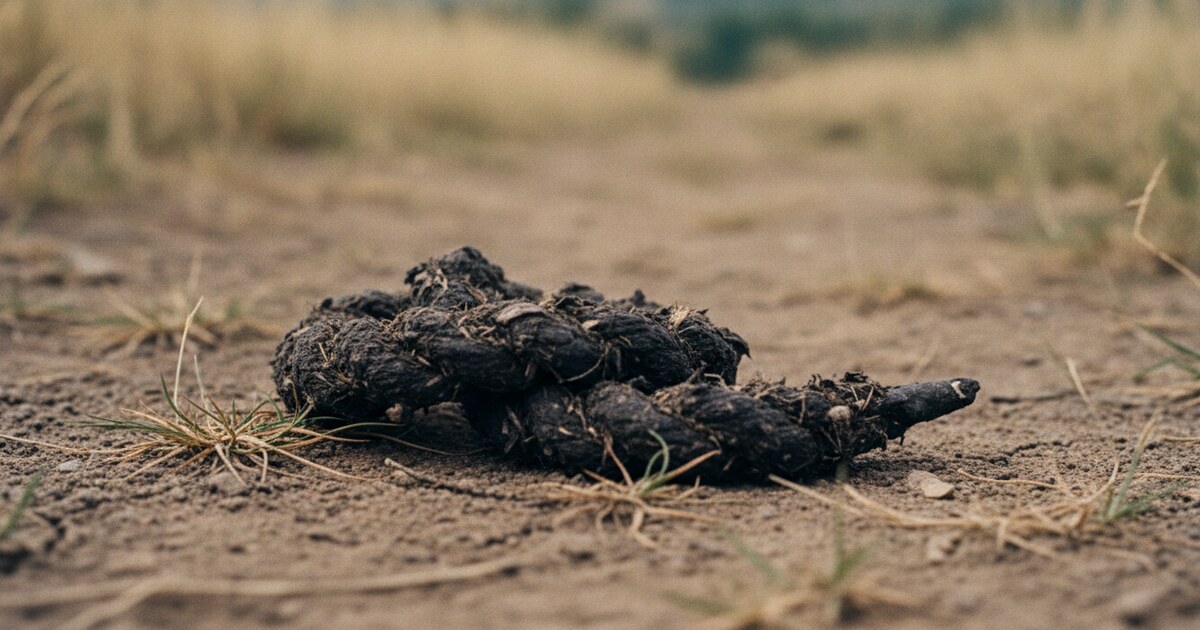
Coyote scat is a dark, twisted rope that tapers to a point at one end, usually 3 to 5 inches long and about 3/4 inch in diameter. It almost always contains visible fur, bone fragments, seeds, or berry skin from what the coyote ate. Dog poop has blunt, rounded ends and no contents inside.
What Coyote Scat Looks Like
The shape is the quickest tell. Coyote scat twists like a wrung-out rope and tapers to a thin point at one end (sometimes both). Dog poop sits rounder in cross-section, more like a sausage, and blunt on both ends. That twisted, tapered profile comes directly from the coyote’s diet: fur and fibrous material in the stool create the rope texture as it passes.
A single dropping runs 3/4 to 1.5 inches in diameter and 3 to 5 inches long, though chains of multiple segments can reach 8 inches. Males tend to leave larger deposits. Color is dark brown to nearly black when the coyote has been eating mostly meat: small mammals, birds, or carrion. Summer and fall scat shifts to lighter gray or reddish-tan when berries and fruit dominate the diet.
Coyote droppings measure 3/4 to 1.5 inches in diameter and 3 to 8 inches long, depending on what the animal has been eating. Fresh scat is dark brown to black with visible fur and bone chips when prey was the recent diet; it shifts to lighter gray or reddish-tan when berries, seeds, and fruit dominate. The surface texture is rope-like, with a distinct taper or twist at one or both ends (a physical result of the fibrous hair in the stool). Coyotes occupy all 48 contiguous US states and an estimated 3 to 5 million live across the country. Urban and suburban populations have grown steadily, making coyote scat a common find in parks, greenways, and backyards. Fox scat runs smaller: about 2 inches long and 1/2 inch in diameter. The main differences from domestic dog scat are texture (twisted rope vs. sausage-shaped), contents (fur and bone vs. none), and ends (tapered vs. blunt).
Texture is a secondary cue. Fresh coyote scat is firm; older deposits dry harder and more crumbly. A dropping from a berry-heavy meal in September may crumble apart almost immediately.
What’s Inside Coyote Scat (and What It Tells You)
The contents shift with the season, and reading that shift tells you what the local coyote has been hunting or foraging.
Winter and spring scat is dark and packed with fur and small bone fragments, evidence of a rabbit, vole, mouse, or squirrel kill. You might spot intact small teeth or tiny claws pressed into the surface. The scat is firm and often quite pungent.
Summer and fall scat is noticeably lighter and often crumbly. Coyotes are opportunistic omnivores, and late summer through fall means blackberries, persimmons, plums, and other fruit. You’ll find seeds, berry skins, and insect exoskeletons mixed in. Some scat from this period barely looks like carnivore scat at all.
Year-round contents include grasshoppers, beetles, and crickets; coyotes eat a lot of insects when they’re available. If you find scat with nothing but plant material and insect parts, don’t rule out coyote.
The contents matter for one practical reason: scat packed with fur and bone is more likely to carry tapeworm eggs than scat from a berry-eating phase, because coyotes pick up Echinococcus by eating infected rodents.
Coyote Poop vs Dog Poop: The Key Differences
This comparison trips people up more than any other, because both species are similar-sized canines that roam the same neighborhoods.
| Feature | Coyote Scat | Dog Poop |
|---|---|---|
| Shape | Rope-like, twisted, segmented | Sausage-shaped, uniform |
| Ends | Tapered to a point or twist | Blunt, rounded |
| Diameter | 3/4 to 1.5 inches | Similar range, but blunter |
| Contents | Fur, bone chips, seeds, berries | None (processed commercial food) |
| Smell | Strong, musky, wild | Less pungent overall |
| Color | Dark brown-black to gray | Variable but usually uniform |
| Placement | Trails, intersections, elevated rocks | Grass, random locations |
The most reliable single check: look at the ends and look for contents. A dropping with a tapered twist and visible fur is coyote. A dropping with blunt ends and nothing inside it is almost certainly dog.
Smell is a secondary cue. Coyote scat has a pronounced musky, wild odor. Scent glands near the base of the tail contribute (the same glands that make the scat a territorial signal). Most people who handle wildlife scat regularly describe coyote as distinctly stronger and wilder than dog feces from the same distance.
For a side-by-side comparison with deer, raccoon, rabbit, and a dozen other species, the animal poop identification chart breaks down size and shape across the most common North American animals.
Where Coyotes Leave Scat (and Why)
Coyote scat is almost never random. A 2023 University of Colorado Boulder study confirmed what trackers have long observed: coyotes go out of their way to deposit scat in conspicuous locations, on trails, at the junctions of two trails, on top of rocks, and at the crest of small rises.
This is territorial communication. Coyotes maintain home ranges by marking boundaries with scat and urine, and they update those marks regularly. A single trail junction can accumulate deposits from multiple animals over a season.
The practical implication: if you find one dropping at a trail intersection, check the surrounding area. More are often within a few yards. Finding scat in the center of a hiking path rather than off to the side is a strong coyote indicator; dogs rarely target the middle of the trail.
Suburban yards show the same behavior. Coyotes that have mapped a neighborhood leave scat at consistent “post” locations (the same rock, the same corner of the fence line), returning to refresh the scent every few days.
Is Coyote Scat Dangerous?
Treat coyote scat as a biohazard, especially if you have dogs or young children.
Echinococcus multilocularis is the main concern. This tapeworm uses coyotes as a definitive host and rodents as intermediate hosts. Coyotes shed eggs in scat; dogs can ingest them during outdoor scavenging, and people can pick them up from contaminated soil. A 2024 study found 26% of urban coyote scats tested positive for E. multilocularis. The resulting infection (alveolar echinococcosis) causes slow-growing cysts in the liver; symptoms may not appear for 5 to 15 years, which makes early detection rare without deliberate screening.
Rabies. Coyotes are a rabies vector species in several US states. The scat alone doesn’t tell you if a coyote is infected, but finding fresh scat near your yard is a reminder that the animal has your property mapped as part of its range.
Toxocara and other roundworms pass through coyote scat and can affect dogs. Regular deworming helps but isn’t a substitute for keeping dogs away from wildlife scat on trails and in the yard.
None of this means coyote scat creates emergency-level risk for healthy adults with normal hygiene. The practical precautions are simple: don’t handle it without gloves, don’t let dogs sniff or roll in it, and keep young children away from areas where you’ve found it.
How to Remove Coyote Poop from Your Yard
Skip dry sweeping and vacuuming without a HEPA filter; both aerosolize particles along with any eggs or bacteria.
A safer approach:
- Put on nitrile or rubber gloves and an N95 mask.
- Spray the scat with a disinfectant (1-to-10 bleach dilution or an EPA-registered product). Let it soak for at least 5 minutes.
- Scoop up the dampened material using paper towels or a bag-over-hand technique.
- Seal in a plastic bag, then seal that bag inside a second bag before binning it.
- Rinse the spot with clean water afterward.
- Wash hands thoroughly after removing gloves.
For hard surfaces like a patio or deck, the 1:10 bleach dilution degrades Echinococcus eggs on contact. Soil is harder to treat; removing the top layer and replacing it is the thorough option if you have repeat deposits in a garden bed.
If scat keeps returning to the same spot, that location has become an established marking post. Moving a large rock or piece of outdoor furniture that the coyote uses as a platform sometimes breaks the habit, though territorial coyotes will often just move a few feet and resume marking.
Squirrel droppings in the same backyard can complicate the ID, as they’re much smaller (about 3/8 inch long) and blunt-ended rather than twisted. For details on the differences, squirrel poop covers the size, shape, and location cues that separate them from rodent droppings.
Frequently Asked Questions
How do I tell coyote poop from fox poop?
Size is the fastest check. Fox scat runs about 2 inches long and 1/2 inch in diameter, noticeably smaller than coyote scat. Both are tapered and twisted, and both may contain fur, bone, or berries. If the dropping is bigger than your thumb from tip to first knuckle, it’s more likely coyote.
What does it mean if I keep finding coyote scat in the same spot?
Coyotes use consistent marking posts to maintain their range. Finding scat repeatedly at the same trail junction, rock, or yard corner means an animal (or several) treats that spot as a regular territorial mark. The coyote isn’t nesting there, but it has mapped your area as part of its home range.
Can coyote poop hurt my dog?
Yes, it can. Dogs can pick up Echinococcus tapeworm eggs by sniffing or rolling in coyote scat, and the resulting infection causes serious liver disease. Keep dogs away from coyote scat on trails and in the yard. Regular deworming and annual vet checks help but aren’t a substitute for preventing direct contact.
Why does coyote scat smell so strong?
Coyotes have scent glands near the base of the tail that contribute a musky, glandular odor to their scat. That smell is part of the territorial signal; the stronger it reads to other coyotes, the more information it conveys. Fresh coyote scat is noticeably more pungent and wilder-smelling than domestic dog feces of the same age.
Once you’ve read the scat and confirmed coyote, spotting the actual animal gives you the full picture. If you see the coyote itself and want a confirmed ID, whether you’re looking at a coyote, a gray fox, a feral dog, or something else, Animal Identifier can tell you from a single photo. Open the app, point your camera at the animal, and get the species along with its habitat, range, and behavior in seconds. It covers mammals, birds, reptiles, and insects worldwide and gives you 2 free identifications a day with no account needed. Available on iOS and Android.