Animal Poop Identification Chart: Whose Droppings Are These?
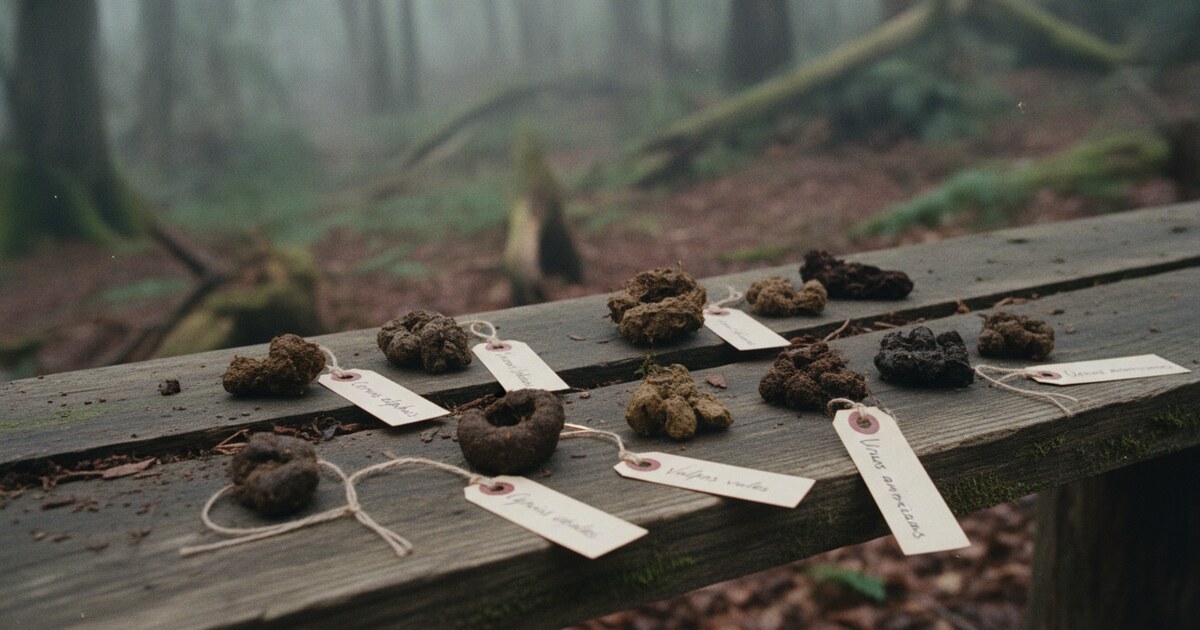
Animal Poop Identification Chart: Whose Droppings Are These?
You found droppings in the backyard, along a hiking trail, or near the foundation of your house, and you have no idea what left them. The animal is long gone. But the droppings themselves are a detailed record, if you know how to read them.
This animal poop identification chart covers 12 common North American species. Each entry gives you the visual details you can actually observe: size, shape, color, and what’s inside. A section on location narrows the field before you even crouch down for a closer look, because where you found them cuts the list of suspects in half.
To identify animal droppings, start with size, then look at shape. Deer leave clusters of small oval pellets, 1/2 to 3/4 of an inch long. Raccoons leave dark tubular scat 2-3 inches long with seeds or berries visible inside. Rats leave tiny pointed capsules near walls. Adding location to those two clues usually pins the species.
The Animal Poop Identification Chart
Use size as your first filter. It rules out most candidates before you’ve studied anything closely.
Deer: Clusters of smooth, oval pellets, each about 1/2 to 3/4 of an inch long. Olive green when fresh, darkening to near-black as they dry. A single deposit typically contains 20-50 pellets scattered or clumped together. Found along browsing paths, garden edges, and lawn perimeters. Elk pellets look similar but run closer to 1 inch long and are noticeably thicker.
Rabbit: Rounder and smaller than deer pellets, about 1/4 to 3/8 of an inch across, nearly spherical. Light tan to medium brown, dry, fibrous, and odorless. Often found in scatter-piles of 50 or more pellets in the same spot, because rabbits tend to revisit regular feeding areas.
Raccoon: Tubular, blunt at both ends, 2-3 inches long and about 1/2 inch across. Dark gray to black, with a strong sour smell. The clearest sign is the contents. Raccoons eat everything, so their scat is packed with seeds, berry skins, corn kernels, or fish bones depending on the season. Raccoons use communal latrine sites, returning to the same flat surface (a deck railing, log, or large rock) repeatedly.
Opossum: Similar in size to raccoon scat, 1.5-2 inches, but often more twisted or curled in shape and lighter in color, from tan to dark brown. Contents include fruit pulp, insects, and occasionally small bones. A musky smell is common.
Coyote / Fox: Rope-like and tapered at one or both ends, 3-5 inches long. The contents identify it immediately: hair, bone fragments, and sometimes feathers from prey. Coyotes often deposit scat at trail intersections and on elevated ground to mark territory, so the placement is deliberate. Fox scat is slightly smaller than coyote scat and usually has a more pointed tip.
Skunk: Short cylinders, 1-2 inches, often with a tapered tip and a noticeable smell even without the spray gland being involved. Contents shift with the season: insects and grubs in spring, berries and small rodents in fall. Color ranges from dark brown to nearly black.
Squirrel: Small elongated pellets about 3/8 of an inch long, reddish-brown to dark brown, with a slight curve at the tips. Found near trees, along fence rails, and on stumps. Squirrel droppings look similar to rat droppings but tend to be slightly larger, lighter in color, and more rounded at both ends.
Rat: Dark brown to black capsules, 1/2 to 3/4 of an inch long with pointed tips. Found in clusters along walls, behind appliances, and under decks. Fresh droppings are shiny; older ones turn gray and crumble. Shiny droppings mean a recent visit.
Mouse: The same pointed-capsule shape as rat droppings, but about 1/4 of an inch long with more dramatically tapered points at both ends. Mice produce around 50-75 droppings a day, so even one animal leaves a visible trail quickly. Usually found near food sources and along baseboards.
Canada Goose: Large (2-3 inch), tubular, olive-green or dark green with a white cap of uric acid at one end. Prolific producers on park lawns and sports fields near water. The volume alone usually makes them unmistakable.
Snake: Small, liquid deposits with a white or off-white chalky center. Uric acid gives snake scat the same white cap you see in bird droppings, but the dark portion is smaller and more concentrated. Finding snake scat regularly in a spot usually means a snake is sheltering nearby, often under a wood pile or behind rock landscaping.
Bear: Only found in western states, mountain areas, and parts of the Southeast. Tubular, 1.5-2 inches in diameter and 5 or more inches long. Color and smell vary dramatically with diet: berry-heavy diets produce bright purple or dark red scat full of seeds; fish or meat diets make it darker and more pungent. Volume alone distinguishes bear scat from every other animal on this chart.
How to Read Scat: Size, Shape, and Contents
The physical properties of animal droppings carry more information than most people realize. Size is the fastest filter: mouse droppings measure about 1/4 inch while bear scat exceeds 5 inches, so a quick size check eliminates most candidates. Shape reveals diet. Pellets come from herbivores like deer and rabbits, whose simple gut produces round, discrete waste. Tubular scat comes from carnivores and omnivores, whose varied diets produce connected cylinders. The length-to-diameter ratio narrows it further: a 4-inch tapered rope with hair inside points to coyote; a 2-inch blunt cylinder with seeds points to raccoon. Contents clinch the ID. Open any tubular scat with a stick and look for seed hulls (raccoon, opossum), bone fragments and fur (coyote, fox), or insect parts (skunk). Herbivore pellets are uniformly fibrous inside. Location rounds out the picture: scat on an elevated surface like a log or railing typically means a territorial predator; scat scattered near food sources means a forager following berry bushes or a compost pile.
Where Animal Droppings Turn Up
Location halves your suspect list before you’ve examined anything closely.
Droppings along the edge of a lawn or garden bed, especially near plantings or vegetable rows, almost always mean deer or rabbit. Both browse low vegetation and follow predictable paths along habitat edges.
Droppings on a flat horizontal surface, like a deck railing, log top, or large rock, in a concentrated pile that keeps growing over several days, point strongly to raccoon. They’re the most consistent users of communal latrines on elevated platforms.
Droppings inside the house, near walls, under appliances, or inside cabinets come down to two options: rat or mouse. The location alone narrows it that far, and size tells you which one.
Droppings placed at trail intersections or on low mounds in wooded or edge habitat mean coyote or fox. The conspicuous placement is intentional territory-marking behavior.
Droppings scattered across open grass near a pond or lake, usually throughout summer, mean Canada geese. They’re the only common species that deposits scat at this scale in open lawn areas.
If you’re tracking deer across a property, droppings are one piece of the picture. Tracks give you the direction of travel and tell you where the animal was heading. Our guide to identifying deer tracks covers how to read size, gait patterns, and what the spacing between prints reveals about age and behavior.
Health Risks From Animal Droppings
Most wild animal droppings carry some health risk. A few carry serious ones.
Raccoon roundworm (Baylisascaris procyonis) is the highest hazard. The eggs survive in soil for years and can cause severe neurological damage in humans if accidentally ingested. Don’t touch raccoon scat bare-handed, and keep children and dogs away from communal latrine sites. Wear disposable gloves and an N95 mask, dampen the area before disturbing it (to keep particles down), and seal the waste in a plastic bag before disposal.
Hantavirus comes from rodent droppings, particularly deer mice in the western US. Disturbing dry rodent droppings or nesting material can release particles carrying the virus. Always dampen rodent waste before sweeping and wear a mask in enclosed spaces with active rodent activity.
Leptospirosis spreads through contact with urine or feces from infected mammals, including raccoons, rats, and opossums. Avoid barefoot contact with wet ground in areas where wildlife travels regularly.
Salmonella is common in bird droppings. Casual outdoor contact carries low risk as long as you wash your hands. The higher-risk situation is handling or breathing contaminated material in confined areas.
For most outdoor encounters, deer pellets on a trail or rabbit pellets in the garden carry low risk. The genuinely hazardous situations involve raccoon latrines inside or under buildings, and active rodent infestations in enclosed spaces.
When Scat Alone Doesn’t Tell You Enough
Droppings are one line of evidence. Raccoon and opossum scat can look alike. Fresh deer pellets and old rabbit pellets both read as “dark oval pellet” in low light.
The most reliable approach is to combine signs. Pair the droppings with tracks, feeding damage (gnawed wood, stripped bark, dug-up garden beds), or tufts of fur caught on fencing. Any one of those clues combined with the scat usually resolves the ambiguity.
Snake scat is one of the harder calls to confirm from droppings alone. If you spot the snake itself and want to know what species it is, our guide to apps that identify snakes covers which photo-based tools work reliably and what to look for when comparing options.
When you actually see the animal that made those droppings, a single photo is all you need. Animal Identifier matches the animal to a species in seconds and gives you details on its habitat, diet, and behavior. It covers mammals, birds, reptiles, and insects worldwide, and it’s free to try with 2 identifications a day, no account required.
Frequently Asked Questions
What does deer poop look like? Deer droppings are smooth, oval pellets about 1/2 to 3/4 of an inch long. They’re olive green when fresh and darken to near-black as they dry. A single deposit typically leaves 20-50 pellets clustered together in one spot. They’re easy to distinguish from rodent droppings because deer pellets are larger, smoother, and rounded at both ends rather than sharply pointed.
What animal poop looks like dark berries? Raccoon scat can contain so many berry skins and seeds that it resembles a cluster of dark berries. Bear scat after heavy berry feeding turns bright purple or dark red and is often packed with seeds. The clearest difference is size: bear scat is 5 or more inches long, while raccoon scat tops out around 3 inches.
How do I tell mouse droppings from rat droppings? Size is the most reliable indicator. Mouse droppings are about 1/4 of an inch long with sharply tapered points at both ends. Rat droppings are 1/2 to 3/4 of an inch, similarly shaped but noticeably larger. Location helps too: mice stay close to food sources and along walls, while rats travel farther and tend to leave droppings along established routes between shelter and food.
Are animal droppings dangerous to touch? Some are genuinely hazardous. Raccoon scat can contain raccoon roundworm eggs (Baylisascaris procyonis), which survive in soil for years and cause serious neurological damage. Rodent droppings can transmit hantavirus when disturbed dry in enclosed spaces. Always wear disposable gloves when handling any wild animal feces, dampen the area before cleaning, and wash your hands thoroughly afterward.
What does raccoon poop look like? Raccoon droppings are dark gray to black, tubular, about 2-3 inches long and 1/2 inch in diameter, with blunt ends. The most reliable marker is the contents: raccoons are omnivores, so their scat usually contains visible seeds, berry skins, fish bones, or corn kernels depending on the season. A growing pile in the same spot on a flat elevated surface is a strong indicator.