Groundhog Poop: How to Identify It
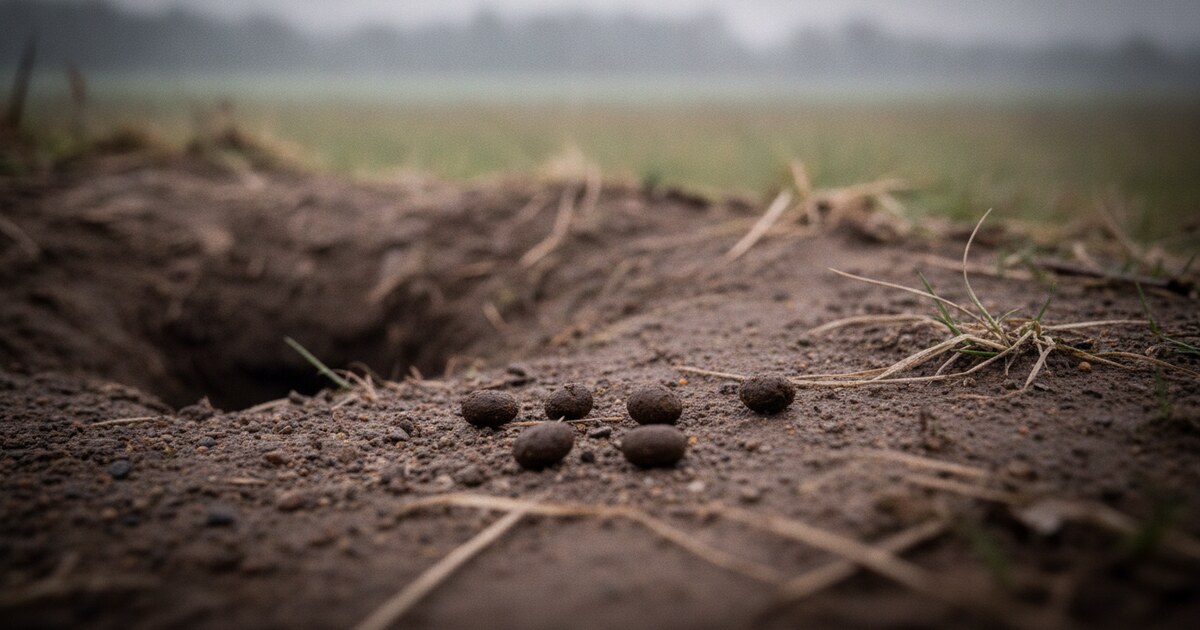
You spotted droppings next to a fresh hole in your yard and you’re not sure what left them. The burrow is a strong clue, but groundhog poop looks similar to rabbit and squirrel droppings from a distance. Knowing the specific differences saves you a lot of guessing, and it tells you whether the burrow is currently occupied.
Groundhog poop is oval to torpedo-shaped, 3/4 to 1 inch long, dark brown to nearly black when fresh, and fibrous throughout. Because groundhogs eat only vegetation, the droppings contain no seeds or insect parts. Groundhogs usually defecate in underground toilet chambers inside their burrows, so finding droppings above ground at all is a meaningful signal.
What Groundhog Poop Looks Like
Each dropping is roughly torpedo-shaped, blunter at one end and slightly tapered at the other. Fresh pellets are dark brown to nearly black, firm but slightly soft due to the high moisture content of their vegetable-heavy diet. They dry out to a medium-tan or gray-brown within 24-48 hours.
Marmota monax (the groundhog, also called woodchuck or whistle pig) is a strict herbivore found across eastern North America and scattered portions of the Pacific Northwest. Adults weigh 5-14 pounds and maintain tunnel systems 25-30 feet long with 2-5 entrances. Each burrow includes a dedicated latrine chamber dug off the main tunnel. Droppings measure 3/4 to 1 inch long and roughly 1/2 inch in diameter, slightly larger than squirrel pellets and more elongated than rabbit pellets. Fresh scat is dark brown to nearly black, shifting to tan-gray as it dries over 24-48 hours. The texture is uniformly fibrous with no seeds, berry fragments, or insect parts, reflecting a diet of grasses, clovers, dandelions, and garden vegetables. Groundhogs are true hibernators, entering torpor from October through March or April. Finding fresh dark droppings outside a burrow entrance confirms the animal is actively in residence right now.
Size comparison at a glance: squirrel pellets run 8-10mm; groundhog pellets run 19-25mm. That gap is obvious once you’ve seen both.
Seasonally, the droppings shift a little. In early summer when groundhogs eat mostly soft green vegetation, pellets are darker, moister, and may clump slightly. By late August and September, as they shift toward harder stems and bark before hibernation, droppings become firmer and lighter brown. The shape stays consistent year-round.
Why Groundhog Droppings Are Hard to Find
Most backyard mammals scatter droppings wherever they happen to be. Groundhogs are different.
Each burrow contains a dedicated latrine chamber, usually a side tunnel 2-3 feet off the main passage. The animal uses it consistently, going back underground to defecate rather than leaving waste where predators might detect it. This deliberate hygiene habit makes above-ground droppings genuinely uncommon compared to what you’d expect from a resident mammal.
When you do find droppings at the entrance, it usually means one of two things. The latrine is full and the animal is using overflow spots just outside, or the groundhog exited in a hurry and went right at the entrance. Either scenario puts the droppings within 3 feet of the burrow opening.
Contrast this with squirrel poop, which turns up all over the yard because squirrels defecate freely wherever they forage. Finding groundhog droppings means you’ve found the burrow itself, not just evidence the animal passed through.
Groundhog Poop vs Squirrel, Rabbit, and Rat Droppings
These four species account for most small-mammal droppings in suburban yards across North America. The differences are consistent enough to ID on sight once you know the field marks.
Squirrel droppings are barrel-shaped with both ends equally rounded, 8-10mm long. Groundhog pellets are noticeably larger (19-25mm), torpedo-shaped with one tapered end, and concentrated near the burrow rather than scattered at random. See the full animal poop identification chart for a side-by-side across a dozen species.
Rabbit droppings are nearly round, pea-sized (8-10mm), dry, and uniformly pale brown. Groundhog droppings are elongated, darker when fresh, and softer. Location also separates them: rabbits scatter droppings anywhere they graze, while groundhog droppings cluster at a single entrance point.
Rat droppings are capsule-shaped with pointed tips at both ends, 12-18mm, and show up in trails along walls or under cover. Groundhog pellets have rounded rather than pointed ends and don’t form trails. Rat infestations also produce dozens of droppings packed into tight runs; a groundhog typically leaves a small cluster of 3-8 pellets, not a trail.
Raccoon scat is tubular, 1/2 to 3/4 inch wide and up to 3 inches long, and usually contains visible seeds and insect parts. Much larger than groundhog droppings. Raccoons use latrines on elevated surfaces (logs, decks, flat rooftops) rather than ground-level burrow entrances.
The simplest single rule: if the droppings are within 3 feet of a burrow entrance, torpedo-shaped, and show no seeds or insect fragments inside, groundhog is the most likely culprit.
Health Risks and Safe Cleanup
Groundhog droppings carry a lower disease risk than raccoon or opossum scat, but they’re not safe to handle bare-handed.
The primary concern is Salmonella, which can transfer through contaminated soil or garden produce that contacts the droppings. Leptospirosis (Leptospira spp.) is possible but uncommon. Groundhogs aren’t a significant vector for Baylisascaris procyonis (the raccoon roundworm), so that particular risk doesn’t apply here.
Cleanup is straightforward. Wear disposable gloves and an N95 or similar dust mask before touching anything. Spray the droppings with diluted disinfectant (1 tablespoon bleach per cup of water) and let it sit for a minute before scooping. This dampens the material so dried particles don’t become airborne.
Bag everything in a sealed plastic bag and discard with household trash. Scrub the surface with soapy water, then disinfect once more. Wash your hands thoroughly even if you wore gloves the entire time.
Keep pets away from the area until cleanup is done. Dogs are particularly prone to Salmonella exposure from wildlife droppings.
What the Droppings Tell You About the Burrow
Finding groundhog poop above ground tells you more than just the species.
Fresh dark-brown droppings within 3 feet of a burrow entrance, combined with loose fresh soil at the opening, mean the animal is actively using that entrance right now. If the pellets are dry, gray-tan, and crumbling, the burrow may be abandoned or the groundhog may have moved on to another tunnel within its home range.
Groundhogs maintain multiple burrow systems across a home range of 1-3 acres and shift between them regularly. An abandoned burrow can hold evidence for months. Fresh droppings are what confirm current occupancy.
If you’re trying to decide whether the problem is active, monitor the entrance for 2-3 mornings. Fresh dark pellets each morning alongside new soil disturbance means the groundhog is in residence and using that specific entrance. That’s the information that matters for deciding whether to act, and how urgently.
Frequently Asked Questions
How big is groundhog poop?
Groundhog droppings measure 3/4 to 1 inch long and roughly 1/2 inch in diameter. They’re noticeably larger than squirrel or rabbit pellets but smaller than raccoon scat. The shape is oval to torpedo with one end slightly more tapered than the other.
Where do groundhogs usually defecate?
Groundhogs use a dedicated latrine chamber inside their burrow and go back underground to defecate. Finding droppings above ground is unusual. When you do find them, they’ll be clustered within 3 feet of an active burrow entrance rather than scattered across the yard.
Can you get sick from groundhog droppings?
Yes, though the risk is lower than with raccoon or opossum scat. Groundhog droppings can carry Salmonella and, more rarely, Leptospira bacteria. Wear disposable gloves, spray with diluted bleach before scooping, and wash your hands thoroughly afterward even if gloves were worn.
Are groundhog poop and woodchuck poop the same thing?
Yes. Groundhog and woodchuck are two names for the same animal, Marmota monax. The droppings are identical regardless of what locals call the species.
How do I tell groundhog poop from rabbit poop?
Rabbit pellets are nearly round, pea-sized, dry, and uniformly pale brown. Groundhog pellets are elongated, darker when fresh, and softer in texture. Location helps too: rabbit droppings scatter randomly wherever the animal grazes, while groundhog droppings cluster at the burrow entrance.
When you spot the groundhog itself, Animal Identifier can confirm the species from a photo. Snap a picture from a safe distance, open the app, and get the species name along with habitat and behavior details. It’s free to try, with 2 identifications per day at no cost and no account required.