Squirrel Poop: What It Looks Like vs. Rat Droppings
Squirrel Poop: What It Looks Like vs. Rat Droppings
You found small dark pellets in the attic, under the bird feeder, or scattered across the deck. Now you’re trying to figure out whose they are. Squirrel droppings get mistaken for rat and mouse droppings constantly because the size and color overlap enough to fool most people at first glance. Getting the ID right matters: rat droppings often signal an active infestation that runs along walls and hides in gaps; squirrel droppings usually point to a nearby feeder visitor or a single animal nesting overhead. This guide covers what squirrel poop actually looks like, how it differs from rat and mouse droppings, where it shows up, and what to do after you find it.
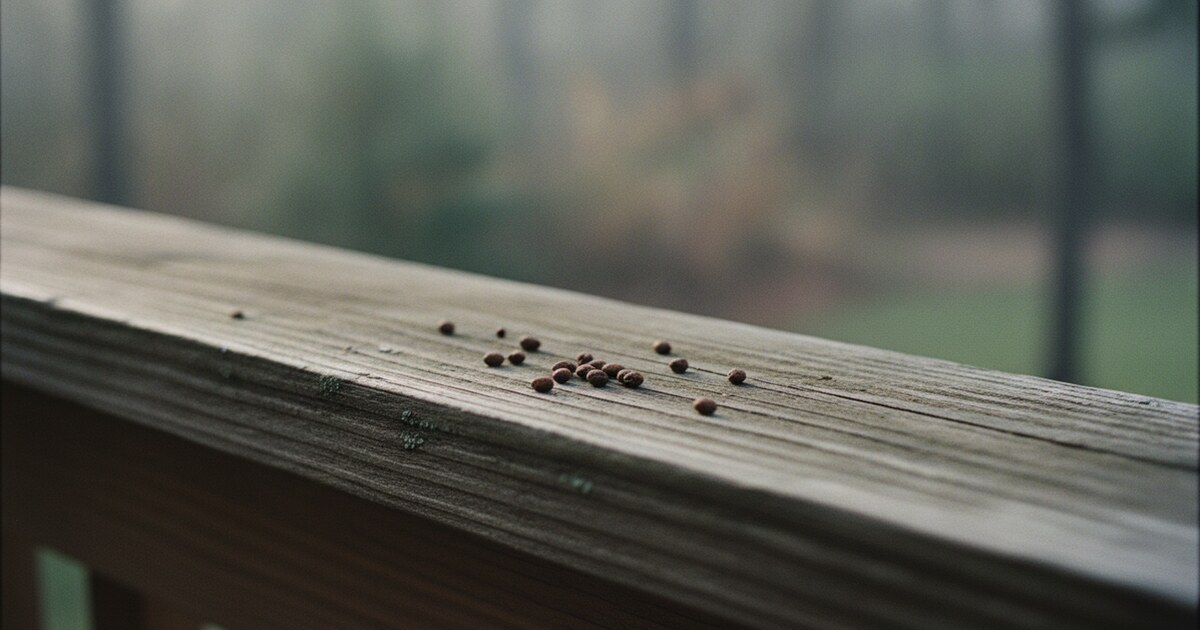
Squirrel droppings are oblong pellets about 3/8 inch (8-10mm) long, with rounded, blunt ends on both sides. Fresh droppings are dark reddish-brown; they dry to tan or chalky gray within a day or two. You’ll find them scattered in loose clusters near food sources or nesting spots, not in the trails along walls that rat droppings leave.
What Squirrel Poop Looks Like
The easiest way to picture squirrel poop is a Tic Tac: roughly the same length (8 to 10 millimeters), the same oblong shape, and both ends smoothly rounded rather than tapered. Most rodent droppings taper to at least one pointed end. Squirrel droppings don’t. That blunt-barrel shape is the single most reliable field mark.
Color shifts with age. Fresh droppings are dark reddish-brown or dark brown, sometimes almost black right after deposit. Leave them for 24 to 48 hours and they fade to tan or pale chalky gray. If you’re finding a mix of dark and light pellets in the same spot, that tells you the squirrel has been visiting regularly over several days, not just once.
Gray squirrel droppings measure 8 to 10 millimeters long, roughly the size of a Tic Tac. Fresh droppings are reddish dark brown with a firm, slightly crumbly texture; they dry to pale tan or chalky gray within 24 to 48 hours. The defining physical feature is the shape: both ends are rounded and blunt. Rat droppings from Norway rats run 12 to 20 millimeters long and taper to a point at one or both ends, nearly twice the squirrel’s length. Norway rats produce 40 to 50 droppings per day, depositing them in trails along walls and in corners; squirrels scatter far fewer pellets near feeding or nesting areas. Flying squirrels, about half the size of gray squirrels, leave correspondingly smaller droppings at around 5 to 6 millimeters long. Squirrel droppings can carry Salmonella and, rarely, leptospirosis. Treat them as a biohazard the same way you’d treat rat droppings.
Texture is a secondary clue. Fresh squirrel droppings feel firm but crumble more easily than rat droppings, which are denser and harder. Both dry out over time, so texture is most useful on material deposited within the last 12 to 24 hours.
Squirrel Poop vs. Rat Poop: The Key Differences
The squirrel-vs-rat question comes up constantly because both animals use attics, both leave dark pellets, and both are active year-round. Here’s how to separate them:
| Feature | Gray Squirrel | Norway Rat |
|---|---|---|
| Length | 8-10mm | 12-20mm |
| Shape | Rounded, blunt on both ends | Tapered, pointed at one or both ends |
| Color (fresh) | Dark reddish-brown | Dark brown or black |
| Color (aged) | Tan to chalky gray | Stays dark brown |
| Texture | Firm, crumbly | Dense, hard |
| Pattern | Scattered clusters | Trails along walls, in runs |
| Activity time | Daytime | Nighttime |
| Typical location | Attic beams, decks, elevated spots | Basements, wall cavities, ground level |
The shape difference is the fastest check. Pick up a dropping with a gloved hand and look at the ends. Rounded and blunt on both sides points to squirrel. Pointed at one end points to rat.
Location tells you a lot too. Rats are neophobic and stick to established runs: you’ll see grease marks along walls, trails in insulation, and pellets concentrated in corners and along baseboards. Squirrels scatter droppings more randomly near wherever they’re feeding or sleeping. If the pellets are on a roof beam, near an eave opening, or under a bird feeder rather than in a wall cavity near the floor, squirrel is the more likely culprit.
Activity timing confirms it. Daytime scratching and movement overhead points to squirrel. Norway rats are nocturnal; nighttime noise points to rats. Flying squirrels are also nocturnal, so nighttime attic activity combined with small, rounded pellets could be either one.
Squirrel Poop vs. Mouse and Chipmunk Droppings
The comparison gets trickier when you add mice and chipmunks to the list.
House mouse droppings are smaller than squirrel droppings, running 3 to 6 millimeters, and they taper to a point at both ends. If the pellets are tiny and needle-like, you’re looking at a mouse rather than a squirrel. Mice also produce droppings far more frequently and scatter them widely, so finding dozens of small pellets spread across a large area is more consistent with mice than squirrels.
Chipmunk droppings are the closest visual match to squirrel droppings in shape, but smaller (around 6mm) and typically darker. The biggest behavioral clue is location: chipmunks live and travel at ground level, near burrow entrances, stone walls, and garden beds. Droppings near a ground-level log pile or along a stone wall are far more likely to be chipmunk than gray squirrel. For a full look at how the two animals differ in size, stripes, and behavior, chipmunk vs squirrel covers the physical differences that matter when you’ve spotted the animal rather than just the scat.
For side-by-side comparisons with deer, raccoon, rabbit, and other common species, the animal poop identification chart shows how size and shape break down across a dozen North American animals.
Where Squirrel Droppings Show Up
Squirrels are predictable about where they drop. The most common spots:
- Attics. The attic is the most frequent indoor location. Squirrels enter through gaps near the roofline, soffit damage, or loose vents, then cache food and build nests near those entry points. Pellets concentrated on attic insulation near eave vents or in a corner where the roofline meets the wall are a strong sign.
- Under bird feeders. Squirrels spend extended time feeding at or below bird feeders. The ground underneath typically has a cluster of pellets mixed in with seed hulls and shells.
- Decks, railings, and outdoor furniture. Squirrels use elevated surfaces as feeding platforms. Railings and flat chair arms make solid perches, and droppings turn up along the edges.
- Tree stumps and tree bases. Gray squirrels cache nuts and seeds in the ground and return to those spots repeatedly. The area around a frequently visited stump or base of a food-producing tree often has scattered droppings.
- Garden beds. Where squirrels dig to bury or retrieve food, you’ll sometimes find droppings alongside the disturbed soil.
The consistent pattern is elevation and food proximity. Squirrel droppings cluster near food sources and resting spots above ground level.
Is Squirrel Poop Dangerous?
Squirrel droppings can carry pathogens, though the risk level is generally lower than with rat droppings.
Salmonella is the most common concern. Squirrels can shed Salmonella bacteria in their feces without appearing sick. Human infection comes from touching contaminated surfaces and then touching the mouth, not from simply being near droppings. Wearing gloves and washing your hands thoroughly afterward is enough for most situations.
Leptospirosis spreads primarily through urine, but droppings near urine deposits can be a source. Infection requires contact with mucous membranes or broken skin.
Hantavirus is a common point of confusion. The news coverage around hantavirus almost always involves deer mice (Peromyscus maniculatus), not squirrels. Gray squirrels, fox squirrels, and flying squirrels are not considered significant hantavirus vectors. If you’re in a deer mouse habitat (western US, rural structures) and finding small droppings mixed in with what you think are squirrel droppings, confirm the species before deciding on a risk level.
The practical approach: treat squirrel droppings as you would any wildlife scat. Gloves on before you touch anything. N95 or P100 respirator if you’re disturbing dried material in an enclosed space like an attic. Keep children and pets away from the area until it’s cleaned.
How to Clean Up Squirrel Droppings Safely
Dry sweeping is the one thing to skip. Sweeping aerosolizes fine particles along with any bacteria in them. Vacuuming without a HEPA filter does the same thing.
A safer approach:
- Put on gloves (nitrile disposable or rubber) and an N95 mask.
- Spray the droppings with disinfectant. A 1-to-10 bleach-and-water mix or an EPA-registered disinfectant both work. Let it soak for 5 minutes.
- Wipe up or scoop up the dampened material with paper towels.
- Seal everything in a plastic bag, then seal that bag in a second bag.
- Wash hands with soap and water after removing gloves.
For large accumulations in an attic, the insulation underneath may need full replacement. Nesting material and urine-soaked insulation hold pathogens long after the squirrel is gone, and no amount of surface cleaning fixes insulation that’s been saturated.
Frequently Asked Questions
Does squirrel poop smell?
Fresh droppings have a mild musky odor, less pronounced than rat or raccoon droppings. In an enclosed space like an attic, accumulated droppings and urine can build to a stronger ammonia smell over time. A small cluster under a bird feeder outdoors is usually odorless from a few feet away.
Do squirrels poop in the same spot every time?
Gray squirrels don’t use a dedicated latrine the way raccoons do. They defecate near wherever they’re eating or nesting, so you’ll find clusters in multiple spots rather than one concentrated pile. A raccoon latrine on a flat surface is a very different situation: the volume, smell, and roundworm risk (Baylisascaris procyonis) are all considerably higher.
How do I know if squirrels are living in my attic?
Daytime scratching and movement overhead, entry holes near the roofline or soffits, and scattered droppings on attic insulation are the usual signs. Squirrels are active roughly from dawn to mid-morning and again in late afternoon, so those are the times you’ll hear them moving.
What do flying squirrel droppings look like compared to gray squirrel droppings?
Flying squirrel droppings run about 5 to 6 millimeters long, with the same rounded, blunt-ended shape as gray squirrel droppings. The difference is size: 5-6mm vs. 8-10mm. Since flying squirrels are nocturnal, nighttime attic activity combined with small rounded pellets points toward flying squirrel rather than gray or fox squirrel.
Can I get sick from squirrel poop?
The risk from brief contact is low but real. Salmonella is the main concern. Wear gloves when handling droppings, don’t touch your face during cleanup, and wash your hands afterward. Don’t let kids play in areas with heavy accumulations near a bird feeder or under a known entry point.
Squirrel droppings are one of the cleaner identification calls in backyard wildlife: look for that blunt barrel shape, the reddish-brown fresh color, and scattered placement near feeders or elevated spots rather than trails along walls. Once you’ve confirmed squirrel from the scat and you actually spot the animal itself, Animal Identifier can tell you whether you’re looking at a gray squirrel, a fox squirrel, a red squirrel, or a flying squirrel from a single photo. The species matters if you’re trying to understand how it got into a structure or what it tends to do in your yard. The app identifies mammals, birds, reptiles, and insects worldwide, covers 2 free identifications a day with no account required, and is available on iOS and Android.