Bear Scat: How to Identify Bear Poop
Bear Scat: How to Identify Bear Poop
Finding a pile of droppings on the trail that’s too big to be a coyote, too tubular to be a deer, and covered in berry seeds stops you cold. Bear scat is one of those signs that tells you a lot at once: where a bear has been, what it ate, and roughly how recently it passed through. This guide walks through bear poop identification by season, size, and species, and shows you how to tell it apart from other wildlife you might be sharing the trail with.
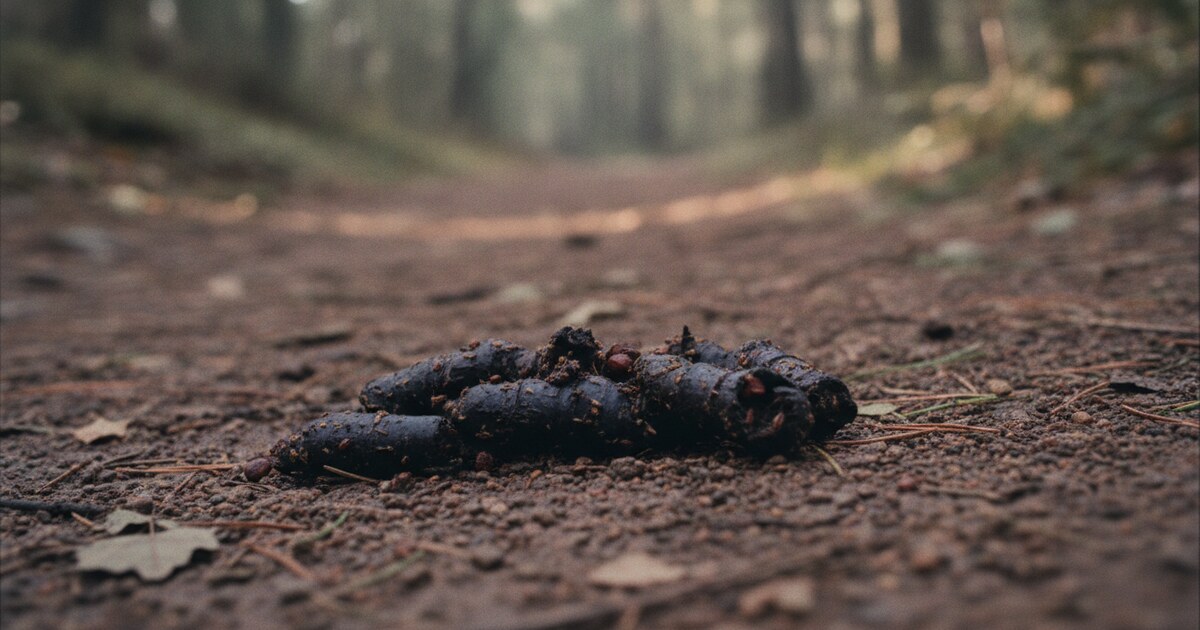
Bear scat is tubular, 1.25–2 inches in diameter for black bears and up to 3 inches for grizzlies. Color shifts with diet: greenish and loose in spring, dark purple-black with berry seeds in summer, and brown-gray with hair or seeds in fall. Fresh scat is warm, moist, and fly-covered.
What Bear Scat Looks Like
Black bear scat runs 1.25 to 2 inches in diameter and usually 5 to 12 inches long, though a single deposit can be shorter segments or one connected mass. The shape is tubular, often tapered at one end like a blunt cylinder. Surface texture varies from smooth to rough depending on what the bear ate.
Grizzly bear scat is structurally identical but larger: typically 1.5 to 3 inches in diameter, and frequently longer overall.
North America holds roughly 600,000 black bears (Ursus americanus), distributed across 32 US states and most of Canada. Grizzly bears (Ursus arctos horribilis) are considerably rarer: about 55,000 in North America, with most in Alaska and fewer than 2,000 in the contiguous US, concentrated in the Yellowstone ecosystem and the Northern Rockies. The two species differ in range: black bears occupy forested habitat coast to coast, while grizzlies are restricted to Alaska, Montana, Idaho, and Wyoming.
Black bears enter hyperphagia in September and October, consuming up to 20,000 calories per day to build fat reserves before denning. A single bear can produce multiple large scat deposits daily during this period, as its digestive system moves quickly through high-volume seasonal foods. Bear home ranges span 10–80 square miles for males and 2–15 square miles for females, meaning one bear’s scat can appear along the same trail corridor repeatedly across weeks.
Color is your first clue out in the field. Summer berry scat runs deep purple-black to dark brown, packed with visible seeds and berry skins. Spring scat is greenish or black, wet, and unstructured.
Fall scat turns brown-gray when the diet shifts to acorns, seeds, or meat. Finding gray scat with large mammal hair in it is a reliable indicator of late-season feeding on ungulates or carrion.
How Bear Scat Changes With the Seasons
Spring is when you’ll find the messiest scat. Bears exit the den lean and start grazing on grasses, sedges, clover, and dandelion. The result looks more like a loose cow pat than a discrete pile: greenish-black, wet, and sometimes watery.
You might also see insect debris mixed in, since bears dig for ants and grubs early in the season.
Summer scat is the easiest to identify at a glance. Huckleberries, blueberries, elderberries, and serviceberries pass through largely intact, leaving scat that’s dark purple or reddish-black and dense with seeds and berry skins. The smell is mild and slightly fermented, not the sharp ammonia odor you’d get from carnivore scat.
A bear working a productive berry patch can produce scat with thousands of seeds visible per pile.
Fall scat reflects hyperphagia. Bears switch aggressively to calorie-dense foods: whitebark pine seeds in the mountains, acorns in the East and Midwest, corn near agricultural land. Acorn and nut scat tends to be brown and granular.
When bears take ungulates or carrion in fall, you’ll start seeing large animal hair, bone fragments, and occasionally hooves or teeth worked into the deposits. This is the scat that can match or exceed grizzly-sized deposits from black bears in their peak feeding phase.
Winter scat is rarely encountered since most bears are dormant. The exception is a “plug,” a firm, dried deposit from the first days after den emergence, composed of compressed pine needles, hair, and dried plant matter from the previous fall.
Bear Scat vs Other Animal Droppings
Size alone rules out most species. Coyote scat is about 3/4 of an inch in diameter, twisted, tapered at both ends, and almost always contains compact fur and bone fragments from small prey. Once you’ve seen both, there’s no confusion. For a closer look at what coyote scat looks like in the field, coyote scat identification breaks down the key differences.
Raccoon scat is smaller still, about 1/2 to 3/4 of an inch in diameter. Raccoons are latrine animals (they return to the same spot repeatedly), so you’ll often find a cluster of similar deposits near a tree base or flat rock. Bear scat has no latrine behavior.
Large dog scat can reach an inch in diameter, but it won’t contain berry seeds, grasses, or large mammal hair. If it looks like dog poop, it probably is.
Mountain lion scat comes closest to small black bear deposits in size, at 1 to 1.5 inches in diameter. The difference is consistent: mountain lion scat is almost always meat-based, with large hair clumps and big bone fragments, and it smells strongly of a cat. It’s also usually covered or partially scraped with soil. Bear summer scat smells mild by comparison and never gets covered.
The animal poop identification chart covers measurements and visual cues across North American mammals side by side, which helps when you’re working through an unfamiliar deposit.
What Bear Scat Near a Trail Tells You
Location gives you context. Scat on a trail is normal: bears use established corridors the same way we do, following ridgelines and creek drainages. A single pile on a maintained trail is interesting but not alarming.
Multiple piles within a small area (10 to 20 yards of each other) usually means a bear has been feeding nearby for several days. This is common in productive berry patches or near mast-producing trees in fall. The bear isn’t following you; it’s working a food source.
Fresh scat is the part that should sharpen your attention. Hold your hand close without touching: if it’s warm, the bear left recently. Other fresh indicators are a moist surface, active flies, and a strong smell.
In dense brush or thick berry patches, fresh scat means the bear may still be nearby. Make noise, keep moving, and make sure bear spray is accessible rather than buried in your pack.
Scat near a campsite that contains food wrappers, packaging, or a processed food smell is a management issue worth reporting to the land agency. That bear has associated humans with food, which creates risk for other visitors.
A fresh deposit combined with claw rakes on a nearby tree and overturned logs signals active use of that zone. Giving the area space and making noise are the right responses in both black bear and grizzly country.
Are Bear Tracks Near the Scat?
Scat and tracks often appear together since bears move along predictable corridors. Black bear front tracks are 4 to 5 inches wide, with 5 toes and claw marks close to the toe pads. Grizzly tracks are wider at 5 to 7 inches, with claw marks set noticeably further from the toes.
If you find large tracks alongside large scat near a berry patch or water source, you’re in active bear habitat regardless of which species left them.
For reading combined sign across North American mammals, animal tracks in snow walks through track shapes and sizes from bears to foxes.
Frequently Asked Questions
What does bear scat look like? Bear scat is tubular, 1.25–2 inches in diameter for black bears and up to 3 inches for grizzlies, typically 5–12 inches long. Color changes with diet: dark purple-black packed with berry seeds in summer, greenish and loose in spring, brown-gray with seeds or hair in fall. The shape is blunt-cylindrical, often tapered at one end.
How do you tell bear scat from coyote scat? Size is the clearest difference. Coyote scat is roughly 3/4 of an inch in diameter, twisted, tapered at both ends, and compact. Bear scat is 1.25–3 inches in diameter, larger in total volume, and contains different material: berry seeds, grasses, or large mammal hair rather than the small prey fur and bone in coyote deposits.
Is it dangerous to be near fresh bear scat? Fresh scat means the bear was recently in the area. If the scat is warm and fly-covered, the bear may still be close. Make noise, avoid lingering in thick cover, and have bear spray accessible in grizzly habitat. The scat itself isn’t an emergency, but treat it as a cue to be alert.
What does black bear scat smell like? It depends on the diet. Summer berry scat smells mildly sweet and fermented, not strongly offensive. Fall meat-heavy scat smells much more like a carnivore. Spring scat from a grass diet has a mild, grassy odor. None of it has the sharp ammonia smell of bobcat or mountain lion scat.
Does bear scat carry disease? Yes. Bear scat can harbor Giardia, roundworms, and other parasites. Don’t touch it with bare hands. If you need to move it from a campsite, use a stick and wash your hands thoroughly afterward. Inhaling dried scat dust in enclosed spaces also carries risk, most relevant in wildlife management contexts rather than on the trail.
When you spot the bear itself, Animal Identifier can tell you the species in seconds from a photo: black bear, brown bear, grizzly, or one of the rarer regional variants. It covers mammals, birds, reptiles, and insects worldwide, with follow-up chat so you can ask about behavior, range, or how to tell it from a lookalike. Free to try on iOS and Android, no account required.