Animal Tracks in Snow: Identification Guide
Animal Tracks in Snow: Identification Guide
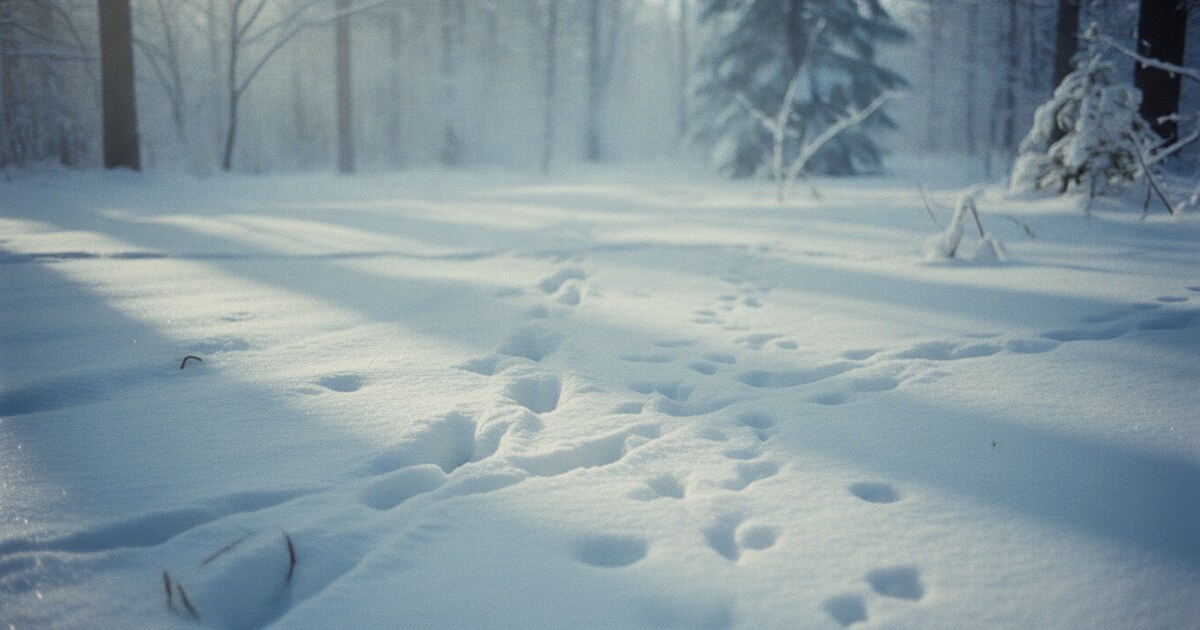
Fresh snow is the best tracking surface you’ll find. Every animal that crossed the yard or trail overnight leaves a clear print, and those prints can tell you the species, direction, speed, and behavior before the melt erases them. The trouble is that most beginners stare at a single print, compare it to a chart, and still can’t decide between three possibilities.
Animal tracks identification in snow gets much easier once you stop leading with print shape and start with gait pattern. Shape distorts as snow melts; the rhythm of how an animal moves doesn’t. Once you’ve drilled the four gait types into your head, you’ll narrow most tracks to two or three species before you even crouch down to look closely.
To identify animal tracks in snow, check three things in order: the gait pattern (the trail’s spacing and arrangement), the number of toes in a single print, and the print size. Gait pattern is the most reliable first step because melt distortion changes print shape but not the overall trail pattern.
Reading Animal Tracks in Snow: Where to Start
The first question isn’t “what made this print?” It’s “how was the animal moving?”
Walkers place one foot at a time in an alternating pattern. Deer, coyotes, foxes, and bobcats all walk. Many canines trot in direct register, meaning the rear foot lands exactly in the front foot print, which produces a near-straight line of single prints instead of a paired track.
Bounders push off with both front feet, then land on both back feet. Rabbits and hares are the classic example. Their track group looks like a backward question mark: two large oval hind prints out front, two smaller round front prints slightly behind.
Gallopers include weasels and mink. They arc forward in a low C-shape, planting two feet close together, then two more slightly offset behind. The resulting track is a pair of prints followed by another pair a foot or two back.
Pacers swing both legs on the same side at once, leaving two prints side by side. Bears, skunks, raccoons, and porcupines all pace. The paired prints have an offset quality: front and hind on the same side, close together.
Snow temperature and age are the biggest factors in track legibility. Below 20°F in dry powder, prints compact cleanly and hold their shape for 12-24 hours under calm conditions; toe pads and claw marks stay readable. Between 25-32°F, melt distortion starts within 2-4 hours, expanding print width by 20-40% and blurring heel pads. Above 32°F, sharp edges disappear in under an hour. Experienced trackers check the surface crust to gauge age: older tracks develop a thin glassy layer from surface refreeze, while fresh tracks have soft, granular edges. Canines trot with direct register, producing a near-straight line; felines register slightly off to the side, producing a staggered row. Combining gait, print shape, and track age is how experienced trackers narrow a trail to a single species quickly. Measuring several prints in the middle of a trail, not the distorted edges, gives the most accurate numbers.
Animal Tracks in Snow: Species by Species
Work your way through this section with a fresh trail in front of you. Look for the gait group first, then confirm with the print details.
Deer
White-tailed deer leave the only split-hoof print in most North American backyards. Each track is 2-3 inches long, shaped like an upside-down heart with two blunt, rounded toes at the back and two narrower points at the front. Dewclaw impressions (two small dots) show up several inches behind the main print in deep snow or when a deer is running.
Stride is roughly 14-18 inches between prints when walking. In snow more than 4 inches deep, deer drag their feet, leaving a trough between prints. A doe’s trail is straighter; bucks during rut walk with a wide splay. The heart-shaped print is so distinctive there’s really no other species to confuse it with.
For a deeper look at how to age and read deer tracks across all conditions, see our deer tracks identification guide.
Eastern Cottontail Rabbit
Rabbit tracks are the first pattern most beginners lock in, and for good reason: the bounding group is unmistakable. Two large oval hind prints (3-4 inches long) land out front; two smaller, rounder front prints (about 1.5 inches long) land behind them and slightly to the sides. The whole group spans 8-18 inches forward per bound, depending on how fast the rabbit was moving.
Four toes on each foot, but the hind prints are elongated and spread wide. No claw marks usually visible in shallow snow. Snowshoe hares leave a nearly identical but larger pattern: hind prints up to 6 inches long.
Gray Squirrel
Squirrel tracks look like a smaller, tighter version of rabbit tracks. The front feet (about 1.5 inches) land first, then the larger hind feet (2.5 inches) swing around and land ahead of where the front feet were. The cluster is compact, 3-5 inches wide.
The giveaway in a snowy yard: the trail connects caching sites. You’ll see a cluster of prints, then a small hole where the squirrel dug up or buried an acorn, then another cluster further on. Five toes on hind feet, four on front.
Red Fox
A fox walking through fresh snow leaves one of the tidiest trails you’ll find: a nearly straight line of oval prints, about 2-2.5 inches long and 1.75-2 inches wide. Foxes direct-register almost perfectly, so the trail looks like a string of single prints rather than two rows.
What separates fox from coyote: fox prints are narrower and more oval, the two middle toes are less prominent, and fur on the bottom of their feet often blurs toe-pad separation entirely. The stride is also shorter, around 13-15 inches between prints.
Coyote
Coyote prints look like a mid-sized dog’s, but the trail is far straighter. Dogs meander; coyotes trot with purpose. Print size is 2.5-3.5 inches long, oval, 4 toes with sharp claw marks. The two middle toes are close together and forward-pointing, giving the print an oval look that’s narrower than most dog breeds.
Trail width (straddle) is 4-5 inches side to side, compared to 6-8 inches for a similar-sized dog. If the trail goes 200 yards without a detour to sniff a tree or double back, it’s almost certainly a coyote.
Raccoon
Raccoon prints are unmistakable once you’ve seen them. The front print (2-3 inches long) looks like a small hand: 5 long, separated fingers with a rounded palm. The hind print is larger (3.5-4.5 inches) and resembles a narrow human foot with 5 long toes.
Raccoons pace, so the trail shows front and hind prints close together on the same side, offset slightly. The handlike front print is the fastest ID. They move in an awkward lope near stream banks and trash cans, and their trails often lead directly to water.
Bobcat
Bobcat prints are round, 1.5-2 inches wide, with 4 toes and no claw marks in most conditions (cats retract their claws). The print is symmetrical and soft-edged, very different from the oval, claw-tipped prints of canines.
Stride is 12-14 inches in a loose, staggered line. Bobcats sometimes direct-register but typically leave a slightly offset trail. The rounded, clawless print in snow is the fastest separation from fox and coyote. Mountain lion tracks follow the same rules but are much larger: 3-4 inches wide.
How to Measure Tracks in Snow Accurately
Melt makes prints look bigger than they are. A track left at 6 a.m. in wet snow can look 30-40% wider by noon. Always measure several prints from the middle of a trail, where melt exposure has been equal, rather than at the start or end.
Two measurements matter most:
- Print length: from the tip of the longest toe to the back of the heel pad
- Print width: across the widest point of the toe spread
For the trail itself, measure the stride (one footfall to the next footfall of the same foot) and the straddle (the full width of the trail side to side). Stride narrows the species; straddle separates animals of similar print size.
A coin, pen, or key fob next to the track in your photo gives you a scale reference you can measure later at home.
Tracking Sign Beyond the Print
Prints alone tell half the story. When you’re reading animal tracks in snow, look for what goes with them.
Urine marks in snow appear as yellow stains, often at the base of a tree or post. Canines scent-mark frequently; cats and deer less so. Coyotes often mark at intersections.
Tail drag marks show up from low-slung animals: muskrats, otters, opossum, and occasionally raccoons. A line running between the prints is one of the fastest IDs for these species.
Compressed snow or blood near a track group is a predator-prey interaction site. Wing tip impressions in the snow on either side of a small print cluster usually mean a hawk or owl made a successful strike.
For a complementary skill, check out our animal droppings identification guide: scat near a trail is often the confirmation that a print ID needs.
Frequently Asked Questions
What are the most common animal tracks found in snow? In most of North America, the most common tracks are deer, eastern cottontail rabbit, gray squirrel, red fox, and coyote. In suburban areas, raccoon and domestic cat are also frequent. Each leaves a distinct gait pattern: deer alternate-walk, rabbits bound, squirrels cluster-hop, and canines trot in a nearly straight direct-register line.
How do I tell coyote tracks from dog tracks in snow? Trail straightness is the most reliable cue. Coyotes trot with purpose in a near-straight line; dogs wander, backtrack, and sniff. Coyote prints are oval with toes clustered toward the center and sharp claw marks; dog prints are rounder and wider relative to their length. The straddle of a coyote trail is also narrower than a dog of the same print size.
How long do animal tracks last in snow? In dry powder below 20°F with no wind, prints can hold their detail for 24 hours or more. In wet snow near freezing, 2-4 hours before melt distortion makes them hard to read accurately. Wind erases claw marks and toe separations within minutes regardless of temperature.
Do cat tracks show claw marks in snow? Domestic cats and bobcats retract their claws, so their prints usually have no claw marks. This is one of the fastest ways to separate a feline track from a canine. Coyotes, foxes, and dogs always show visible claw tips in a clear, fresh print.
What do rabbit tracks look like compared to squirrel tracks? Both bound, but the pattern differs in size and spacing. Rabbit track groups have two large elongated hind prints out front and two small round front prints behind, spanning 8-18 inches per bound. Squirrel groups are smaller and tighter, spanning 3-5 inches across, with the hind prints landing only slightly ahead of the front prints. The rabbit’s hind prints are noticeably elongated; the squirrel’s are rounder.
Snow turns the winter landscape into a logbook. Follow a single trail long enough and it tells you where the animal sheltered, what it ate, and how it responded to being startled. The gait patterns are the grammar of that language, and once you know them, you’ll read the snow before you’ve even slowed down. When the trail leads you to the animal itself, Animal Identifier can put a name to it from a single photo: point, shoot, and get the species along with habitat and behavior details in seconds. Free to start with 2 IDs a day, no account needed. Download it on the App Store or Google Play.