Green Caterpillar Identification Chart
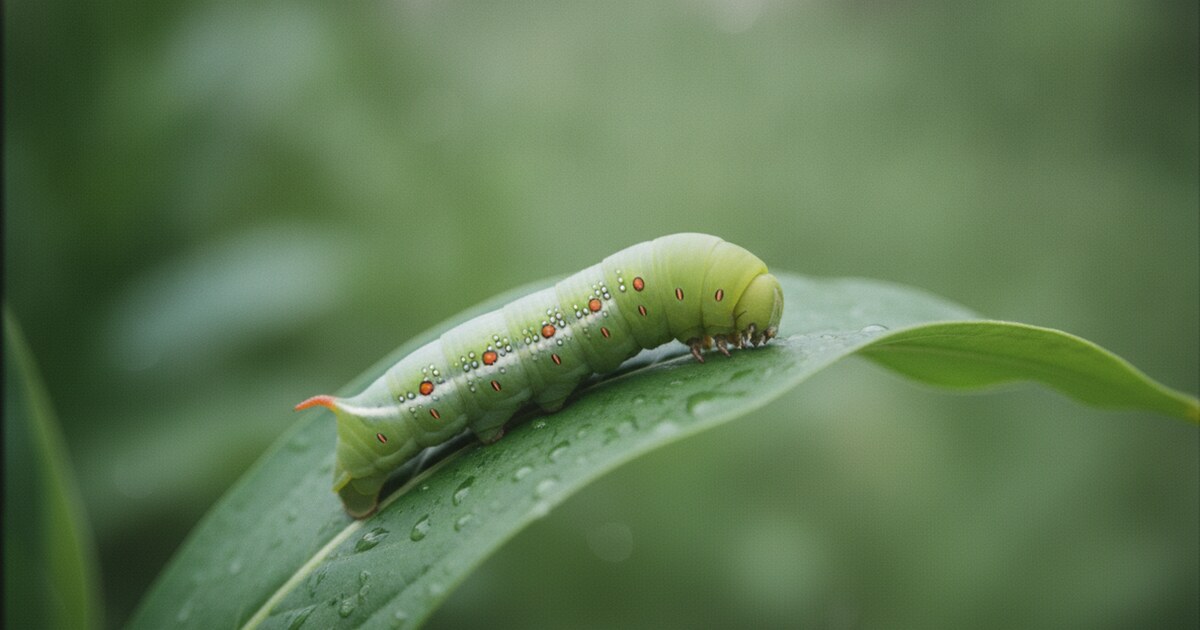
Green Caterpillar Identification Chart
You’ve spotted a green caterpillar on a tomato plant, a fennel stem, or dangling from a branch on a silk thread, and you want to know what it is before you handle it. “Green” covers a wide range: pale lime, deep forest green, bright yellow-green, almost translucent. The good news is that most green caterpillars carry extra markings — stripes, spots, false eyespots, or spines — that narrow the field quickly.
This green caterpillar identification chart organizes the most common US species by visual marking type rather than by taxonomy or alphabet. Work from the most obvious feature you can see: does the caterpillar look plain green with nothing else, or does it have stripes, spots, large false eyes, or spiny clusters? If you’re dealing with a caterpillar that’s black and yellow rather than green, our black and yellow caterpillar guide covers those separately.
Green caterpillars in the US are most often identified by their secondary markings. The Tomato Hornworm is large and pale green with diagonal white V-marks along the sides and a curved rear horn. The Black Swallowtail caterpillar is bright green with black crossbands and yellow spots. The Luna Moth caterpillar is lime green with small orange dots along the spiracles. The Cabbage Looper is pale green and loops when it walks.
How to Use This Green Caterpillar Identification Chart
The most useful first step is looking at the markings, not the size. Size shifts with each instar — the developmental stage the caterpillar is in when you spot it. A Tomato Hornworm fresh out of the egg is under a centimeter long and looks like a thin green thread. By its fifth instar it’s as thick as a thumb, and the diagonal white V-marks are unmistakable.
Color can also change between instars. Early-stage Black Swallowtail caterpillars are black with a white saddle and look nothing like the green-banded adults. If your caterpillar seems close to a species but the color seems off, check photos of earlier instars before ruling it out.
After markings, look at the host plant. Caterpillars are specialists. Tomato Hornworms feed almost exclusively on nightshade family plants: tomatoes, peppers, eggplant, tobacco. Black Swallowtail caterpillars want carrot family plants: parsley, dill, fennel. Cabbage Loopers stay on brassicas. The host plant alone can cut your candidates by half.
Green caterpillars are the larvae of moths and butterflies. The US has roughly 12,000 species of Lepidoptera, and several hundred produce notably green larvae. Most green coloration serves as camouflage against leaf tissue, which is why green caterpillars almost always feed on foliage rather than bark or stems. Identification by color alone is rarely reliable because many unrelated species share the same base green. The practical key is secondary markings: the presence or absence of stripes, dorsal spots, eyespots, or urticating (stinging) spines narrows the field to a few candidates in most regions. Body shape helps further: hornworm larvae are thick and smooth with a visible rear horn; geometrid caterpillars (inchworms) are thin and loop when they walk; swallowtail larvae are plump with a retractable orange organ called the osmeterium. Region and season also matter: the Luna Moth caterpillar is widespread east of the Rockies, while Western Tiger Swallowtail caterpillars cover the west.
Plain Green Caterpillars With No Obvious Markings
A few common species look uniformly green with little else at first glance.
Cabbage Looper (Trichoplusia ni)
The Cabbage Looper is one of the most common green caterpillars in US vegetable gardens. It’s pale green to yellow-green, slender, and moves by looping its body: arching the mid-section up as it walks, like a measuring tape coiling. That movement pattern is the fastest identification shortcut — if it loops, it’s likely a looper or an inchworm. Adults reach about 4 cm. Host plants are cabbage, kale, broccoli, and other brassicas. No sting risk.
Inchworms (Geometrid moth caterpillars)
“Inchworm” covers a large group, not a single species. Most are thin, twig-like, and loop when moving. Colors range from pale green to brown depending on the species and the plant they’re eating. Many match their host plant closely enough to be genuinely hard to spot until they move. No sting risk from any geometrid species.
Winter Moth Caterpillar (Operophtera brumata)
Common in the northeast, this pale lime-green inchworm feeds on oak, maple, and fruit trees in early spring. It’s small (under 2 cm), and it’s often the cause when trees come out of bud break looking ragged and chewed. Moves by looping; no sting risk.
Green Caterpillar Identification: Stripes and Crossbands
Stripes are the most common secondary marking on green caterpillars. Two species account for most identifications in US gardens.
Tomato Hornworm (Manduca quinquemaculata)
Full-grown specimens are hard to miss: up to 10 cm long, bright green, with seven white V-shaped marks running diagonally down each side and a curved black horn at the rear. Despite the horn and the impressive size, Tomato Hornworms can’t bite or sting. The damage they do is defoliation — a single fifth-instar larva can strip a tomato plant significantly overnight.
One useful thing to check before removing them: are there small, white rice-shaped cocoons attached to the body? Those are the pupae of Cotesia congregata, a parasitic wasp. A hornworm carrying them is already dying. Leave it in place; the wasps emerging from those cocoons are beneficial predators.
Black Swallowtail Caterpillar (Papilio polyxenes)
This is the species behind most searches for “green caterpillar with black stripes and yellow spots.” Fully mature larvae are bright green with black crossbands, each crossband dotted with yellow spots. They’re stout — around 5 cm long. When threatened, they push out a forked orange organ from just behind the head called the osmeterium. It’s purely defensive, smells faintly of citrus, and is completely harmless.
Host plants are in the carrot family: parsley, dill, fennel, carrot tops. If you’re growing herbs and you spot these caterpillars, many gardeners choose to leave them. They grow into Black Swallowtail butterflies, which are widespread and genuinely attractive.
Fall Cankerworm (Alsophila pometaria)
A smaller striped species that’s frequently confused with a looper because it also loops when walking. Color ranges from pale green to darker green, with faint white or yellow stripes along the sides. Found on oak, elm, and apple in spring. No sting risk.
Green Caterpillars With Eyespots
Two common swallowtail caterpillars carry large false eyes that mimic a snake’s head — a strategy that works well at close range.
Eastern Tiger Swallowtail Caterpillar (Papilio glaucus)
Smooth, plump, and green with a slightly swollen thorax section carrying two large convincing false eyes: dark circles with a lighter inner ring and a white highlight spot. Early instars are brown and white and look like bird droppings. The false-eye stage begins around the third instar, and by that point the resemblance to a small tree snake is striking enough to make even experienced naturalists look twice.
Found on wild cherry, tulip poplar, ash, and birch. Completely harmless. Can also be identified by the osmeterium when handled.
Spicebush Swallowtail Caterpillar (Papilio troilus)
Similar approach to the Tiger Swallowtail but with a more saturated apple-green color and more elaborately marked eyespots: large yellow spots with dark pupils, plus two smaller orange-centered spots just behind the eyespots. Typically rests in a rolled leaf, which is easy to spot on spicebush (Lindera benzoin), sassafras, or redbay.
Often confused with the Eastern Tiger Swallowtail caterpillar. The key differences: Spicebush larvae are brighter green, and the eyespots sit further back on the thorax, closer to the body.
Green Caterpillars With Spines: Sting Risk
Some green caterpillars carry urticating spines — hollow hairs connected to venom glands. Contact causes a burning, itchy rash.
Io Moth Caterpillar (Automeris io)
This is the stinging green caterpillar most commonly encountered in the eastern US. Early instars are orange-red and move in groups. By the final instar, they’re bright green with white and red lateral stripes and covered in clusters of branching spines. Each spine cluster is venomous. The sting is sharp and immediate, roughly comparable to a wasp sting, and produces a red welt that lasts several hours.
Found on a wide range of host plants including wild cherry, oak, willow, and corn. Don’t handle them. The spines can break off and stay in skin, prolonging the irritation.
Stinging Rose Caterpillar (Parasa indetermina)
Flattened, oval, and bright green with yellow and orange dorsal striping and rings of stinging spines along the sides. Found on rose, apple, oak, and other woody plants. Contact causes the same burning reaction as the Io Moth caterpillar. More common in the south and mid-Atlantic. If you’re finding stinging caterpillars on garden shrubs and they’re not matching the Io Moth, this is the likely candidate.
For a broader look at spined species, including ones that aren’t green, our guide to spiky caterpillars covers the full range of urticating species and their sting risk.
The Luna Moth Caterpillar
Worth its own section because it’s one of the most striking caterpillars in North America and one that people frequently can’t identify on first sight.
Luna Moth Caterpillar (Actias luna)
Bright lime green, plump, and smooth with a faint yellow lateral stripe running the length of the body and small orange or reddish dots along the spiracles (one per segment). No spines, no crossbands. Can grow to 9 cm. Common on walnut, hickory, persimmon, and sweet gum east of the Rockies.
The adult Luna Moth is one of the largest moths in North America, with pale green wings and long trailing tails. Finding the caterpillar is worth noting the location; they pupate in leaf litter, and the cocoon is easiest to protect if you know roughly where it’ll be.
How Animal Identifier Helps
A visual chart works when the caterpillar holds still long enough to check every feature. That doesn’t always happen, and photos make identification faster and more reliable in most cases.
Animal Identifier works from a photo. Take a picture of the caterpillar, and the app returns the species with information on habitat, behavior, and whether there’s a sting risk. The follow-up chat lets you ask “how do I tell this from a Spicebush Swallowtail?” without starting a separate search. Coverage includes all the species in this guide and many less common ones that don’t appear on most charts. It identifies from a single photo with 2 free identifications per day, no account required.
Frequently Asked Questions
What is the most common green caterpillar in the US?
The Cabbage Looper (Trichoplusia ni) and Tomato Hornworm (Manduca quinquemaculata) are probably the most frequently encountered green caterpillars in gardens. Cabbage Loopers appear on vegetables through most of the growing season across all regions. Tomato Hornworms peak in mid to late summer, primarily where tomatoes, peppers, and eggplant are grown.
Are green caterpillars poisonous?
Most green caterpillars are harmless. The main exceptions are the Io Moth caterpillar and the Stinging Rose Caterpillar, both of which carry urticating spines that inject venom on contact. The sting feels similar to a wasp sting and causes a burning rash lasting a few hours but isn’t medically serious in healthy adults. Swallowtail larvae, hornworms, Luna Moth caterpillars, and most loopers are safe to handle.
What green caterpillar has black stripes and yellow spots?
The Black Swallowtail caterpillar (Papilio polyxenes) is the most common match. It’s bright green with black crossbands dotted with yellow spots, about 5 cm long when full-grown. Found most often on parsley, dill, fennel, and carrot tops. It’s harmless, emits a faint citrus scent from a defensive organ when picked up, and grows into a common North American swallowtail butterfly.
What is the large green caterpillar on my tomato plant?
Almost certainly a Tomato Hornworm (Manduca quinquemaculata). It’s pale to bright green with seven V-shaped white diagonal marks along the sides and a curved black horn at the tail end. Full-grown specimens reach 8 to 10 cm. Despite their size, they can’t sting or bite. Check for small white cocoons on its body — those are parasitic wasp pupae, meaning the hornworm is already dying.
If you find a green caterpillar you can’t place from this chart, take a photo and let Animal Identifier work it out. The app covers hundreds of caterpillar and moth species across North America, with follow-up chat to answer questions about what you found. Download Animal Identifier on iOS or Android.