Bugs That Look Like Roaches: What You're Actually Seeing
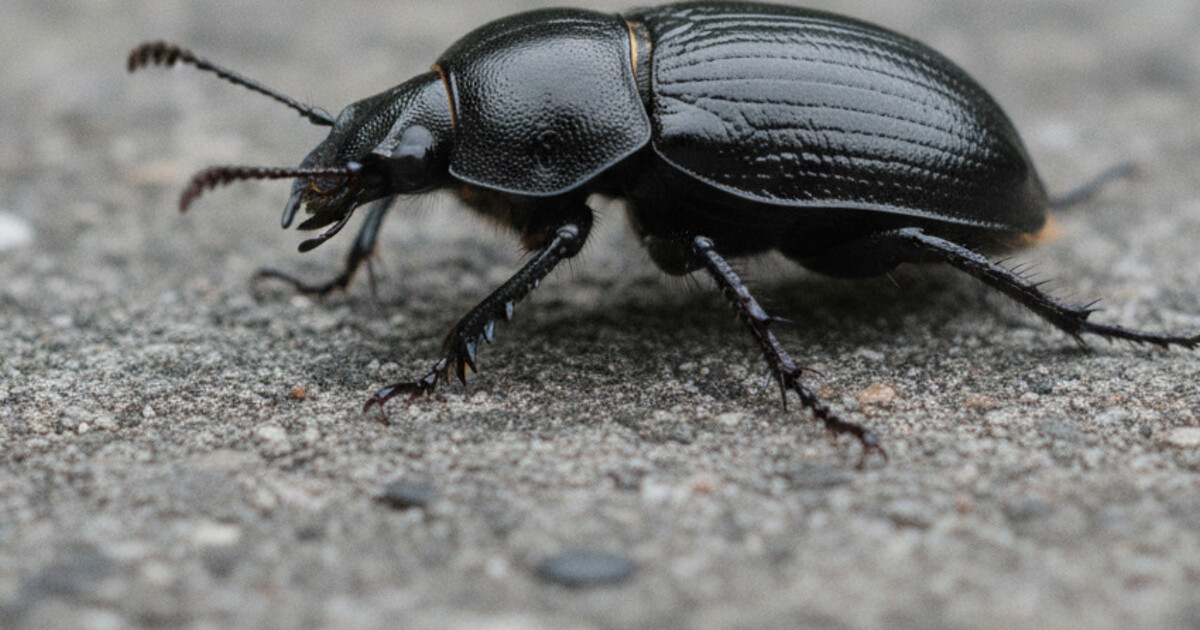
You flip on the kitchen light and something dark, flat, and fast disappears under the refrigerator. Your first thought: cockroach. That’s a fair instinct. Cockroaches are among the most common household pests, and the question “what is this bug that looks like a roach?” comes up constantly because a dozen other insects share the same basic body plan. Identifying them correctly matters. A cockroach infestation calls for pest control. A ground beetle that wandered in from the garden is harmless and will probably find its own way back outside. A few structural field marks separate cockroaches from their lookalikes, and once you know what to check, most IDs take less than a minute.
The bugs most often mistaken for cockroaches are ground beetles, June bugs, giant water bugs, and bed bugs. Cockroaches have flat, oval bodies with antennae roughly as long as the body and two short tail-like cerci at the abdomen’s rear. Ground beetles look similar but have a pointed, forward-narrowing head, ridged wing covers, and no cerci. A clear photo usually settles the question.
The Field Marks That Separate Cockroaches From Everything Else
Cockroaches belong to the order Blattodea, which contains roughly 4,600 described species worldwide, though only about 30 of those associate regularly with human structures. In the United States, the 4 pest species you’re most likely to encounter are the German cockroach (Blattella germanica, 13–16mm, tan with 2 dark pronotal stripes), the American cockroach (Periplaneta americana, 38–53mm, reddish-brown with a yellow figure-8 pattern on the pronotum), the Oriental cockroach (Blatta orientalis, 20–27mm, dark brown to black, favors cool damp spaces), and the brownbanded cockroach (Supella longipalpa, 10–14mm, tan with pale crossbands). All 4 share 3 structural hallmarks: a flat, oval body that lets them squeeze through gaps as thin as 3mm, antennae roughly equal to body length, and 2 cerci (tail-like appendages) at the rear of the abdomen. Cerci are the single most reliable field mark for separating cockroaches from beetle lookalikes that otherwise match in color and size.
Check the tail end first. If the bug has 2 small finger-like projections at the rear, cockroach is a real possibility. If the tail is clean with no projections, you’re almost certainly looking at a beetle, true bug, or some other insect. Antennae length is the second check: cockroach antennae sweep back over the body and are at least as long as the insect itself; most beetles have antennae noticeably shorter than their body.
Location and season give context too. German cockroaches almost never come in from outside; they travel building to building through shared pipes, packaging, and secondhand appliances. A bug that walked in from the yard in fall is far more likely to be a beetle than an infesting roach.
Ground Beetles: The Cockroach Lookalike You’re Most Likely Seeing
Ground beetles (family Carabidae) are behind most “what is this bug that looks like a roach?” calls. There are roughly 2,000 species in North America, many of them shiny black or dark brown, flat-bodied, and fast. They’re outdoor predators that hunt other insects in leaf litter and soil. In fall, as temperatures drop, they push indoors through gaps under exterior doors and along foundation walls.
The structural differences are clear if you can get a close look. A ground beetle’s head narrows into a distinct “neck” before the thorax, giving it a more elongated, forward-pointed profile compared to the rounder, tucked-under head of a cockroach. The wing covers (elytra) show fine parallel ridges running lengthwise; cockroach wings (when present) are flat and papery. Ground beetles have no cerci.
A single ground beetle near an exterior door is not a pest situation. These are predatory insects that eat aphids, caterpillar eggs, and soil pests. They’re beneficial. If you’re seeing many of them indoors, the fix is sealing gaps around exterior doors and ground-level windows, not calling pest control.
June Bugs, Click Beetles, and Other Beetle Lookalikes
June bugs (Phyllophaga spp.) are clumsy, reddish-brown oval beetles that fly to porch lights from May through July and end up on floors, spinning helplessly. From above, a June bug is roughly the size and color of an American cockroach. Up close, the differences are apparent: June bugs are rounded and dome-shaped, not flat, and the head is nearly hidden under the pronotum. Their antennae end in leaf-like club segments (a shape no cockroach has) and they buzz when they finally get airborne.
Click beetles are another source of confusion. Brown and black species run 15–20mm, and their elongated profile can suggest a cockroach in poor light. The tell: a click beetle flipped onto its back launches itself upright with an audible snap, using a spine-and-socket mechanism on the thorax. Cockroaches don’t click.
Brown marmorated stink bugs (Halyomorpha halys) sometimes turn up in these conversations too. They’re flat and oval, but the five-sided shield shape and banded antennae are a noticeably different silhouette in good light. Easiest confirmation: if the bug smells strongly when disturbed, it’s a stink bug.
The pattern across these beetle species: if the body is rounded or domed rather than flat, if the antennae are shorter or clubbed, and if the rear end is clean with no cerci, you’re not looking at a cockroach.
Giant Water Bugs, Bed Bugs, and Wood Cockroaches
Giant water bugs (Belostoma spp. and Lethocerus spp.) are sometimes called “water cockroaches,” though they’re not related to cockroaches at all. They belong to the order Hemiptera (true bugs). Adult Lethocerus reach 60–70mm, larger than any common house roach. They live in ponds and streams but fly between water sources at night, attracted to artificial lights, which is how they turn up poolside or indoors with an open window.
The differences are obvious at close range. Giant water bugs have front legs modified into grasping hooks for catching tadpoles and small fish, and rear legs flattened into paddles. They have no cerci. Handle one carefully: they bite.
Bed bugs (Cimex lectularius) are at the opposite size extreme: 4–5mm, flat, reddish-brown, and wingless. People sometimes describe them as “baby cockroaches.” Both are flat and oval, but that’s where the resemblance ends. Bed bugs are slow movers, have no wings and no cerci, and live in mattress seams and furniture joints rather than running across open floors. Cockroach nymphs, which are small enough to suggest bed bugs, carry visible cerci even at early stages and move in quick, erratic dashes.
Wood cockroaches (Parcoblatta spp.) are actual cockroaches that people frequently dismiss as something less concerning. They live outdoors in decaying logs and leaf piles, look like lighter, smaller American cockroaches (20–30mm, tan to brown), and males fly to lights in summer. The key distinction: wood cockroaches don’t establish indoors. An individual that wanders in will die within a few days without the moisture and organic matter of its outdoor habitat. A German or American cockroach will find what it needs inside and reproduce.
A single roach-looking bug near an exterior door in summer is more often a wood cockroach than the start of an infestation. The same principle of matching context with field marks applies across insect identification generally, and it’s the same method we use in our guide to black and yellow caterpillars, where a few visual features separate harmless species from ones worth knowing about.
When You Can’t Tell From Memory: How Animal Identifier Helps
Identifying a bug from a split-second sighting in poor light is difficult even for experienced naturalists. The practical approach is the same one that works for telling apart small brown birds: get a photo first, then identify.
If you can get the bug into a jar or glass, photograph it from above and from the side with your phone. The most useful details to capture: antennae length relative to body, the shape of the rear end (cerci or no cerci), whether the body is flat or dome-shaped, and any ridges on the wing covers. Add where you found it and the time of year, and you’ve ruled out most possibilities before looking anything up.
Animal Identifier can identify insects and arthropods from a photo. Take a clear shot and the app returns the species, information on habitat and behavior, and enough context to know whether you’re looking at a pest or a harmless garden visitor. After the ID you can ask follow-up questions in the chat: “how do I tell it from a roach?” or “does this one bite?” and get direct answers without leaving the app. It covers insects alongside birds, mammals, and reptiles, all from one app. Free to start with 2 identifications a day, no account needed, on iOS and Android.
Frequently Asked Questions
What is the bug in my house that looks like a small cockroach?
The most likely candidates are ground beetles, wood cockroaches (if you’re near wooded areas in summer), or cricket nymphs. Check the rear end: cockroaches have 2 short cerci (tail projections) that beetles and crickets don’t have. Movement is another clue: cockroaches run in quick, flat, light-avoiding dashes; most beetles move more deliberately and don’t scatter toward the darkest corner.
How do I tell a cockroach from a ground beetle?
Look at the head and tail. A ground beetle’s head narrows into a distinct “neck” before the thorax, giving it a forward-pointed profile; a cockroach’s head is blunt and tucked under the pronotum. At the rear, a cockroach has 2 cerci; a ground beetle’s tail is clean. Ground beetles also have parallel ridges along the wing covers, while cockroach wings are flat and papery.
What does a June bug look like compared to a cockroach?
June bugs are rounded and dome-shaped; cockroaches are flat. June bugs have clubbed antennae with leaf-like segments at the tip, while cockroach antennae are long, thin, and uniform. June bugs fly clumsily to lights and buzz audibly; cockroaches run and rarely fly indoors. The reddish-brown color can be similar, which is what triggers the confusion.
Do giant water bugs come inside?
Rarely. Giant water bugs live in ponds and streams but fly between water sources at night and are attracted to artificial lights. They sometimes land on patios or near open windows and doors, and occasionally come indoors. They can’t survive long without standing water and don’t infest homes. Handle them carefully: they bite.
Can I photograph a bug and have it identified?
Yes. Animal Identifier identifies insects and other animals from a photo. Get as clear a shot as possible, focusing on the head, antennae, and rear end, and the app returns the species along with habitat and behavioral information. It covers insects, spiders, and other arthropods alongside birds and mammals, all in one place.
If you’ve spotted something that looks like a roach, the clearest path is a photo. Snap one, upload it to Animal Identifier, and you’ll have a species ID in seconds along with enough information to know whether you need pest control or just an open door.