Apps to Identify Spiders: What Actually Works
You spot a spider on the bathroom wall, crawling across the porch, or dropping from the ceiling. You want to know what it is and whether it’s safe to move. That’s exactly the moment an app to identify spiders earns its place on your phone.
These apps work better than most people expect. Point your camera at the spider, take a clear photo, and you’ll get a species name and basic information in a few seconds. This guide covers the best options, how they compare, and what you need to get a confident result.
The best free app to identify spiders is Seek by iNaturalist: completely free, 4.8 stars from 31,000+ App Store ratings, real-time camera ID included. Animal Identifier covers all animals, adds a follow-up AI chat, and gives 2 free IDs per day. Spider Identifier: AI Scanner specializes in arachnids, free download with paid premium tiers.
Can AI Apps Identify Spiders?
Yes, and reliably for common species. Photo-based spider identification analyzes the visual features in your image: body shape, leg proportions, coloring, eye arrangement, and markings. The AI matches what it sees against a species database and returns the closest result.
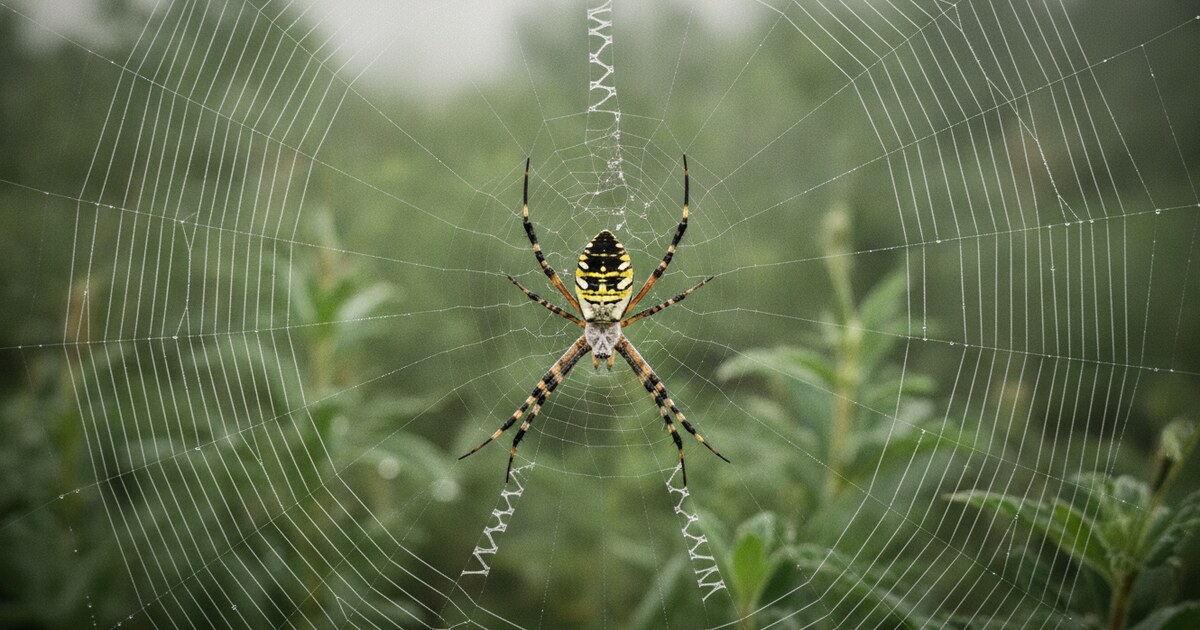
Species with distinctive patterns get identified correctly the vast majority of the time. A black widow’s red hourglass, a garden spider’s yellow-and-black abdomen, or a jumping spider’s large forward-facing eyes are easy for these systems to pin. Harder cases are juveniles (whose markings often differ from adults), spiders photographed from awkward angles, and closely related species that look nearly identical.
There are roughly 45,000 described spider species worldwide. In the United States, about 3,500 are documented, and most are harmless to humans. Medically significant ones are a short list: the black widow (Latrodectus), the brown recluse (Loxosceles reclusa), and a handful of close relatives. The overwhelming majority of spiders people encounter (wolf spiders, jumping spiders, cellar spiders, garden orb weavers) pose no real risk. A good spider identification app targets this gap: helping you tell the harmless majority from the few that warrant caution, without needing entomology training. The leading apps draw from large databases of photographed specimens. Seek by iNaturalist, published by iNaturalist (a not-for-profit organization), pulls identification data from millions of real-world observations contributed to iNaturalist.org. The App Store listing shows 4.8 stars from over 31,000 ratings and the app is completely free.
Best Apps to Identify Spiders
Three apps stand out. Here’s what each does well and where it falls short.
Seek by iNaturalist
Seek is published by iNaturalist, a not-for-profit organization. The App Store listing shows 4.8 stars from over 31,000 ratings, with no in-app purchases: it’s completely free. The app uses your phone’s camera in real time, suggesting species as the image comes into focus. Location data is factored in, which narrows possibilities to spider species actually documented in your region.
Identification data comes from millions of confirmed observations contributed to iNaturalist.org by naturalists worldwide. For North American species, this gives it broad and well-documented coverage. Seek also covers plants, birds, mammals, and fungi, so it functions as a general-purpose field app rather than a spider specialist.
It doesn’t offer follow-up questions or a chat feature. For a free ID that just needs a name, it’s the most-tested option available, and the 31,000+ rating count makes the 4.8-star average meaningful.
Animal Identifier
Animal Identifier covers mammals, birds, reptiles, and insects worldwide, not just arachnids. You photograph or upload an image, get the species back with details on habitat, behavior, and diet, and then ask follow-up questions in the app’s AI chat. That chat is scoped to animals, so you can ask “Is this venomous?” or “How do I tell this apart from a brown recluse?” and get a contextual answer based on the identified species.
The app gives 2 free identifications per day with no signup required. Identification history is saved on-device. All identifications run in the cloud, so internet is required. No offline mode is available. The App Store listing shows developer Artmvstd SIA with a free download and optional subscriptions ($3.99/week or $24.99/year for unlimited IDs). Available on iOS and Android.
Spider Identifier: AI Scanner
Spider Identifier: AI Scanner, developed by Semen Sharyhin, focuses exclusively on arachnids. The App Store listing describes AI-powered identification from a photo or image upload, with a comprehensive spider species database and instant results. The listing shows 4.4 stars from 85 ratings. It’s free to download, with in-app purchases at $4.99 per week or $29.99 per year for premium access. Some user reviews in the App Store describe accuracy issues and occasional error messages.
If you specifically want a spider-only app, this is the most narrowly focused option of the three. The 85-rating sample is much smaller than Seek’s 31,000+, so the score carries less weight.
How to Take a Photo That Gets Results
The app can only work with what you give it. A few things consistently make the difference.
Get a top-down view whenever you can. Body shape and the proportions between the cephalothorax (front section) and abdomen are key ID features, and both are clearest from above. A side-angle shot obscures them.
Even lighting helps more than people expect. Flash tends to blow out the fine markings that separate species from each other. Natural daylight from a window or outdoor shade gives the AI more contrast to work with. Include the whole spider in the frame: a cropped abdomen or missing legs remove the details most likely to confirm the species.
Photograph the web too if there is one. Orb webs, funnel webs, and cobweb tangles each point to different spider families. Sometimes the web alone is enough to narrow the ID, even when the spider is partially hidden. You don’t need to get dangerously close: most phone cameras can pull enough detail from 25 to 30 cm away.
Dangerous Spiders Worth Knowing by Sight
For most spiders you’ll encounter at home, an AI identification is just curiosity. Two groups in the US are genuinely worth knowing regardless of what any app says.
Black widows (Latrodectus) are glossy black with a red or orange hourglass marking on the underside of the abdomen. They build messy irregular cobwebs in dark corners, woodpiles, garage corners, and under outdoor furniture. Found across the continental US.
Brown recluses (Loxosceles reclusa) carry a violin-shaped mark on the front body section and have six eyes arranged in three pairs, rather than the more typical eight. They’re concentrated in the central and southern United States, particularly in Missouri, Kansas, Oklahoma, and Texas.
Any identification app should be treated as a first-pass answer, not a substitute for medical advice. If you’re concerned about a bite, contact a healthcare provider. For other insects you might encounter indoors, our guide to bugs that look like roaches covers the most common cases of mistaken identity.
Frequently Asked Questions
Can I identify spiders using a picture for free?
Yes. Seek by iNaturalist is completely free with no subscription or in-app purchases. Animal Identifier gives 2 free identifications per day with no account required. Both work from a single photo taken or uploaded from your phone’s camera roll.
What is the best free insect identifier app?
For spiders specifically, Seek by iNaturalist is the most-reviewed free option: 4.8 stars from over 31,000 App Store ratings, no cost. Animal Identifier covers spiders alongside mammals, birds, reptiles, and all other insects, and adds a follow-up AI chat for questions after the ID. For caterpillar identification apps specifically, we’ve covered those in a separate comparison.
Can AI identify venomous spiders?
Yes, for species with clear markings. Black widows and brown recluses identify correctly from well-lit, top-down photos the majority of the time. Results are less reliable for juveniles, worn or dirty specimens, and species photographed from difficult angles. Treat the app’s answer as context, not a definitive safety assessment.
Do spider identification apps work offline?
Seek by iNaturalist requires internet for full species matching. Animal Identifier runs identifications in the cloud and requires internet for all IDs. If you’re somewhere without a signal, a printed regional field guide is the reliable fallback.
Spotted a spider you can’t name? Open Animal Identifier, snap a photo, and get the species back in seconds. With 2 free identifications per day and an AI chat for follow-up questions about what you found, it covers spiders and every other animal you might encounter. Download Animal Identifier for iOS and Android at animalidentifier.app.