Dog Breed Identifier by Picture: How Accurate Is It?
Dog Breed Identifier by Picture: How Accurate Is It?
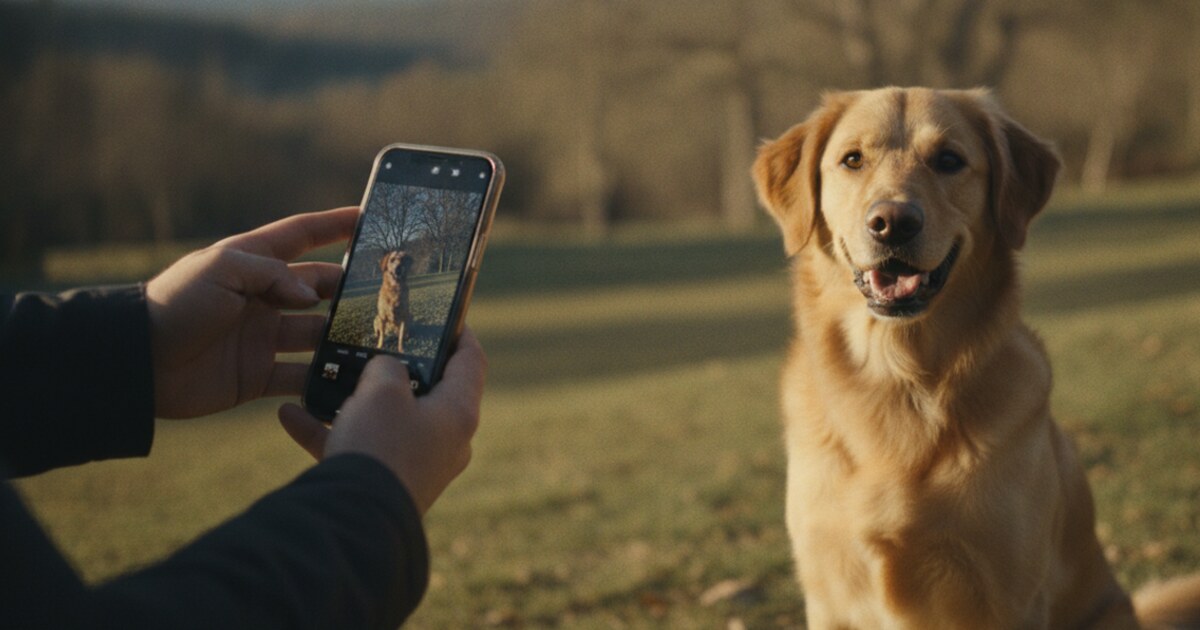
You pull up next to a dog at the park and can’t figure out what it is. Or you adopt from a shelter and the intake card just says “terrier mix.” A dog breed identifier by picture promises to answer that in seconds: snap a photo, get a breed. But how accurate is that answer, and when can you actually trust it?
This guide covers how photo-based AI identification works, which free options are worth your time, and where the technology hits its limits so you know when to look further.
Dog breed identifiers by picture use AI to analyze ear shape, muzzle length, coat texture, and body proportions, then match those features against a breed database. For common purebreds in clear photos, accuracy is generally high. Mixed breeds are harder: the AI shows the dominant ancestry but often misses secondary breeds that contribute less visually.
How AI Dog Breed Identification by Picture Works
When you upload a photo, the app runs it through a convolutional neural network (CNN), the same class of AI used in medical imaging and face recognition. The model was trained on thousands of labeled photos across hundreds of recognized breeds. It scans for a cluster of visual markers: ear set and shape, muzzle length-to-width ratio, coat texture and length, tail carriage, and body proportions. Those features get compared against the training data, and the result is a ranked list of breed matches with confidence scores.
AI dog breed identification works by feeding a photo through a convolutional neural network trained on thousands of labeled images across hundreds of recognized breeds. The model extracts visual features: ear set and shape, muzzle length-to-width ratio, coat texture and length, tail carriage, and overall body proportions. It compares them against its training data to return a ranked list of breed matches with confidence scores. Most consumer apps cover 120-400 breeds. The American Kennel Club (AKC) recognizes 201 breeds as of 2026; the Fédération Cynologique Internationale (FCI) recognizes 354. No single app covers all of them. For purebred dogs photographed from the front or a 3/4 angle in clear light, accuracy is high for common breeds. Mixed-breed accuracy drops sharply: the model identifies the most visually dominant ancestry but may miss secondary breeds contributing less than 25% of phenotype. Photo quality is the biggest driver of accuracy. Shadows, motion blur, and partial views degrade results more reliably than breed rarity does.
Most apps return the top 2-3 matches rather than a single answer. For a purebred, that usually means one confident result followed by two close lookalikes. For a mix, those top matches may each reflect a different piece of the dog’s ancestry.
Free Ways to Try a Dog Breed Identifier by Picture
Several options are available right now without paying anything.
iOS built-in (iOS 15 and later)
If you have an iPhone running iOS 15 or later, Apple’s Photos app can identify dog breeds without any extra download. Open a photo of your dog, swipe up, and the breed appears in the info panel if the system can identify it. The model covers roughly 350 breeds. In informal testing by dog owners, it consistently identified common purebreds from basic snapshots. Mixed breeds typically return the dominant breed or nothing; the system doesn’t guess when it’s uncertain.
Animal Identifier
Animal Identifier handles the full animal kingdom, dogs included. You take or upload a photo, get the breed back in seconds, and can then ask follow-up questions in the AI chat: “How big do these dogs get?” or “How does this differ from a golden retriever?” That follow-up capability is useful when a breed name alone doesn’t tell you much. Animal Identifier gives 2 free identifications per day with no account required and is available on both iOS and Android.
Web-based tools
Sites like whatbreedismydog.com and dogbreeddetector.com let you upload a photo and get a result in your browser with nothing to install. They work well for a one-off lookup, though neither offers follow-up AI chat or identification history.
If you’re curious about cat breeds too, the same AI approach applies. See our cat breed identifier by picture guide for a comparison of what works for cats.
How Accurate Are Dog Breed Identifiers by Picture?
Accuracy depends heavily on the dog and the quality of the photo.
Common purebreds: High accuracy. Labrador Retrievers, German Shepherds, Golden Retrievers, French Bulldogs (breeds with well-documented visual signatures and large training datasets) get correctly identified in most clear photos. These breeds dominate the training sets, so the models know what they look like from many angles and in many coat conditions.
Rare or uncommon purebreds: Harder. The Mudi, the Cirneco dell’Etna, or the Bergamasco have far fewer training images. Some apps won’t recognize them and return a common-breed lookalike instead. If your dog is a rare breed, the result may point you toward the closest visual match rather than the actual breed.
Mixed-breed dogs: This is where most people are disappointed. A dog that’s 50% Lab and 50% Pit Bull may look almost entirely like one breed, depending on which traits dominate. The AI works from what it sees in a single photo. It can tell you which breed the dog most resembles visually; it can’t tell you what percentage of each breed makes up the animal’s genome. If you need that breakdown, a DNA test is the only reliable path.
Photo quality beats everything. A blurry photo, a dog mid-stride, a face half in shadow: any of these can push the right breed to second or third place, or miss entirely. The variance introduced by a bad photo is larger than the variance between most common breeds.
How to Take a Photo That Gets the Best Result
A few habits make a real difference without any extra equipment.
Get the dog to hold still. Motion blur is the single biggest accuracy killer. A treat held above the camera or a quick “sit” command works; you don’t need the dog to stay for long, just a half-second of stillness.
Use natural light. Harsh indoor lighting throws shadows across the face and flattens coat texture, both of which the model relies on. Outside on an overcast day is ideal: even light, no hard shadows.
Shoot from the front or a 3/4 angle. A full-face or slight side shot gives the AI the ear set, muzzle profile, and eye shape it needs. Profile shots hide half the face and are less useful.
One dog per frame. Two dogs in the same photo confuse most apps. You’ll either get one identified and one ignored, or a scrambled result.
Skip the accessories. A bandana covering the neck, a hat over the ears, a collar with a large tag covering the chest; anything blocking the features the model looks for will degrade the result. Plain dog, plain background, plain light.
When a Photo Identifier Isn’t Enough
Photo-based identification is fast and free, but it has real limits.
Mixed-breed percentage breakdowns: If you need to know that your dog is 38% Boxer, 29% American Staffordshire Terrier, and 33% other, a photo can’t give you that. A DNA test can. Embark and Wisdom Panel are the two most widely used kits in the US; both cover hundreds of breeds and return a percentage breakdown alongside health screening information. Kits typically run $100-$200 depending on the tier.
Look-alike breeds: Some breed pairs are genuinely hard to separate visually. An unregistered dog resembling a Poodle mix might be a Bichon Frise, a Lagotto Romagnolo, or a Barbet. If the breed matters for a specific reason (breed-restricted housing, insurance, or just wanting certainty) you need a DNA test or a vet’s hands-on assessment.
Young puppies: Coat color, head shape, and body proportions change significantly in the first several months. A six-week-old puppy often looks little like the adult breed. Wait until at least 8-12 weeks for a more reliable visual result.
Shelter intake records: If you’ve adopted a dog, the intake staff often know more than the paperwork shows. A quick conversation with the shelter team is free and sometimes more accurate than any app.
For identifying your cat’s breed from a photo, the same technology applies with its own quirks. Our guide to identifying your cat’s breed walks through what works and what doesn’t.
Frequently Asked Questions
Is there a free app that can identify my dog’s breed?
Yes. Animal Identifier offers 2 free identifications per day with no account required, on both iOS and Android. iPhone users running iOS 15 or later also have a built-in breed identifier in the Photos app: open a dog photo, swipe up, and the breed appears in the info panel. Web tools like whatbreedismydog.com work in a browser for free with no download.
Can AI identify my dog’s breed accurately?
For common purebred dogs in clear, well-lit photos, AI identification is generally accurate. Mixed breeds are harder because the AI works from visual features alone; it can tell you which breed the dog most resembles, but not the full genetic mix. Photo quality is the biggest variable: a sharp, well-lit photo produces meaningfully better results than a blurry or shadowy one.
How do I find which breed my dog is for certain?
A DNA test is the only definitive method for mixed-breed dogs. Embark and Wisdom Panel are the two leading US options, covering hundreds of recognized breeds and returning a percentage breakdown. For purebreds, registration papers are definitive. Photo-based identification gives a fast, useful answer for purebreds but should be treated as an estimate for mixes.
What’s the difference between a photo identifier and a DNA test?
A photo identifier analyzes visible physical traits in a single image and returns results in seconds. A DNA test analyzes your dog’s genome from a cheek swab and takes 2-4 weeks to process. Photo ID is reliable for common purebreds and useful as a quick first answer. DNA testing is the only method that breaks down a mixed-breed dog’s ancestry by percentage and can flag breed-specific health markers.
Animal Identifier works for the whole animal kingdom, not just dogs. If you spot an unfamiliar bird, reptile, insect, or wild mammal, you can photograph it and get the species identified in seconds, with details on behavior, habitat, and diet. The AI chat lets you follow up with questions after each identification. Download Animal Identifier on the App Store or Google Play.