Cat Breed Identifier by Picture: 5 Apps Tested
Cat Breed Identifier by Picture: 5 Apps Tested
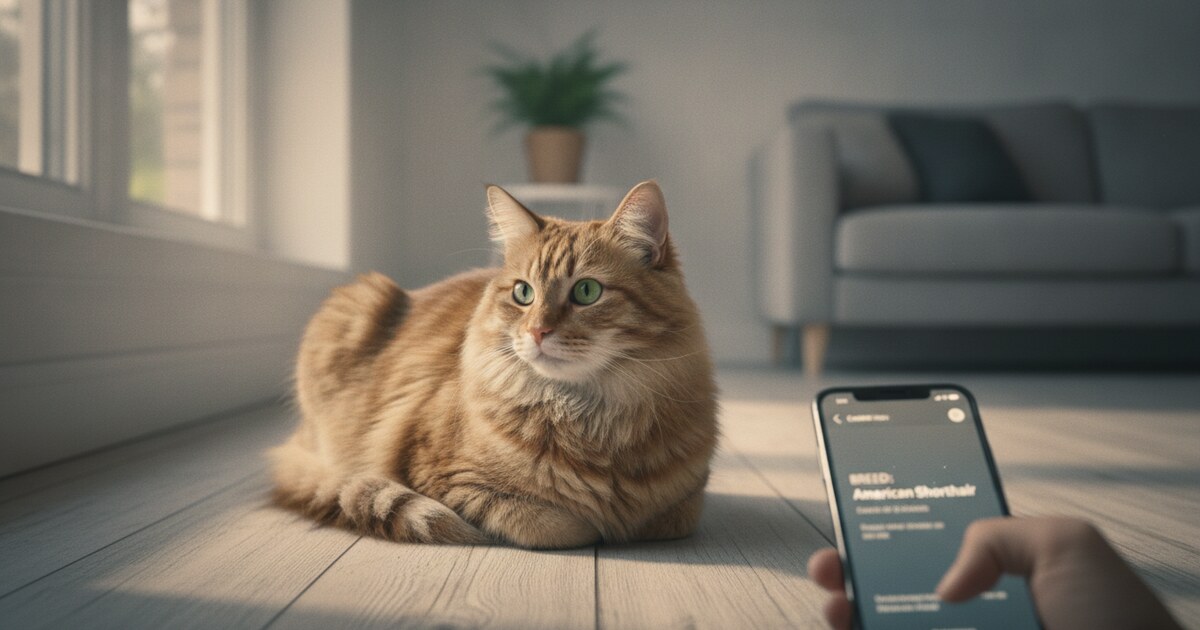
You spotted a cat with unusually long, tufted ears and a bushy tail, and now you want to know what breed it is. Or maybe it’s your own cat, and you’ve always wondered. Either way, you can point your phone at a photo and get an answer in seconds.
Several apps handle cat breed identification from pictures, but they work in very different ways. Some are dedicated cat apps with large breed databases. Others are general-purpose AI tools that happen to cover cats. Knowing which is which saves you time and gives you more useful results.
This guide covers five options: what each one does well, what it costs, and where it falls short.
The best cat breed identifier apps by picture are Cat Scanner (around 60 breeds, 4.6 stars), Catium (shows confidence scores alongside results), and Animal Identifier (AI-powered with a follow-up chat). For a quick result without downloading anything, Google Lens handles popular breeds directly from your phone’s camera.
How Accurate Are Cat Breed Identifiers by Picture?
The honest answer: it depends heavily on the cat. The CFA (Cat Fanciers’ Association) recognizes 45 breeds, while TICA (The International Cat Association) registers 73. Pedigree cats make up roughly 5-10% of the pet cat population; the other 90-95% are mixed-breed domestic cats. AI breed identification apps work by training on thousands of labeled cat photos and matching visual patterns: facial structure, ear shape, coat pattern, body proportions, and eye color. These systems flag dominant breed traits in a mix reliably, but a mixed-breed cat with Maine Coon ancestry may look more like a generic tabby than a Maine Coon. The apps here use computer vision with breed databases ranging from around 60 to over 100 recognized varieties. Accuracy is highest for purebred cats with unmistakable traits (a Persian’s flat face, a Siamese’s pointed coloring, a Maine Coon’s tufted ears and size) and lowest for mixed-breed domestic shorthairs with generic tabby markings. A photo gives you a visual match; a DNA test gives you a genetic one.
Treat these apps as a useful starting point. If breed matters for health screening, insurance, or veterinary records, a DNA test from Basepaws or Wisdom Panel for Cats is the definitive route. Photo-based apps tell you what the cat looks like; DNA testing tells you what the cat actually is.
The 5 Best Cat Breed Identifier Apps by Picture
1. Cat Scanner: Best Dedicated Cat Breed App
Cat Scanner by Siwalu Software GmbH is the most thoroughly tested dedicated cat breed app available. It identifies around 60 breeds, covering all breeds officially recognized by the Fédération Internationale Féline (FIFe) plus a few additional varieties.
You can scan from a new photo, record a short video, or pull an image from your gallery. The app detects mixed breeds and provides information about each breed match, which matters given that most cats don’t fit neatly into one category. A premium tier unlocks offline scanning and a speed-vs-accuracy toggle, useful when you’re outdoors with unreliable data.
With 6,946 App Store ratings and a 4.6-star average, Cat Scanner has more real-world testing behind it than anything else in this category.
Rating: 4.6 out of 5 stars (6,946 App Store ratings) Price: Free; in-app purchases up to $13.99 for premium access Platform: iOS and Android Best for: Cat owners who want the most dedicated breed database available
2. Catium: Best for Confidence Scores
Catium by Roman Pieskov takes a cleaner approach: it shows a confidence score alongside the breed result so you know exactly how certain the AI is. A result reading “94% Ragdoll” is more useful than a bare breed name with no indication of how much the model trusts the match.
The app adds care guidelines tailored to the identified breed, which is a helpful touch if you want to understand whether the cat’s behavior or dietary needs align with a specific breed profile. All identification history is stored locally on your device rather than on external servers.
One caveat: Catium has only 6 App Store ratings at time of writing, so the perfect 5.0 average reflects a very small sample. It’s a promising newer option but hasn’t been tested at scale yet.
Rating: 5.0 out of 5 stars (6 ratings, new app) Price: Free; Premium at $4.99/week or $29.99/year Platform: iOS (requires iOS 16.4 or later) Best for: People who want to see the AI’s confidence level alongside the breed result
3. Animal Identifier: Best for Follow-Up Questions
Animal Identifier handles cats as part of a broader AI identification system covering mammals, birds, reptiles, and insects worldwide. Point it at a photo and the app returns an identification in seconds. The follow-up chat is what sets it apart: after the ID, you can ask questions directly (“what breed does this look like?” or “how do I tell it from an Abyssinian?”) and get a real answer rather than hunting through static breed pages.
It performs best with cats that have distinctive visual traits, where the AI can anchor to specific physical markers. Two free identifications per day, no signup required. Internet is required for every scan; there’s no offline mode.
For a guide to reading your cat’s breed from physical traits on your own, see our article on what breed is my cat.
Price: Free (2 identifications/day); upgrade available for more Platform: iOS and Android Best for: Identifying any animal, not just cats, and asking specific follow-up questions about what you found
4. Google Lens: Best Free No-Download Option
Google Lens is already in your Android camera app, and it’s inside the Google app on iOS. Point it at a cat, tap the image search button, and it returns breed matches for visually distinctive cats: Persian, Siamese, Maine Coon, Bengal, and others with strong, recognizable traits.
It isn’t a dedicated cat app, so there are no breed profiles, care information, or mixed-breed analysis. But for a quick visual confirmation when you encounter an unfamiliar cat outdoors, it needs no setup and costs nothing. Animal Identifier covers a much broader species range than cats; if you want to see how AI tools compare on reptiles, our breakdown of apps to identify snakes covers a similar comparison.
Price: Free (part of Google’s ecosystem) Platform: Android (built-in camera) and iOS (via the Google app) Best for: Quick breed checks without downloading another app
5. Seek by iNaturalist: Best for Outdoor Wildlife Context
Seek identifies living organisms (animals, plants, fungi) from photos using iNaturalist’s community observation database. For cats, it returns a species-level result (Felis catus, domestic cat) rather than a breed. That’s not what most people searching for a cat breed identifier want, but there’s one specific situation where it’s useful.
If you’ve found a feral or stray cat and need to confirm it’s a domestic cat rather than a wild feline at distance (like a bobcat with a similar coat pattern), Seek handles that species-level question reliably. For actual breed identification, the other four apps on this list are a better fit.
Price: Free Platform: iOS and Android Best for: Distinguishing wild felines from domestic cats in outdoor settings
How to Get the Best Photo for Breed Identification
All five apps work better with a clear, well-lit photo where the cat’s face and body are both visible.
Things that consistently trip up breed AI:
- Low light or photos with heavy shadows across the face
- Cats curled into a tight ball (hides tail length, body proportions, and ear shape)
- Extreme close-ups of the face alone (several apps use body shape as a key input)
- Kittens under 6 months, whose adult breed traits haven’t developed yet
- Blurry photos from a moving cat
For the best result: natural light, cat at a 3/4 angle to the camera, full body visible, photo in focus. If the first result seems wrong, try a second photo from a different angle. Most of these apps allow unlimited retries on the free tier.
When the App Says “Domestic Shorthair”
Most cats are domestic shorthairs or domestic longhairs, and if an app returns that result, it’s being accurate, not failing.
For mixed-breed cats, the apps sometimes flag a dominant visual trait (“shows characteristics consistent with Maine Coon ancestry”) without committing to a specific breed. That’s the right call. A cat that looks vaguely Siamese-adjacent isn’t a Siamese, and a good app won’t say it is.
If you genuinely need breed confirmation (for health screening, breed-specific insurance, or veterinary documentation), a DNA test is the right tool. Basepaws and Wisdom Panel for Cats both offer mail-in DNA kits that determine breed ancestry from a cheek swab. They cost around $65-$150 depending on the depth of analysis, but the results are based on genetics, not visual matching.
Photo apps are fast, free, and good for satisfying curiosity. For anything that matters medically or legally, DNA is the standard.
Frequently Asked Questions
Can a picture tell you what breed a cat is? A photo can identify likely breed traits in cats with strong, distinctive visual markers. For purebred cats with recognizable features (Persian, Siamese, Bengal), accuracy is reasonably high. For mixed-breed cats (roughly 90-95% of pet cats), apps can flag dominant visual traits but can’t confirm a specific breed. Treat photo-based results as visual matches, not pedigree certificates.
What is the most accurate cat breed identifier app? Cat Scanner by Siwalu Software GmbH is the most tested dedicated option, with 4.6 stars across 6,946 App Store ratings and a breed database covering around 60 FIFe-recognized varieties. Catium shows confidence scores alongside each result, which helps you assess how reliable a specific identification is. For definitive breed confirmation, DNA testing remains more accurate than any photo app.
Do cat breed identifier apps work on kittens? Most apps return lower-accuracy results for kittens because breed-defining traits (coat texture, body proportions, ear shape and size) aren’t fully developed until 1-2 years of age. A kitten photo often returns “domestic shorthair” even when the adult cat will grow into a recognizable breed type.
Is Cat Scanner free? Cat Scanner is free to download with optional in-app purchases for premium features, including offline scanning. Premium access is available up to $13.99 on the App Store. The core breed identification feature works without a purchase.
Can Animal Identifier tell me my cat’s breed? Animal Identifier identifies cats from photos and returns species and visual information including breed-relevant traits. It gives 2 free identifications per day with no signup required, and the follow-up chat lets you ask specific questions about the result. It covers mammals, birds, reptiles, and insects rather than cats specifically, but it performs well for cats with distinct visual characteristics.
Animal Identifier is free to start: 2 identifications per day, no account needed, and a built-in chat so you can dig into what you found. Download it on the App Store or Google Play.